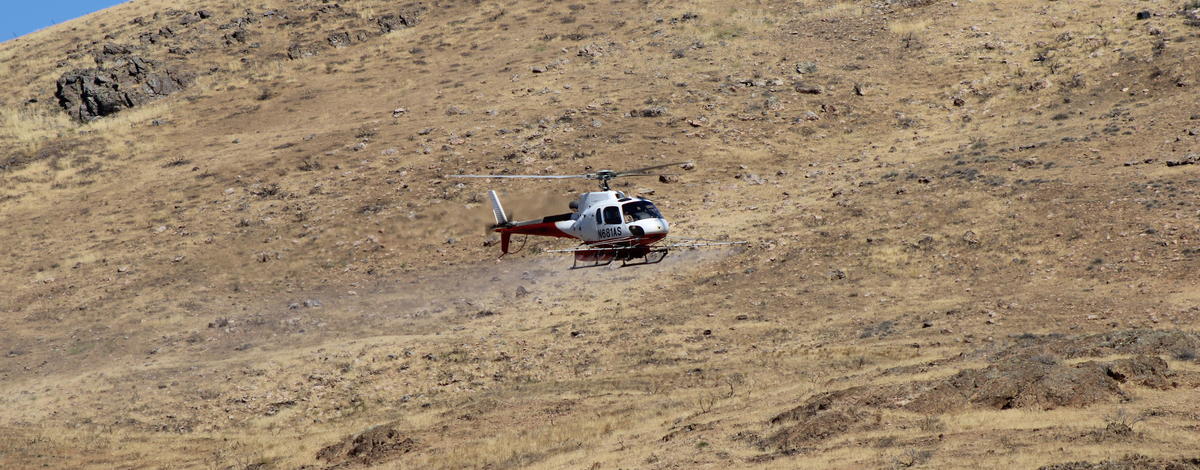
Those looking to recreate in the South Hills, Soldier, and Smoky Mountains in September may see a low-flying helicopter spraying pre-emergent herbicide on the hillsides in game management units 43, 44, 48, and 54 to control the spread of invasive annual grasses, such as cheatgrass.
The best way to combat invasive annual grasses is with a pre-emergent herbicide. Most seeds dropped by these grasses germinate in the fall following the first moisture, making timing critical. Applying herbicide before the seeds germinate helps prevent them from becoming established plants. The most effective application window is from late August through early October.
Why we spray in the fall:
• Weather patterns are more predictable, allowing spraying during low‑wind conditions.
• Fall precipitation helps bind the herbicide to the soil, where it can remain effective. This timing is also important because cheatgrass is largely dormant in the fall before green-up begins
• Treating after fire season avoids the risk of a wildfire occurring before rainfall can incorporate the herbicide into the soil, which could reduce or eliminate its effectiveness.
The goal in applying herbicide now is to remove and reduce the spread of invasive annual grasses, which improves big game habitat and reduces the risk of wildfire.
The spraying project is scheduled to begin the week of September 1 and continue through September 12. Treatments will be conducted on a day, or days where wind and weather conditions meet the required parameters for spraying treatments to occur. The helicopter used for the project can be distinguished by large sprayer booms extending from both sides of the body of the helicopter.
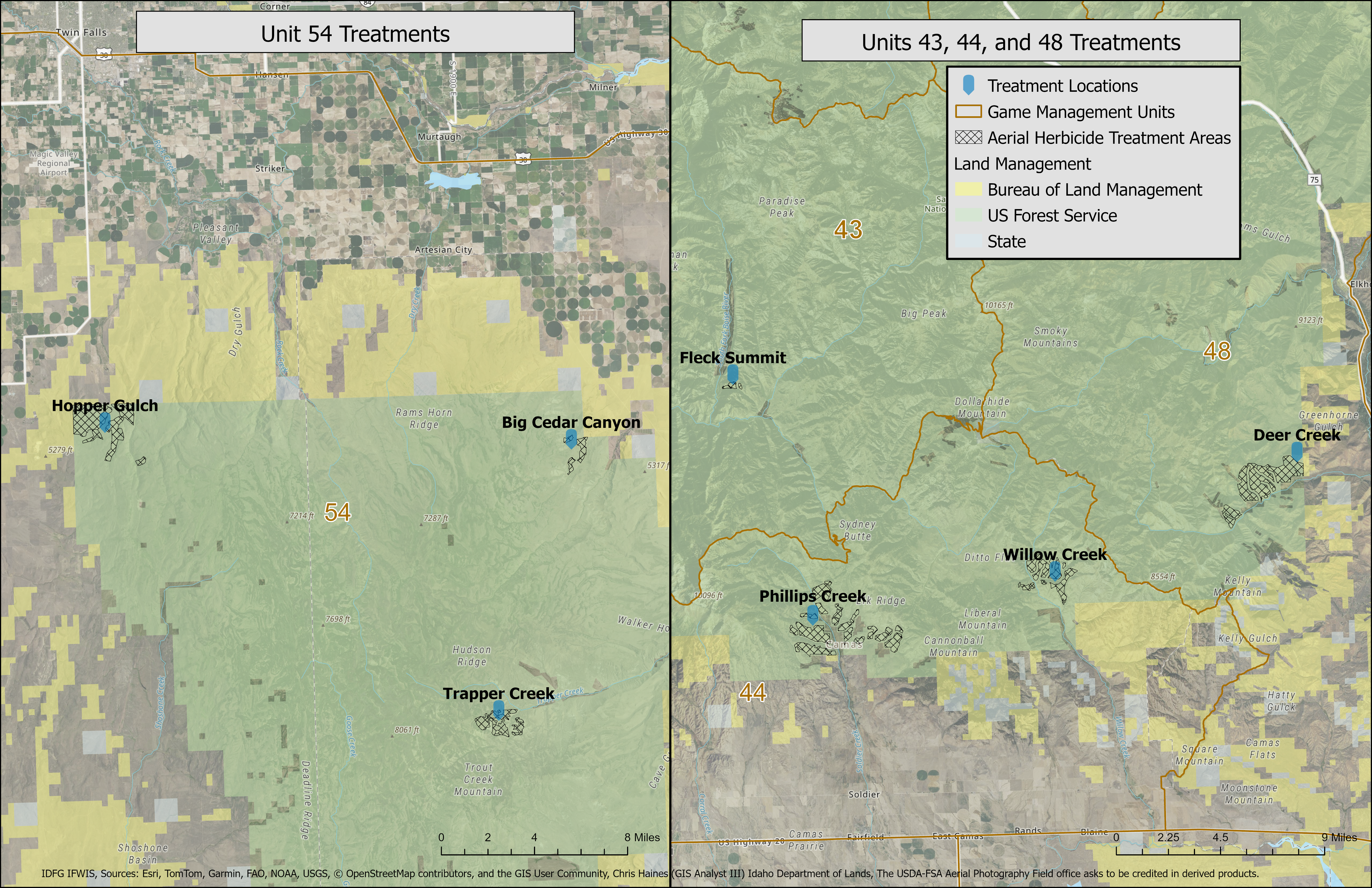
Areas to be treated will include a portion of Willow Creek, Fleck Summit, Phillips Creek, and Deer Creek drainages in game management units 43, 44, and 48 as well as portions of the Trapper Creek, Hopper Gulch, and Big Cedar Canyon drainages in game management unit 54. It is anticipated that treatment will occur for 2-3 days per location. In total, approximately 8,000 acres will be treated.
Helicopter and crews will be staging at multiple locations along these areas. For safety, hunters and recreationists are urged to avoid these areas while the helicopter and crews are working.