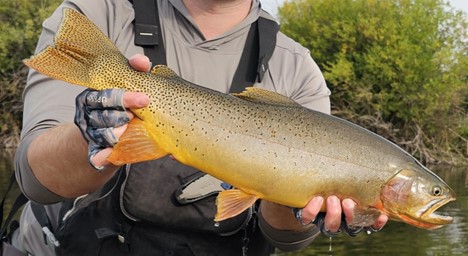
Idaho Fish and Game is launching a conservation project this fall to protect native Yellowstone cutthroat trout in the Teton River Canyon. On Oct. 8, biologists will conduct a rotenone treatment on the lower 5.5 miles of Badger Creek to reduce non-native rainbow trout that pose a threat to the genetic integrity of native cutthroat.
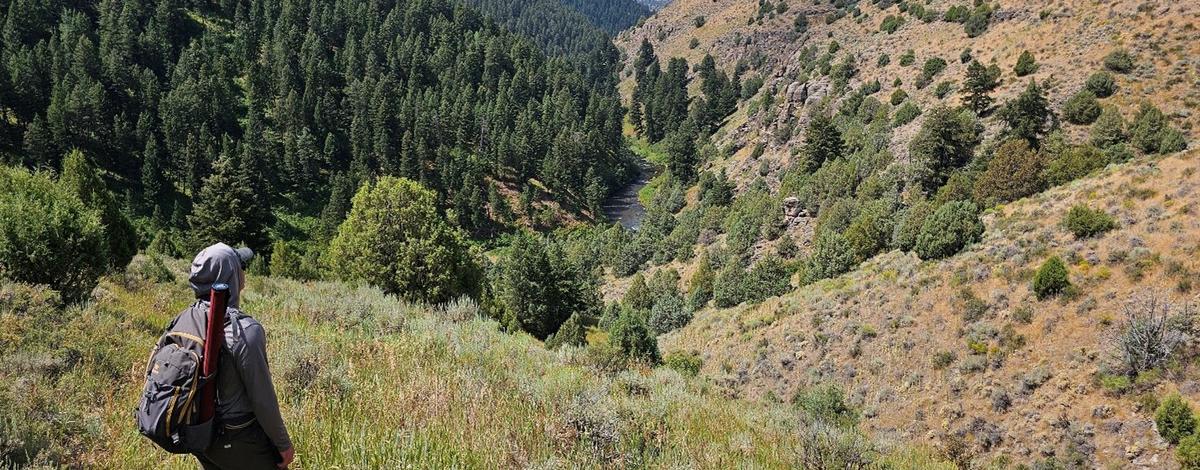
Conservation project planned to protect Yellowstone cutthroat trout in Teton Canyon
idfg-jbrower
Why this project is needed
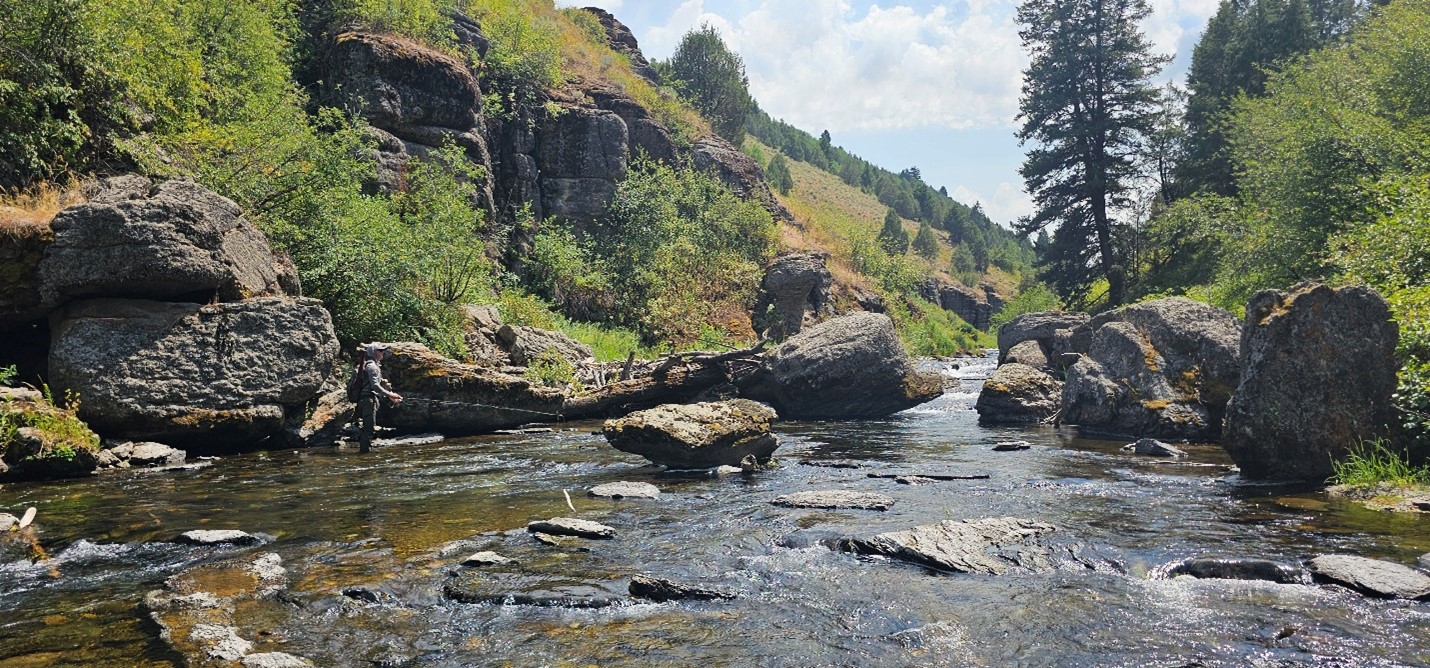
The Teton River Canyon, between Felt Dam and the Teton Dam site, is the last section of the Teton River where Yellowstone cutthroat trout remain the dominant trout species. Elsewhere in the drainage, cutthroat populations have declined due to competition and hybridization with rainbow trout.
Badger Creek, a tributary that flows into the Teton River just upstream of Bitch Creek, has one of the highest densities of rainbow trout in the area—estimated at more than 4,500 fish per mile in its lower section. These fish compete directly with cutthroat for food and habitat and interbreed with them, diluting important local genetics. Fish and Game, with help from partners like Friends of the Teton River, has already documented rainbow trout moving from Badger Creek into Bitch Creek, a critical cutthroat spawning and rearing tributary.
The goal of this project is to limit threats to cutthroat in Teton Canyon by significantly reducing the rainbow trout population in the lower 5.5 miles of Badger Creek. To accomplish this, Fish and Game will conduct a rotenone treatment on Oct. 8.
What is Rotenone?
Rotenone is a naturally occurring compound found in plants that has been used by the native peoples of Central and South America for centuries to capture fish for food. It works by inhibiting gilled organisms (like fish) from being able to effectively uptake oxygen. Fisheries managers began using rotenone as a conservation tool as early as the 1930s, and it’s been one of the most effective, safest, and fiscally responsible ways to control fish populations.
For more information on the use of rotenone as a tool for fisheries management, check out this article.
What to expect if you’re visiting the area
In the coming weeks, you’ll see an increased presence of Fish and Game staff collecting preliminary data and staging gear/materials in and around lower Badger Creek. Signs will be posted warning the public not to enter the water on the day of the treatment. On treatment day, people may observe a slight purple color in the Teton River for a short distance downstream of the mouth of Badger Creek, which will be caused by the addition of potassium permanganate to detoxify the rotenone.
Long-term plan
In the coming years, Fish and Game will conduct manual suppression as necessary to ensure the rainbow trout population in Badger Creek remains in check.
"Given populations of rainbow trout upstream in Teton Valley, we recognize that complete eradication of rainbow trout in Teton Canyon is not a feasible objective," says Fisheries Biologist Nathan Tillotson. "However, if we can push the reset button on Badger Creek and allow cutthroat to re-establish as the dominant trout species, the entire population of cutthroat in Teton Canyon will be more resilient going forward."
For all questions and comments regarding the project, please contact:
Nathan Tillotson – Upper Snake Regional Fisheries Biologist
Nathan.Tillotson@idfg.idaho.gov
(208) 535-8026