
Many of the trout the Idaho Department of Fish and Game (IDFG) stocks into Idaho’s streams, lakes, and reservoirs cannot reproduce. Stocking sterile trout in these locations is an intentional management action. The most commonly stocked sterile fish in Idaho is Rainbow Trout. We stock triploid Rainbow Trout, meaning these fish have three complete sets of chromosomes instead of two. This makes them sterile. Hatchery staff induce triploidy by interrupting the early stages of embryo development shortly after fertilization with high pressure (several thousand psi) which causes the egg to retain an extra set of chromosomes and renders the fish sterile. Other times, IDFG uses hybrid combinations such as Tiger Trout or Tiger Musky that are naturally sterile. Sterile fish are an important tool in a fisheries manager’s toolbox because they allow fishery managers to have more direct control over a population’s density and their potential to cause detrimental genetic impacts to wild fish.

Why stock sterile fish?
Sterile fish are an important tool in a fisheries manager’s toolbox

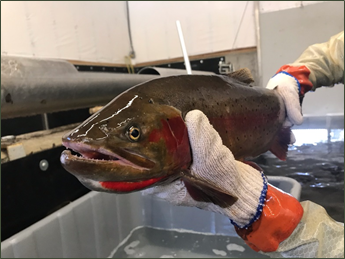
However, before we can discuss fish management scenarios that involve stocking sterile versus fertile fish, we first must understand how hatchery trout impact wild trout populations. There is a lot of misunderstanding on this topic, and it has been the subject of major research efforts IDFG has conducted. Intuitively, some anglers may be concerned that stocking catchable sized trout (8+ inches) in systems supporting existing wild trout could result in negative impacts to the wild trout population due to competition for food and space. However, the lifespan of a catchable sized trout from a hatchery is quite short in streams and rivers. These fish are raised in a very different environment to wild populations, which contributes to a far shorter lifespan. In a study carried out in Idaho waters, the research team of Meyer et al. 2012 observed no impacts of stocking high densities of hatchery catchable Rainbow Trout on wild Rainbow Trout in several Idaho streams. They determined “The lack of population‐level effects from stocking catchables was not surprising considering the high short‐term mortality and the socially and physiologically naive behavior typically exhibited by hatchery catchables stocked in lotic systems.” The take home message is that hatchery catchable trout have no effect on wild trout in Idaho streams and rivers. Thus, the addition of sterile Rainbow Trout catchables is a strategy used to augment catch rates and/or provide additional harvest opportunity.

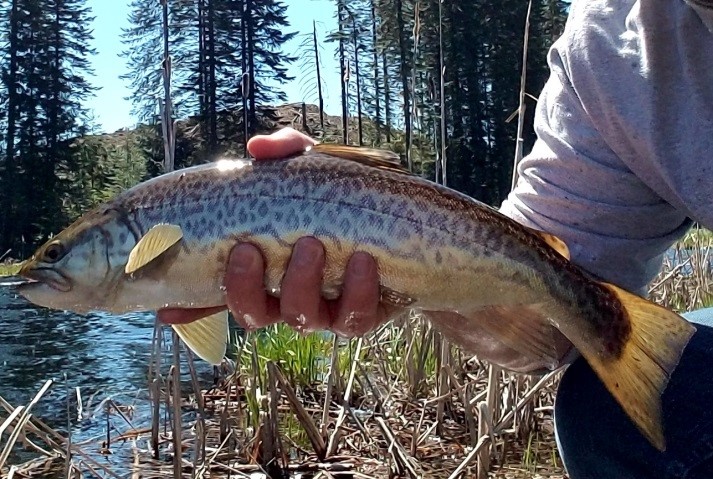
Sometimes IDFG stocks sterile fish because we want to have more control over the numbers of fish, as to meet the fisheries management goals we have for that waterway. An example would be stocking Tiger Trout into a mountain lake. If our goal for a mountain lake is for it to have trophy Tiger Trout, then we will want to keep that population at a relatively low population density. At lower densities, the fish will not have as much competition for resources and thereby have faster growth rates which leads to an overall bigger size at maximum ages. This allows the fish to grow to larger sizes and produces a trophy fishery.
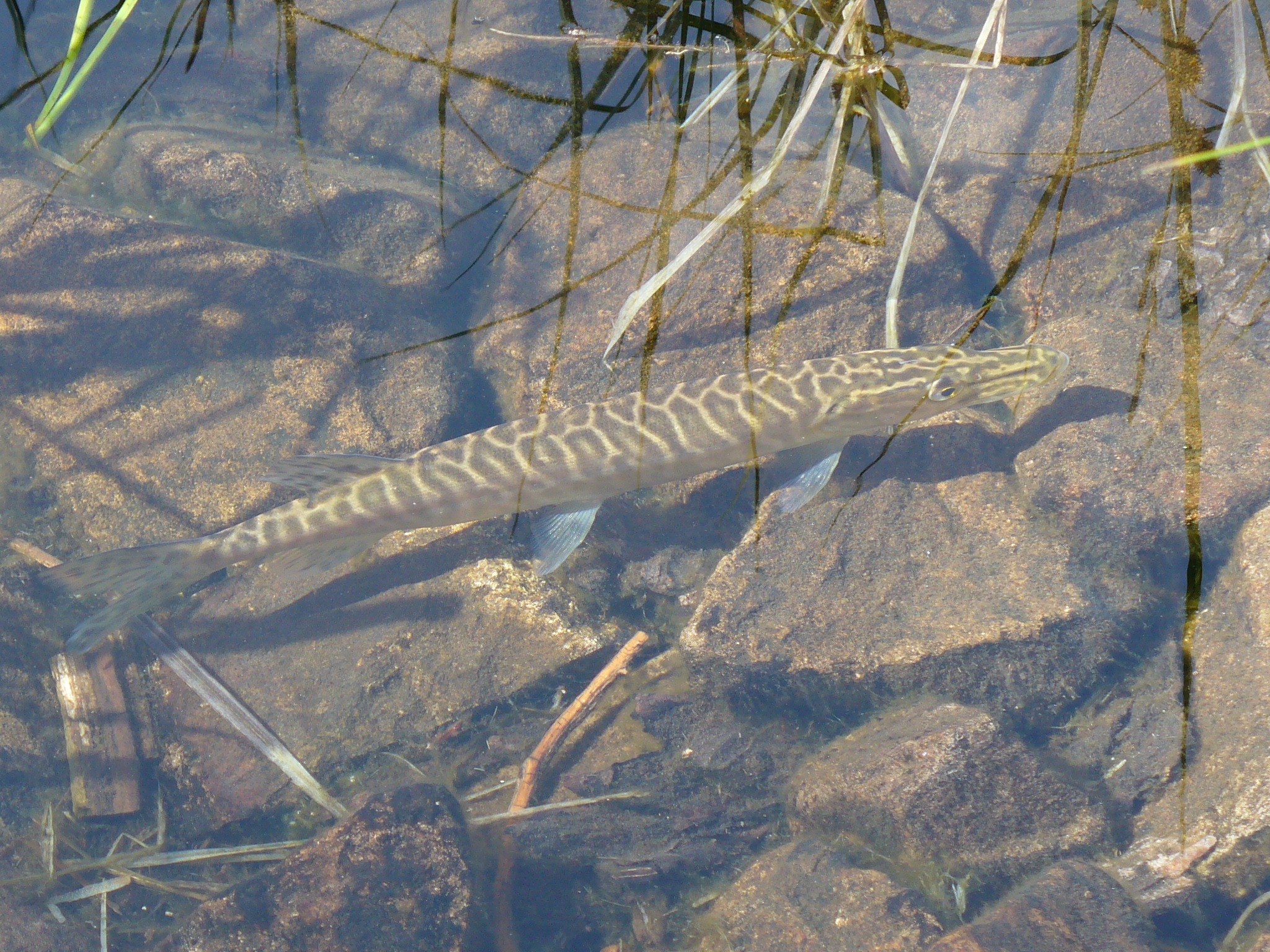
In more rare cases, we may use sterile fish as a biocontrol. We have done this with Tiger Musky in an attempt to reduce invasive Brook Trout in some systems. There, our long-term goal is either the eradication of the undesirable species or a suitable decrease in abundance to result in increased overall size of individual fish which would make the fish more desirable to anglers. A stunted Brook Trout population in a mountain lake would be an example of this type of situation. Tiger Musky can be an effective predator in some lakes, depending on habitat types, and over time can reduce a Brook Trout population to the point where surviving Brook Trout grow larger, which provides a quality or trophy fishery for both Tiger Musky and Brook Trout.
More examples include Birch Creek and the Henrys Fork at Macks Inn. Birch Creek has healthy wild Rainbow and Brook trout populations. While these populations are healthy, Birch Creek is a popular fishery and garners substantial angling effort. The addition of sterile Rainbow Trout catchables increases angler catch rates and harvest opportunity beyond what Birch Creek can support naturally, and provides these benefits without negatively affecting wild trout survival, growth, abundance, or genetics. Another example is the Macks Inn reach of the Henrys Fork Snake River. When IDFG considers stocking hatchery fish in a stream or river supporting wild reproducing trout such as the Henrys Fork, we often do not want the stocked fish to influence the genetics (and consequently the behavior and traits) of the wild trout present which have proven to be well-adapted to local stream conditions. Stocking sterile Rainbow Trout into the Macks Inn reach of the Henrys Fork augments angler catch while protecting the genetics of native Yellowstone Cutthroat Trout present in the Henrys Fork and Henrys Lake outlet.

In some cases, IDFG does stock fertile, diploid fish which can reproduce. Here our goal may be for the stocking to supplement the population and contribute to the fishery’s recruitment. Mackay Reservoir is an example of this. Mackay Reservoir, like a lot of western reservoirs, goes through large, seasonal fluctuations in water level. This can lead to recruitment problems, so we stock fertile fish to mitigate this bottleneck. In other cases, such as Henrys Lake, we will stock fertile Yellowstone Cutthroat Trout that naturally want to migrate into spawning tributaries to spawn in order to boost natural production in Henrys Lake tributaries and to continue to provide a viable egg source to fill hatchery requests for not only Henrys Lake but several other waters where Henrys Lake Cutthroat Trout are stocked throughout the state. So, while IDFG often stocks sterile fish, there are many cases where stocking fertile fish better aligns with our fisheries management objectives.
Overall, there are several things IDFG takes into consideration regarding our fish stocking strategies. The ability to use sterile hatchery fish in Idaho greatly increases the opportunities for hatcheries to supplement fisheries across the state. While the situation and reasons for different stocking strategies are dependent on location, IDFG consistently strives to preserve, protect, perpetuate, and properly manage the fishery resources in this great state.