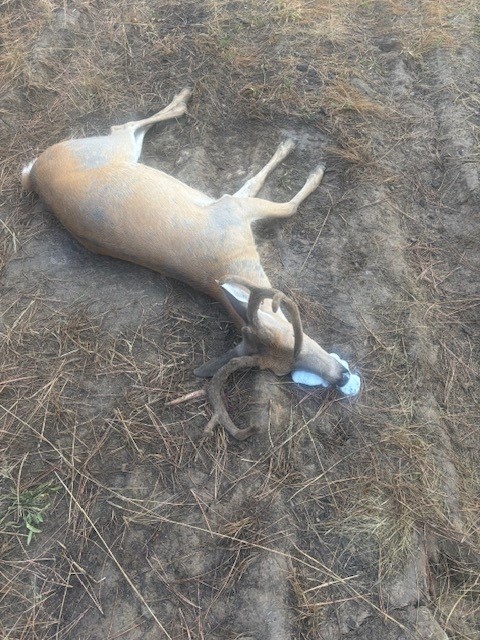
Epizootic Hemorrhagic Disease (EHD) is not a threat to humans or livestock, but it can be alarming to hunters and landowners who encounter sick or dead deer. Fish and Game has received many questions about the outbreak, what it means for hunting this year, and what to expect for the future of white-tailed deer populations in the Clearwater Region.
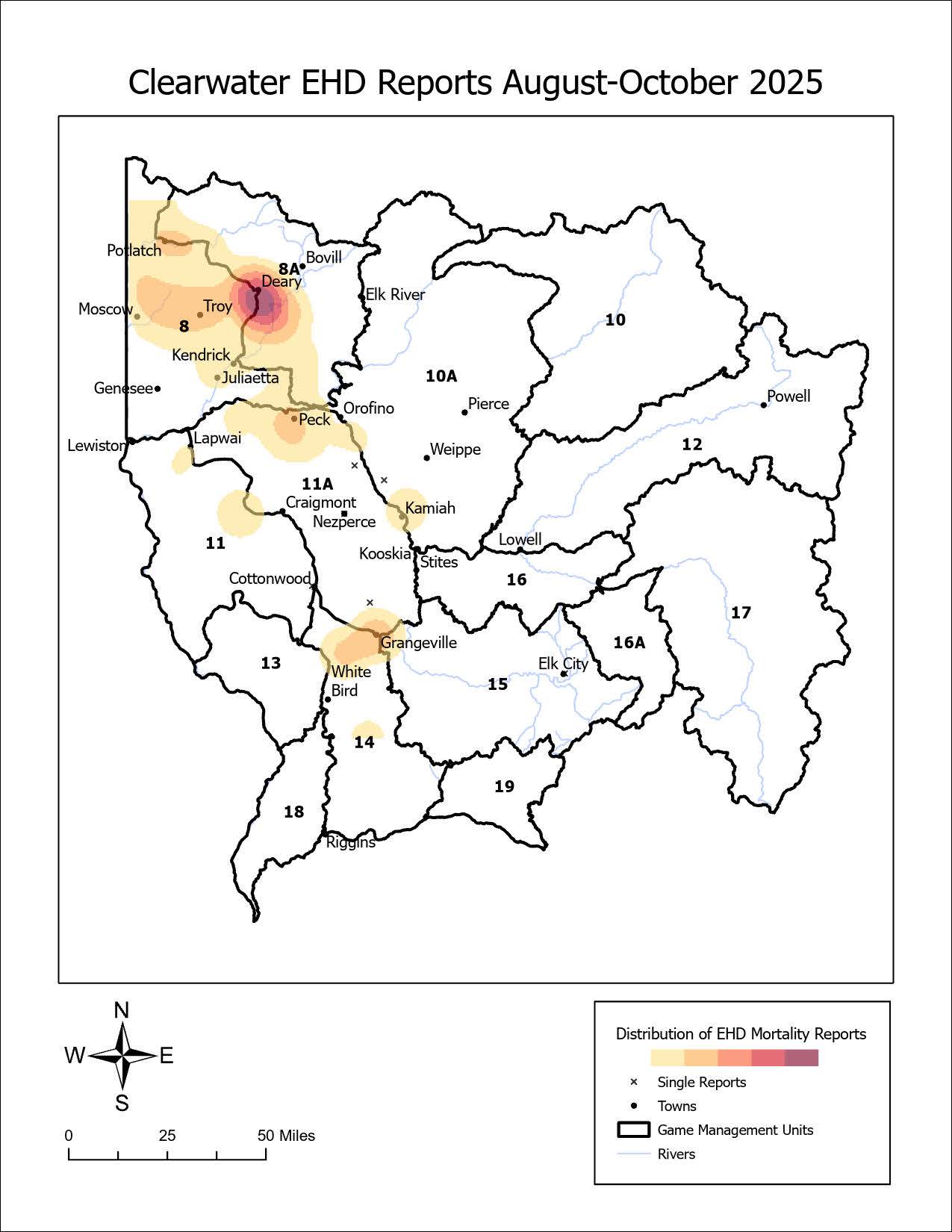
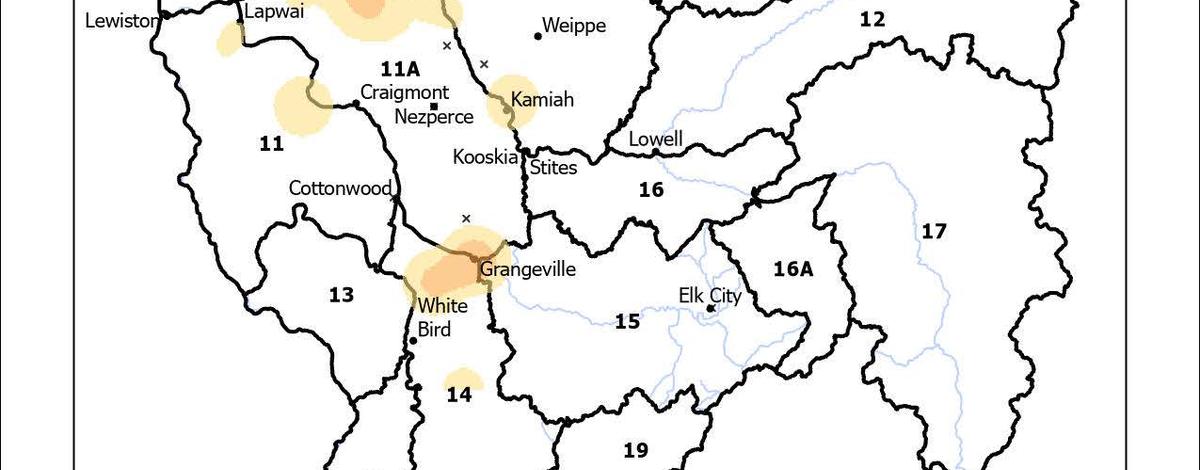
As of October 6, biologists have received ongoing reports of just under 1,000 white-tailed deer mortalities in the Clearwater Region suspected to be caused by EHD. About 72% of these reports have come from Units 8 and 8A and approximately 18% have come from Units 11A and 14. In other units only a handful of suspected cases have been reported.
Estimating the actual number of deer lost during an EHD outbreak is extremely difficult. However, based on the number of reports, the 2025 outbreak appears similar in severity to the 2021 event, though centered in a different part of the region. In 2021, cases were concentrated in Unit 11A near Kamiah and Kooskia, as well as in Units 8A, 10A, 15, and 16 at lower elevations extending downstream toward Orofino and up the South Fork of the Clearwater. In contrast, most reports in 2025 have come from farther north, primarily in Units 8 and 8A, with the area around Deary being the hardest areas hit.