
A mountain lion was sighted on the Lewis-Clark College campus during the late-evening hours of Sunday, Feb. 1. Surveillance footage later showed a young lion at the ticket booth by the baseball field. Fish and Game, campus security staff and Lewiston Police officers searched the area but did not locate the animal.
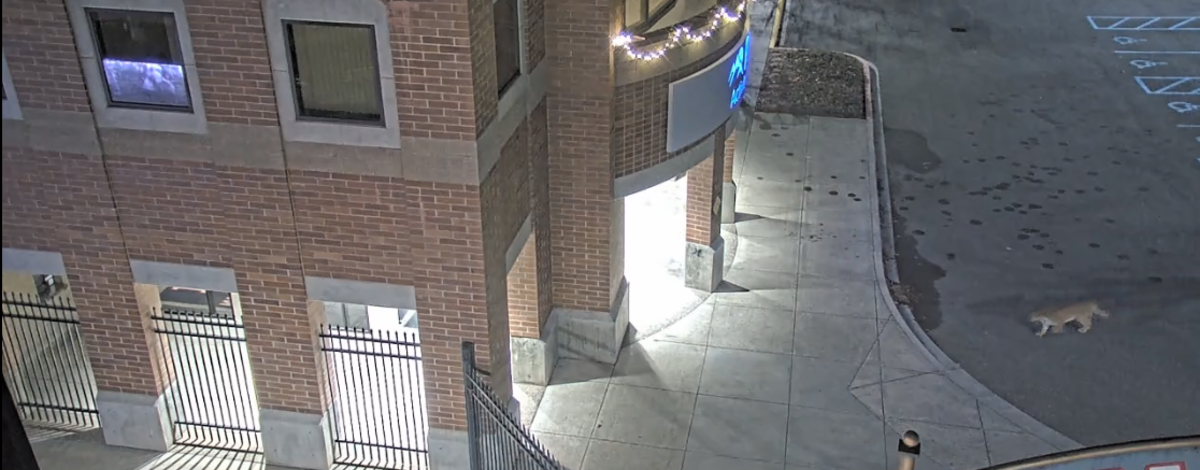
Mountain lion sighting on Lewis-Clark College campus in Lewiston
idfg-jbruns
Mountain lion sightings serve as a reminder to use caution. Residents should stay aware of their surroundings to protect themselves and their pets.
Public safety is top priority
Mountain lions generally live in remote areas, are nocturnal and very secretive, so they are seldom seen. However, mountain lions can sometimes be found in and around areas where people live. “While sightings of mountain lions in urban areas are rare, it's not unheard of,” said Jana Ashling, Regional Wildlife Manager.
Fish and Game always prioritizes public safety. Residents and visitors living near wildlife—regardless of species—should remain vigilant to reduce the risk of unexpected encounters.
Personal safety tips
If you encounter a mountain lion:
- Do NOT run. Running triggers the lion’s chase instinct.
- Do NOT turn your back. Face the lion, make yourself appear large, and yell loudly. Avoid high-pitched screams, which can mimic prey.
- Slowly back away while maintaining eye contact.
- Carry safety equipment such as bear spray, a noise device (air horn), and a bright flashlight if walking at night.
- If attacked, fight back.
Additional precautions:
- Use lights to see your surroundings, especially in yards or neighborhoods at night.
- Avoid headphones while running or biking, so you can hear wildlife nearby.
Pet Safety
Mountain lions are opportunistic predators and may view pets as prey. To protect pets:
- Keep pets on a leash.
- Observe pets’ behavior—they may sense a lion before you do.
- Do not leave pet food outside.
- Before letting pets outside, turn on lights, make noise, and visually check for wildlife.
- Accompany pets outdoors whenever possible.
- Protect your chickens and other small livestock by keeping them secured in a locked coop, especially at night
Homeowner Safety
To reduce the likelihood of a mountain lion approaching your home:
- Be aware of wildlife when leaving your house.
- Do not feed wildlife; elk and deer are preferred prey, and feeding them can attract predators.
- Encourage neighbors to avoid feeding wildlife.
- Secure household garbage.
- Prevent lions from accessing spaces under patios or decks.
- Cover window wells, which could serve as resting spots.
- Install motion-sensor lights to deter wildlife, ensuring they don’t disturb neighbors
Residents are urged to report all mountain lion sightings or encounters to the Fish and Game, Clearwater Regional Office at (208) 799-5010. Timely reports help staff monitor lion behavior and assess potential risks to public safety.