
idfg-badge

Idaho Fish and Game

California bighorns relocation owyhees

Video: See bighorn sheep released into Idaho's Owyhee canyonlands

idfg-rphillips

Sheep were translocated from Oregon as part of a population enhancement project

You may have heard about bighorns being released into southern Idaho’s Owyhee canyonlands, and now you can see the whole story behind this intensive project to boost bighorn herds in the Owyhees.  

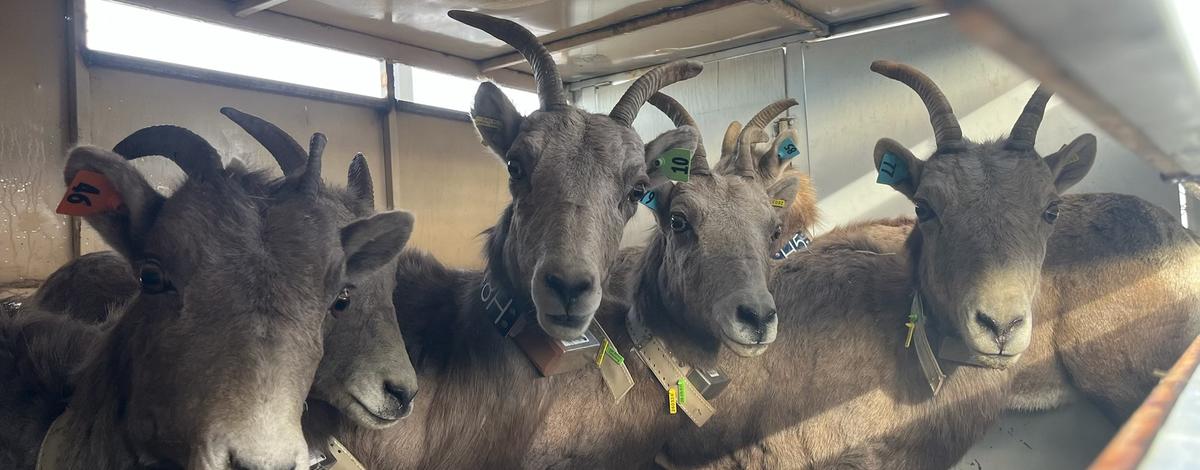
Idaho Fish and Game, in partnership with Oregon Department of Fish and Wildlife, Wild Sheep Foundation, and others, translocated 30 California bighorn sheep in January from a healthy population near John Day, Oregon to the Jacks Creek area in the Owyhees. 

Bighorn sheep were historically common in Owyhee County, but native sheep were lost from the local landscape in the early 1900s. Fish and Game first translocated California bighorn sheep back into the Jacks Creek area in the late 1960s, with more bighorns added in the 1980s to bolster the growing population.  

The herd grew to about 360 animals at its peak in the early 1990s, but has declined steadily since then. A July 2024 survey counted 111 sheep. The goal is to increase genetic diversity and improve long-term bighorn herd health. 

Studies indicate the Jacks Creek area has suitable habitat to support more sheep, and health testing of Jacks Creek sheep found no evidence a bacterial disease that has caused severe bighorn die-offs in other areas. Both the Jacks Creek herd and the John Day source population tested negative for the bacteria prior to the translocation.  

Most of the sheep released were females, which play a critical role in boosting herds. All released sheep were fitted with GPS collars, allowing biologists to closely monitor their survival, movements, reproduction, and lamb survival. Since the sheep were translocated and the video produced, 28 of them have survived.  

Biologists are hopeful that’s a positive sign because relocated sheep can be prone to mountain lion predation until they learn their new terrain and how to avoid the cats that live there. Most of the sheep translocated were also pregnant ewes, so come spring, there will likely be a baby boom when those lambs are born, but that population bump could be short-lived if lambs don’t survive to adulthood.  

Success of the project will be not only be measured by a short-term increasing bighorn population trend. Managers will also look for increases in adult female survival, improved pregnancy and lambing rates, and greater numbers of lambs surviving to adulthood.