idfg-badge

Idaho Fish and Game

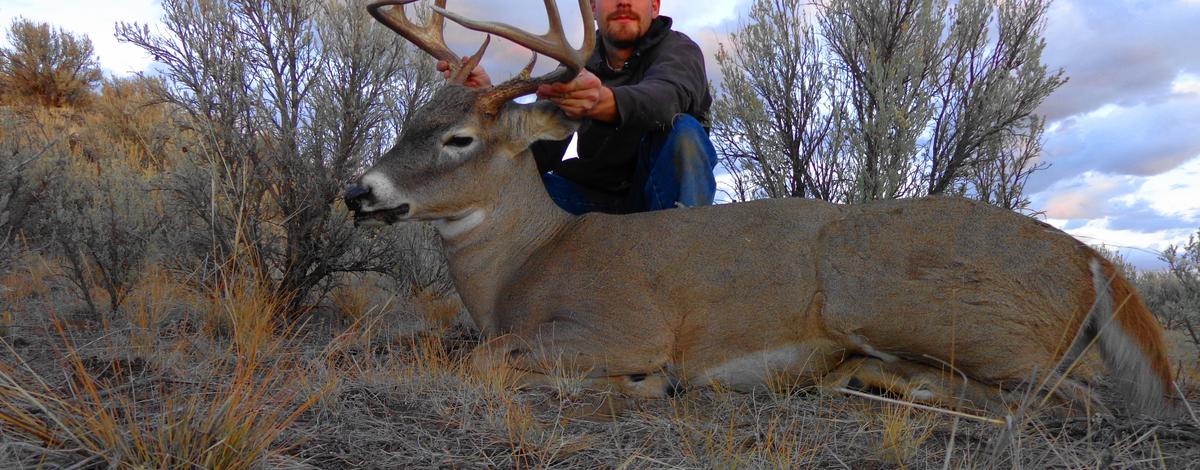
hunter with his whitetail buck October 2012

A quick and dirty guide to white-tailed deer hunting this year

idfg-cliess

Alright whitetail hunters, you’re up. As you head into the woods this season for white-tailed deer hunting, keep some of this information in your back pocket. Like whitetails themselves, whitetail hunters also tend to be more locale-specific, focusing on tried-and-true pockets of timber and mountain year after year. So, keep that in mind as you read through this guide—a statewide overview painting white-tailed deer hunting with broad strokes that may or may not encompass your specific draw or clear cut. 

Last thing worth mentioning before diving in: White-tailed deer aren’t typically found in every region of the state, so our statewide outlook is really only a 2/3 state outlook. Wildlife biologists in regions where whitetails do exist, however, have provided more specific, localized forecasts regarding their specific regions. With EHD raising its ugly head again, things changed in late summer, but more on that below.

White-tailed deer in the snow

Some context heading into this season

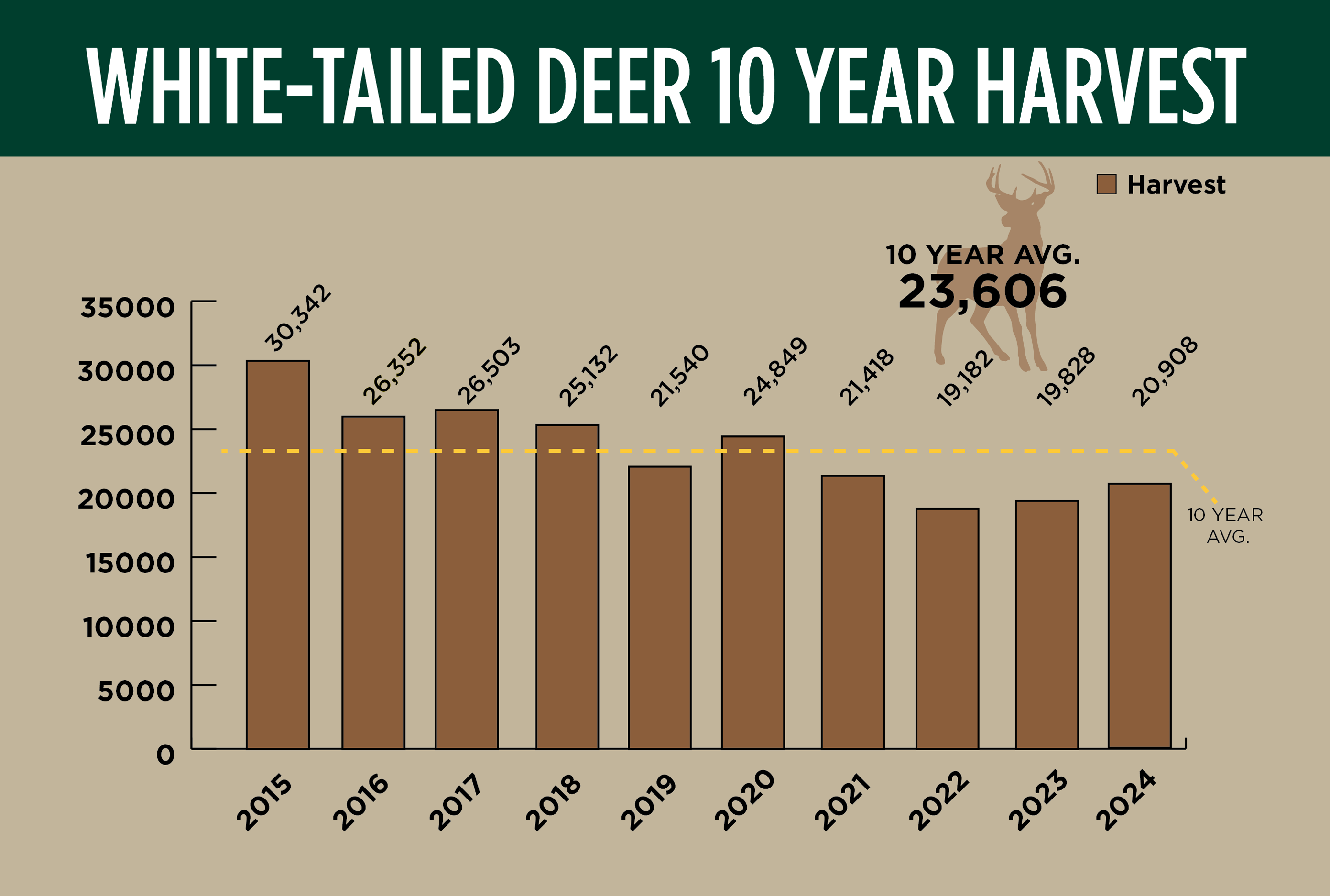
Fall 2022 was a low spot for white-tailed deer harvest. The reason for that 10-year low was not bitter cold, but hot, dry weather and biting midges. Epizootic hemorrhagic disease (EHD) wreaked havoc on the Clearwater Region’s whitetails that summer, killing thousands of deer. So, to see two consecutive increases in whitetail harvest is a good sign for wildlife managers and hunters alike that whitetails herds are moving back in the right direction. 

An estimated 48,766 white-tailed deer hunters hit the woods last year, with 40% of those successfully bagging a deer. Who knows! Maybe the same 48,766 hunters went 2 for 2 during the past two years, as harvest success was identical. But I doubt it.

As predicted though heading into the 2024 hunting season, overall harvest numbers for whitetails increased from 19,828 to 20,908.

whitetail0367.jpeg

Like with any species, and as mentioned countless times in regard to mule deer, it takes time for animals to rebound, but whitetails tend to rebound more quickly. Back in early 2023, Boudreau forecasted “another 2-3 years” before the Clearwater’s whitetail herds would be fully recovered, but optimistically pointed out that they were in fact “over the hump.”

And then...

The return of EHD in 2025

EHD, as mentioned above, decided to rear its ugly head once again during August, and a few trickles of reports turned to a stream, creating a mixed bag of expectations for white-tailed deer hunters.

As of Oct. 27, biologists have received reports of roughly 1,080 white-tailed deer mortalities in the Clearwater Region and 386 in the Panhandle Region suspected to be caused by EHD. About 72% of the Clearwater's reports have come from Units 8 and 8A and approximately 18% came from Units 11A and 14. In other units only a handful of suspected cases have been reported.

Estimating the actual number of deer lost during an EHD outbreak is extremely difficult. However, based on the number of reports, the 2025 outbreak appears similar in severity to the 2021 event, though centered in a different part of the region.

For context, in 2021, cases were concentrated in Unit 11A near Kamiah and Kooskia, as well as in Units 8A, 10A, 15, and 16 at lower elevations extending downstream toward Orofino and up the South Fork of the Clearwater. In contrast, most reports in 2025 have come from farther north, primarily in Units 8 and 8A, with the area around Deary being the hardest areas hit.

You can read more about the EHD situation in the Clearwater Region here.

How EHD may or may not affect your hunt

Despite the ongoing outbreak, Fish and Game has not recommended altering current deer seasons. White-tailed deer populations in the Clearwater Region remain strong overall, and while EHD has caused localized losses, deer numbers across much of the region remain robust and well above conservation concern. 

Hunters should be aware that in some areas they may encounter fewer deer than in past years. These localized declines can be disappointing, but other parts of the region have seen little or no impact from EHD, particularly at higher elevations, and these will continue to provide good hunting opportunity. After the severe outbreaks of 2003, and 2021, hunters did not see a drop in harvest success, and white-tailed deer populations are recovering well since 2021, though not back to previous levels.

The lay of the land

Like with other big game species, there are different environmental factors that can impact herd health. Temperature, annual precipitation and snowpack, drought, wildfires, etc. are environmental variables our biologists consider when determining how and where deer and elk are going to be in the months leading up to opening day. 

“Body size and antler growth on this year’s white-tailed deer is looking solid,” Boudreau said.

As the herds continued rebuild, a mild winter, a precipitous spring, and a relatively fireless summer have all been positive ingredients for a successful fall. How the positive signs leading into the season will clash with the reality of an EHD outbreak remains to be seen. If the past is an accurate guide, it's unlikely to have a large effect on the overall whitetail harvest, but will likely drop harvest in localized areas, so choose your hunting areas with that in mind. 

Deer teeth

Tooth and consequences

Last thing worth mentioning here. Back in 2023, Fish and Game wildlife biologists began a comprehensive tooth collection project (that’s deer teeth) to help determine the age structure of white-tailed deer in a few north Idaho hunting units.

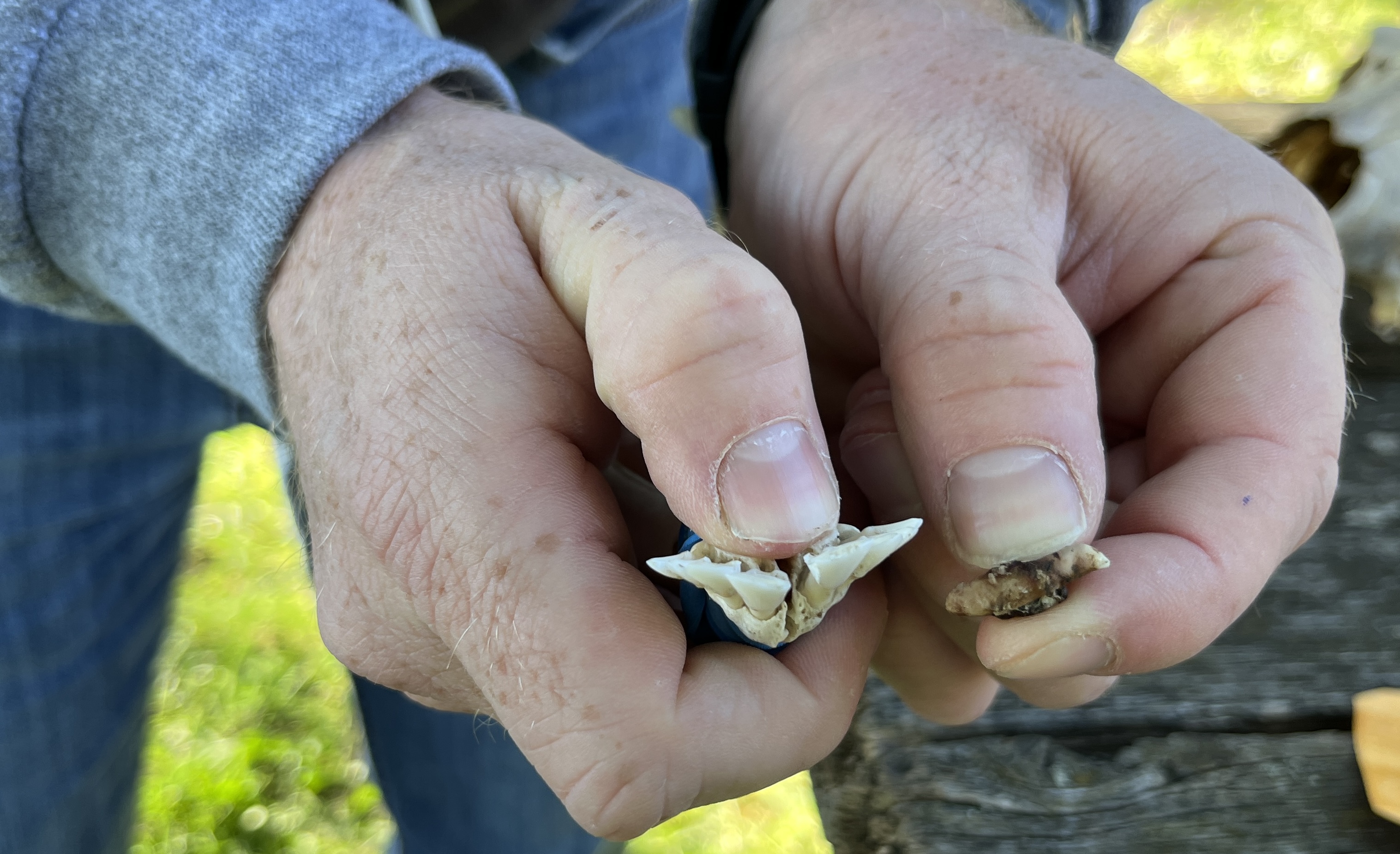
Teeth collected from whitetails—specifically the front teeth—are sent to a lab and aged to determine a range of how old or young harvested deer are, and by extension, the age structure of the rest of the deer out there on the landscape. 

Additionally, in 2024, biologists asked hunters to measure the circumference of buck antlers harvested that season.

The 1,100 white-tailed deer teeth collected in the project’s inaugural year combined with last season’s 1,500 teeth and 700 antler measurements have helped our biologists determine a wider spread of ages among deer than previously thought.

“It was originally thought that buck ages were down, or in other words, we were seeing more younger bucks out there in the field,” Boudreau said. “But thanks to our tooth data and the hunters who submitted those teeth, the data shows there’s actually quite a bigger spread between buck ages.”

Our biologists are once again looking for white-tailed deer tooth submissions during the 2025 hunting season. For more information, check out this article or contact the Panhandle and Clearwater regional offices.

Last Year’s Numbers

  • Total white-tailed deer harvest in 2024: 20,908
  • 2023 harvest total: 19,828
  • Overall hunter success rate: 40%
  • Antlered: 14,270
  • Antlerless: 6,640
  • Taken during general hunts: 19,360 (40% success rate)
  • Taken during controlled hunts: 1,550 (46% success rate)
white-tailed deer 10-year harvest 2025