idfg-badge

Idaho Fish and Game

Melanistic black pheasant walking on green grass and dirt

Hunters will see something new in the air this fall at Sterling WMA in southeast Idaho

idfg-jjackson

Pheasant stocking efforts will be happening on some wildlife management areas (WMAs) and other properties throughout the state during pheasant season this fall. This year, however, things will look a little different at the Sterling WMA in southeast Idaho.  That’s because Idaho Fish and Game Southeast Region has partnered with Idaho for Fish and Wildlife to run a pheasant surrogator on the WMA, one that resulted in rearing and releasing melanistic (black) pheasants. Hunters on Sterling will definitely see something new in the air this fall.
 

The what and why

Fish and Game and the project partners are investigating opportunities to improve Fish and Game’s pheasant stocking efforts and hunter experiences. Traditionally, Fish and Game uses staff and volunteers to truck in boxes of farm-raised rooster pheasants to release at Sterling WMA two times a week during pheasant season. That will still be happening, but this time, hunters may also encounter black pheasants from the surrogator project.

Surrogators (self-contained incubators) hold many pheasant chicks and raise them to 4-weeks old, after which the chicks are released to the wild. The hope is that this method can be successful at rearing birds to harvestable size in a more cost-effective way than purchasing adult pheasants from a commercial pheasant farm. Black birds were used so that hunters and biologists can tell at a glance where any harvested birds originated. 
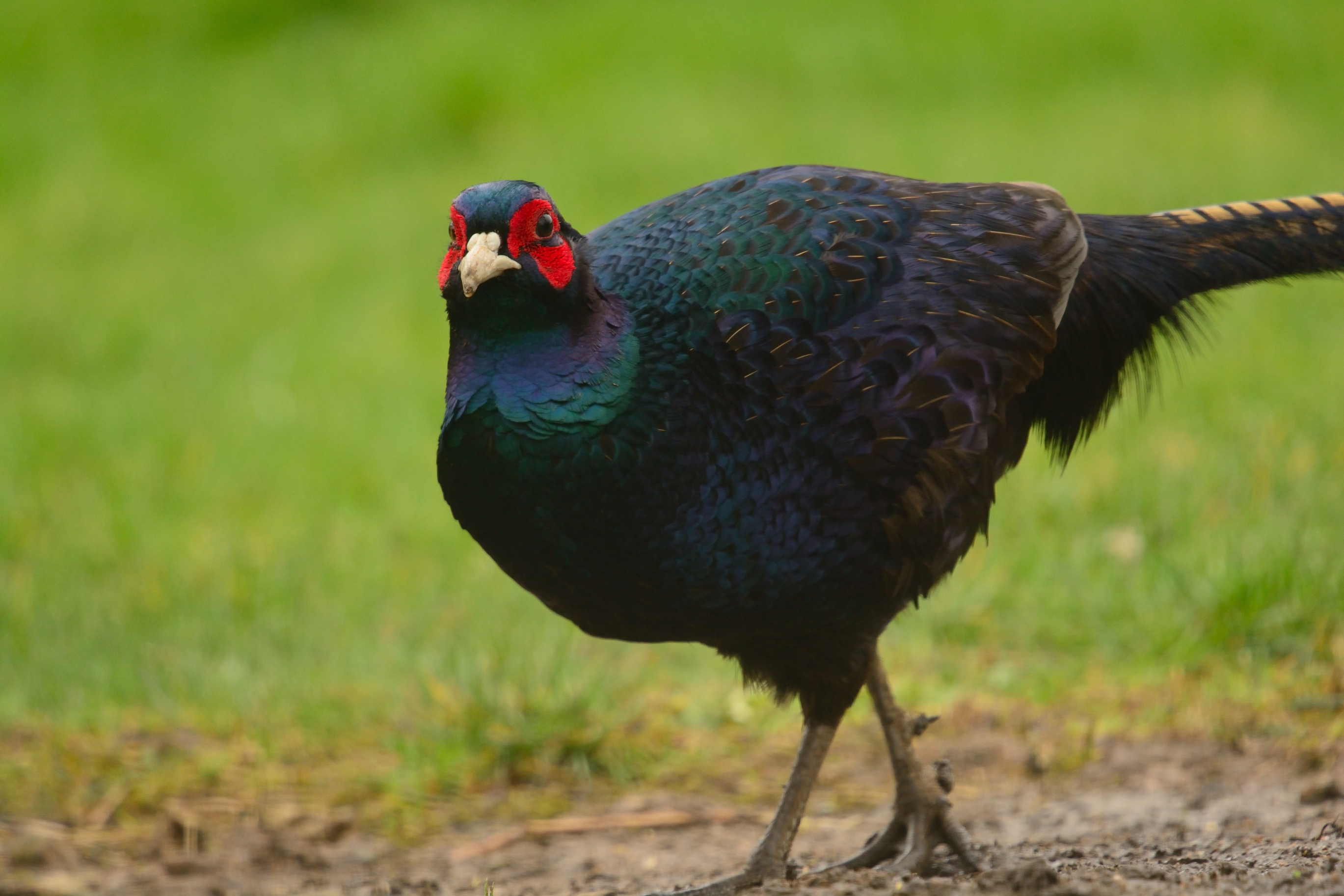
Melanistic black pheasant walking on green grass and dirt
Melanistic (black) ring-necked pheasant. Stock photo by Tom Meakera/Dreamstime.
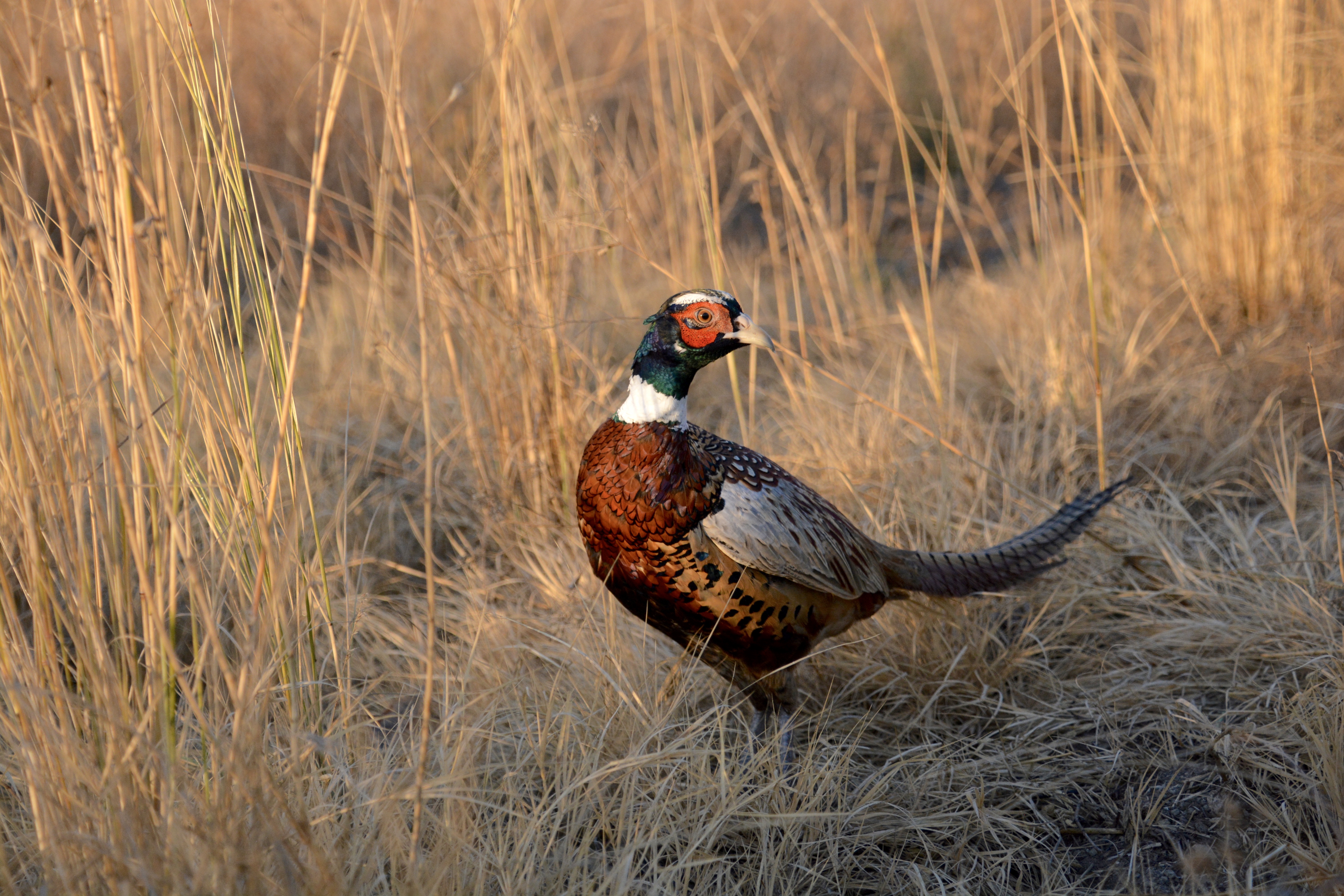
pheasant_a96.jpeg
Typical (non-melanistic) ring-necked pheasant. Photo courtesy Idaho Fish and Game.


Evaluating success

Whether it is surrogator-raised birds or the more traditional pheasant release method, the focus of this project is to evaluate ways to improve the pheasant supplementation program and the pheasant hunting experience for those afield. 

This surrogator experiment will help Fish and Game and its partners evaluate the ability to rear and release pheasants on site and evaluate the potential effectiveness of this technique by seeing how many of the surrogator birds are harvested.

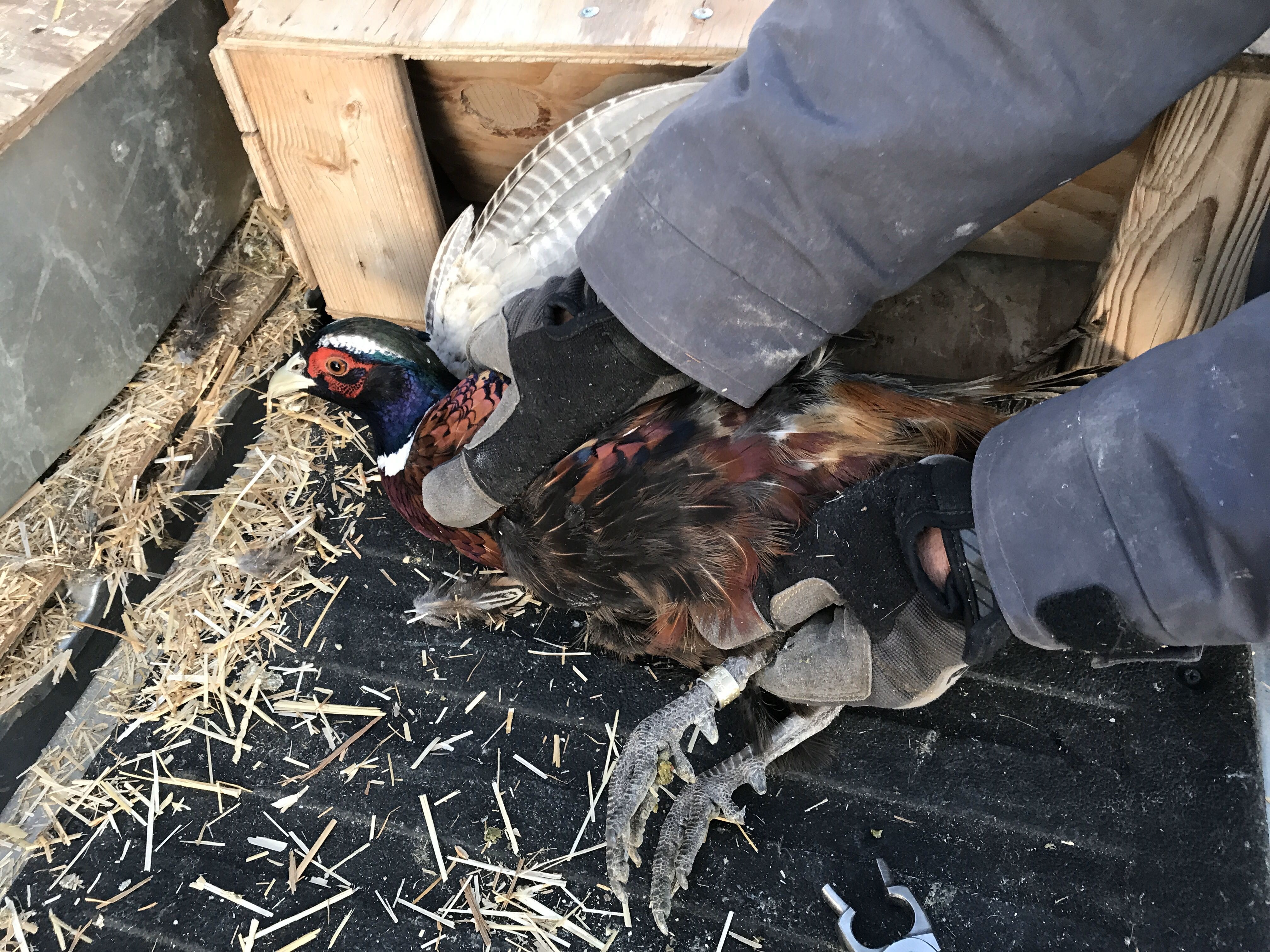
A hunter who harvests a black pheasant will automatically know his/her pheasant came from the surrogator and was not a wild or farm-raised bird. Additionally, as part of this project, Fish and Game will be leg-banding a portion of the roosters distributed via traditional stocking methods. These banded birds will give managers a better understanding of what harvest rates are for farm-raised birds. Managers can then start to compare potential benefits for each of the pheasant supplementation techniques.

Hunters can help with our harvest estimates by doing the following:

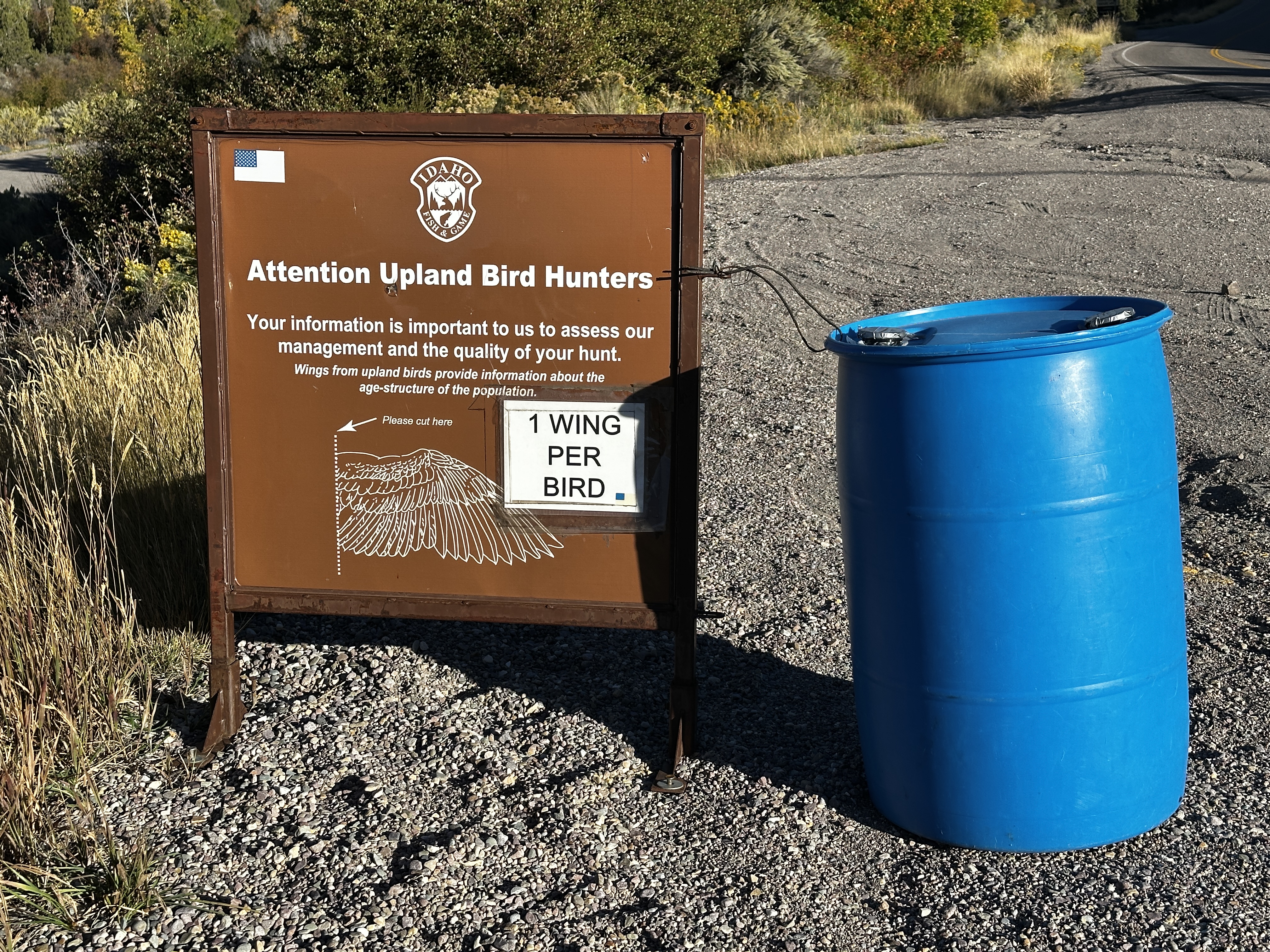
  • Please leave one wing from each of your harvested pheasants in a blue wing barrel which can be found on most access areas and parking lots at the WMA.
     
  • If a hunter prefers to not leave a wing or if they harvest a banded pheasant, he or she can report the harvest to the Southeast Region Fish and Game office in Pocatello at 208-232-4703.

“We will be posting flyers on Sterling WMA with this information as well as some photos of black pheasants,” said Regional Habitat Biologist Maria Pacioretty.  “Just remember, Idaho has no season on hen pheasants no matter the color, so hunters should always be mindful of their target.”

pheasant_banding_oct_2019_2
Ring-necked pheasant with leg band. Photo courtesy Idaho Fish and Game.


Other information pheasant hunters should know

  • Traditional pheasant stocking efforts at Sterling WMA and the Zollinger Access Yes! property in the Southeast Region will begin in time for the youth pheasant season Oct. 8 through Oct. 14. Pheasant stocking does not begin at Portneuf WMA until after regular deer season ends Oct. 24 to reduce crowding for hunters. The Zollinger Access Yes! property requires an on-line signup and reservation before hunters can pursue pheasants. More information can be found here: https://idfg.idaho.gov/hunt/pheasant/stocking/zollinger-access-yes
     
  • Any person 18 years old or older must have a valid Upland Game Bird Permit in possession while hunting pheasants on WMAs or other access agreement properties where pheasants are stocked, including surrogator birds. All pheasants harvested on these properties are required to be validated on this permit.
     
  • All upland game bird hunters are required to wear visible hunter orange (minimum size 36 square inches) above the waist during pheasant season when hunting on properties where pheasants are stocked. A hunter orange hat meets this requirement.
     
  • Shooting hours for upland game birds on properties where pheasants are stocked are 10 a.m. to one-half hour after sunset, except for those areas in the Clearwater Region where shooting hours are 8 a.m. to one-half hour after sunset.

Be sure to consult the 2026-2027 Upland Game, Turkey, & Furbearer Seasons and Rules before heading out to the field to hunt pheasants this season. For information about pheasant stocking efforts on WMAs and access agreement properties throughout Idaho, visit https://idfg.idaho.gov/hunt/pheasant/stocking.

A blue metal barrel sits on a gravel parking area next to a large brown information sign
Wing barrel for collecting upland game bird wings from hunters. Photo courtesy Idaho Fish and Game.