idfg-badge

Idaho Fish and Game

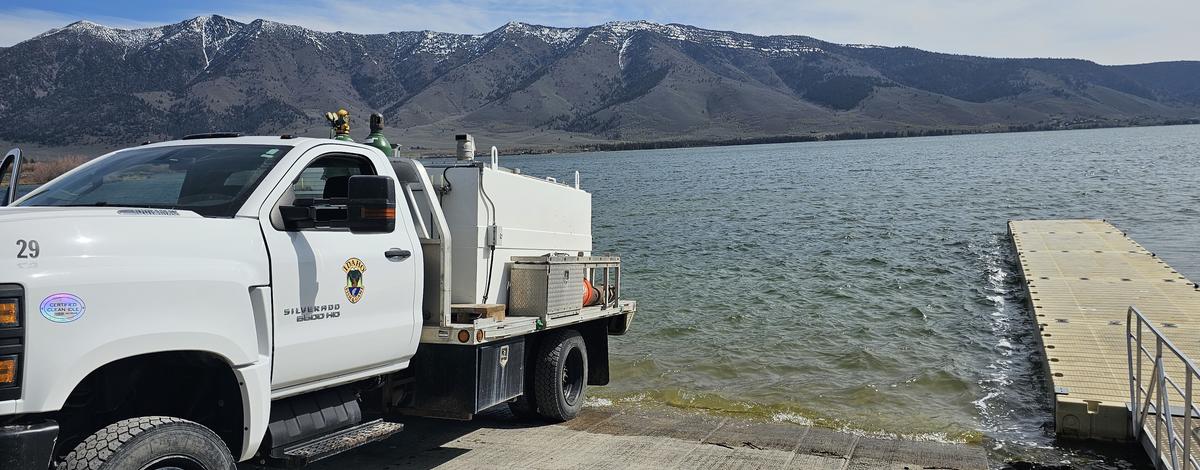
Henrys Lake Stocking Truck

Henrys Lake hybrid trout stocking study underway

idfg-jbrower

Idaho Fish and Game, in partnership with the Henrys Lake Foundation, has launched a new evaluation of stocking strategies aimed at improving the survival of hatchery-raised hybrid trout in Henrys Lake.

Henrys Lake is one of Idaho’s most popular fisheries and relies heavily on annual stocking to maintain strong trout populations. In a typical year, hatchery-origin fish make up an estimated 85–90% of the Yellowstone Cutthroat Trout population, and all hybrid Trout (Rainbow Trout × Yellowstone Cutthroat Trout) come from hatcheries. Brook Trout are less reliant on supplementation, with roughly 25–50% originating from hatchery releases. To support this high-demand fishery, Henrys Lake receives between 1.0 and 1.5 million fingerling trout each year.
Henrys Lake stocking truck

Over the past several years, Idaho Fish and Game biologists have observed reduced survival of stocked fingerling trout, contributing to lower catch rates and a decline in overall fishery performance. Water quality challenges and predation by larger trout are believed to be among the leading causes of mortality, particularly during the first year of life when young fish are most vulnerable.

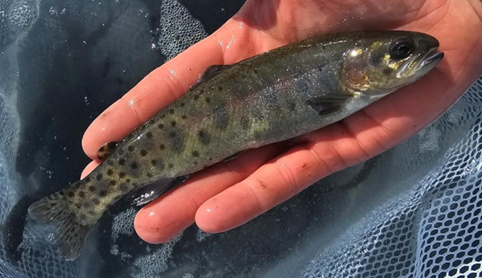
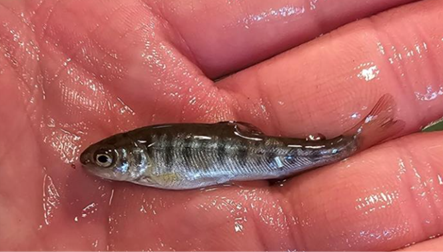
Small hybrid trout fry in the hand

To address these concerns, Fish and Game and the Henrys Lake Foundation initiated a size‑at‑release stocking evaluation in 2025. An additional batch of hybrid trout was produced specifically for this study. With state hatcheries already at full capacity, the Henrys Lake Foundation secured rearing space at a private hatchery to raise these fish.

Hand sized Hybrid Trout

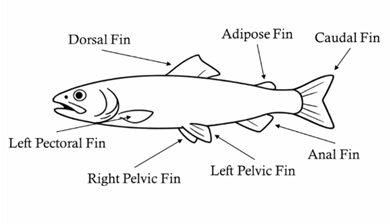
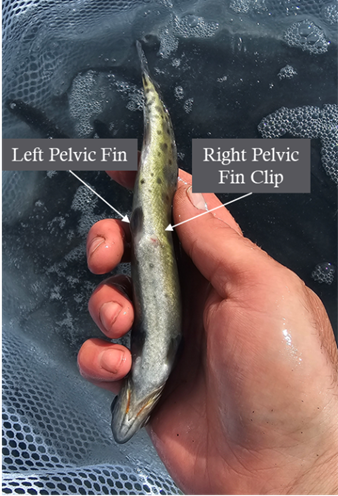
Biologists divided the study fish into two groups using pelvic fin clips for identification. Approximately 17,000 fish received a left pelvic fin clip and were stocked in fall 2025 alongside the traditional release of 1.5 million fingerlings. The remaining fish, marked with a right pelvic fin clip, were held at the private facility through the winter to grow larger and stronger. On May 4, 2026, roughly 19,000 of these older, larger juveniles were released into Henrys Lake. Releasing fish at this advanced size is expected to improve their survival as they enter the fishery.

Trout fin diagram
Trout turned upside down with left and right pelvic fins labeled

In the coming years, Fish and Game will assess the relative survival of these marked groups to determine whether larger, later-season stocking could benefit the long-term management of Henrys Lake.

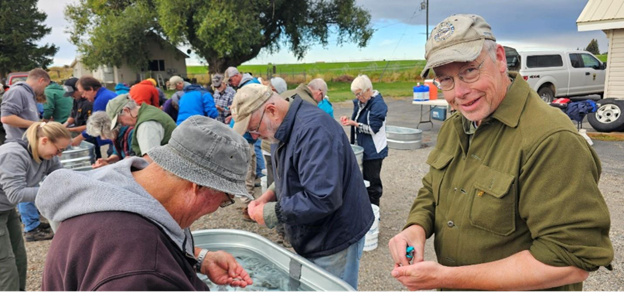
Volunteers clipping fish fins

This project was made possible through the dedication and support of the Henrys Lake Foundation, as well as the many volunteers and students who assisted with marking fish for the study.

Henrys Lake Foundation Logo

Anglers fishing Henrys Lake over the next few seasons are encouraged to check the pelvic fins of hybrid trout they catch. Identifying clipped fish helps biologists evaluate the success of this research.

For questions about the study or the Henrys Lake fishery, please contact:
Nathan Tillotson, Idaho Fish and Game
Email: Nathan.Tillotson@idfg.idaho.gov
Phone: 208‑535‑8026