idfg-badge

Idaho Fish and Game

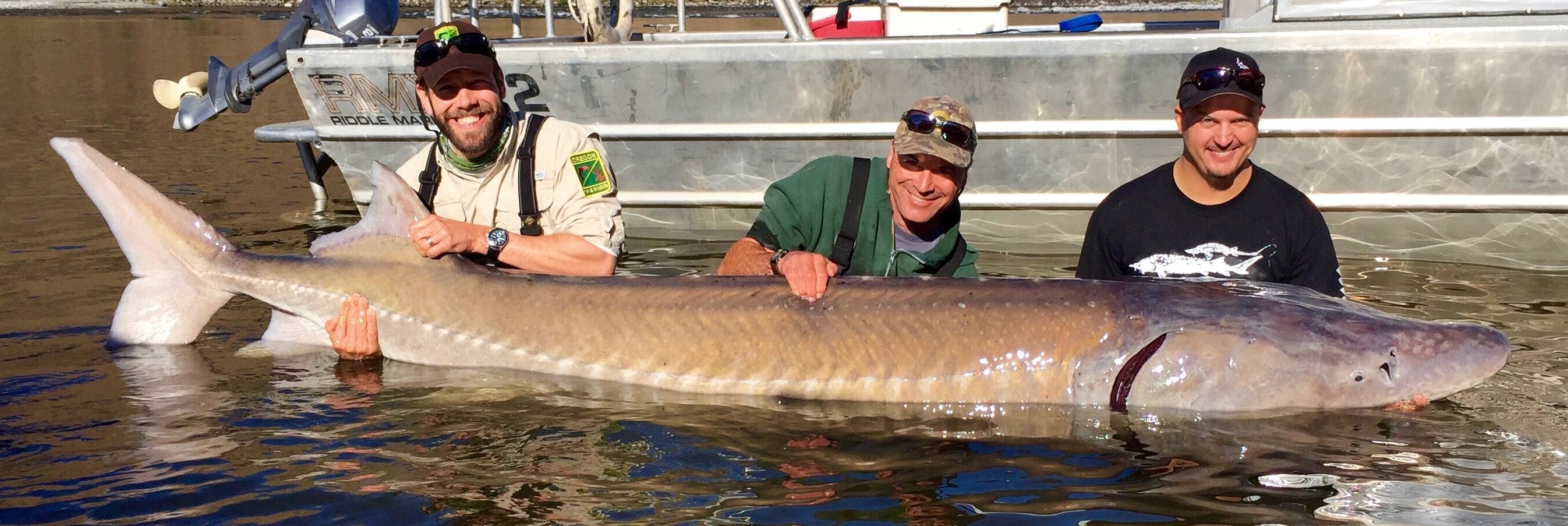
Large sturgeon sampled from Hells Canyon

THE HELLS CANYON WHITE STURGEON POPULATION

idfg-jdupont

Hi everybody. Before I retire, I wanted to leave you with one last blog about my favorite fish, the White Sturgeon. I felt it was important to write this last blog because the Hells Canyon White Sturgeon population is facing some serious challenges that I want you all to be aware of. Even though this blog is quite long, I encourage you to read through its entirety as I suspect you will learn a lot about and develop an appreciation for one of the most amazing fishes in Idaho. 

Throughout this blog , I will commonly refer to work or research “we” have completed or are doing. When I say “we”, I am referring collectively to all the different partners that have been involved in studying this fish population including: the Idaho Department of Fish and Game, Idaho Power Company, Nez Perce Tribe, U.S. Geological Survey, Corp of Engineers, University of Idaho, Washington Department of Fish and Wildlife, Oregon Department of Fish and Wildlife, and Yakima Nation. There has been a tremendous amount of cooperation and coordination by all these entities, and I am using all of this information to tell the story about this sturgeon population. 
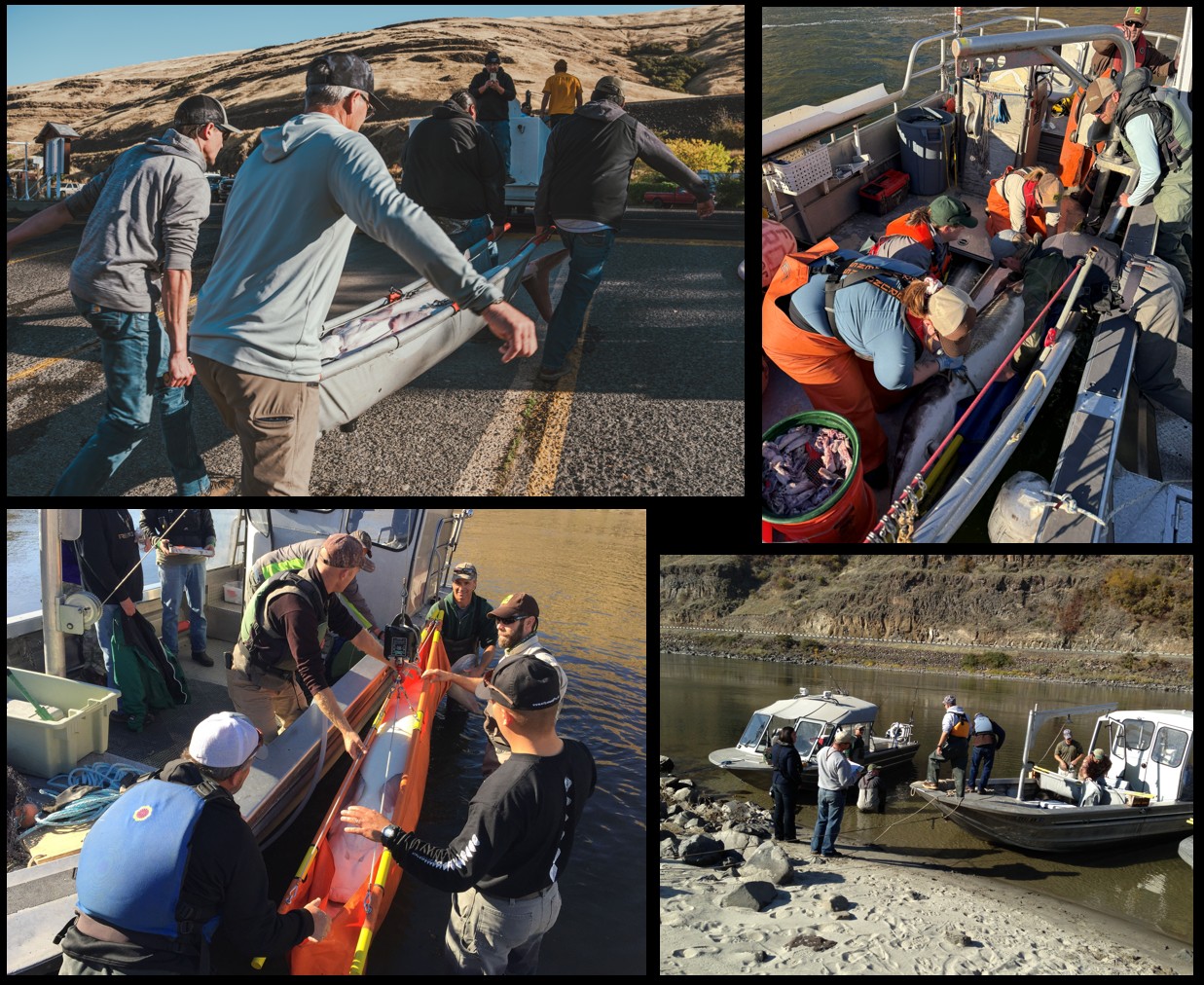
Collaborative work on white sturgeon

STATUS OF HELLS CANYON STURGEON POPULATION

Movement

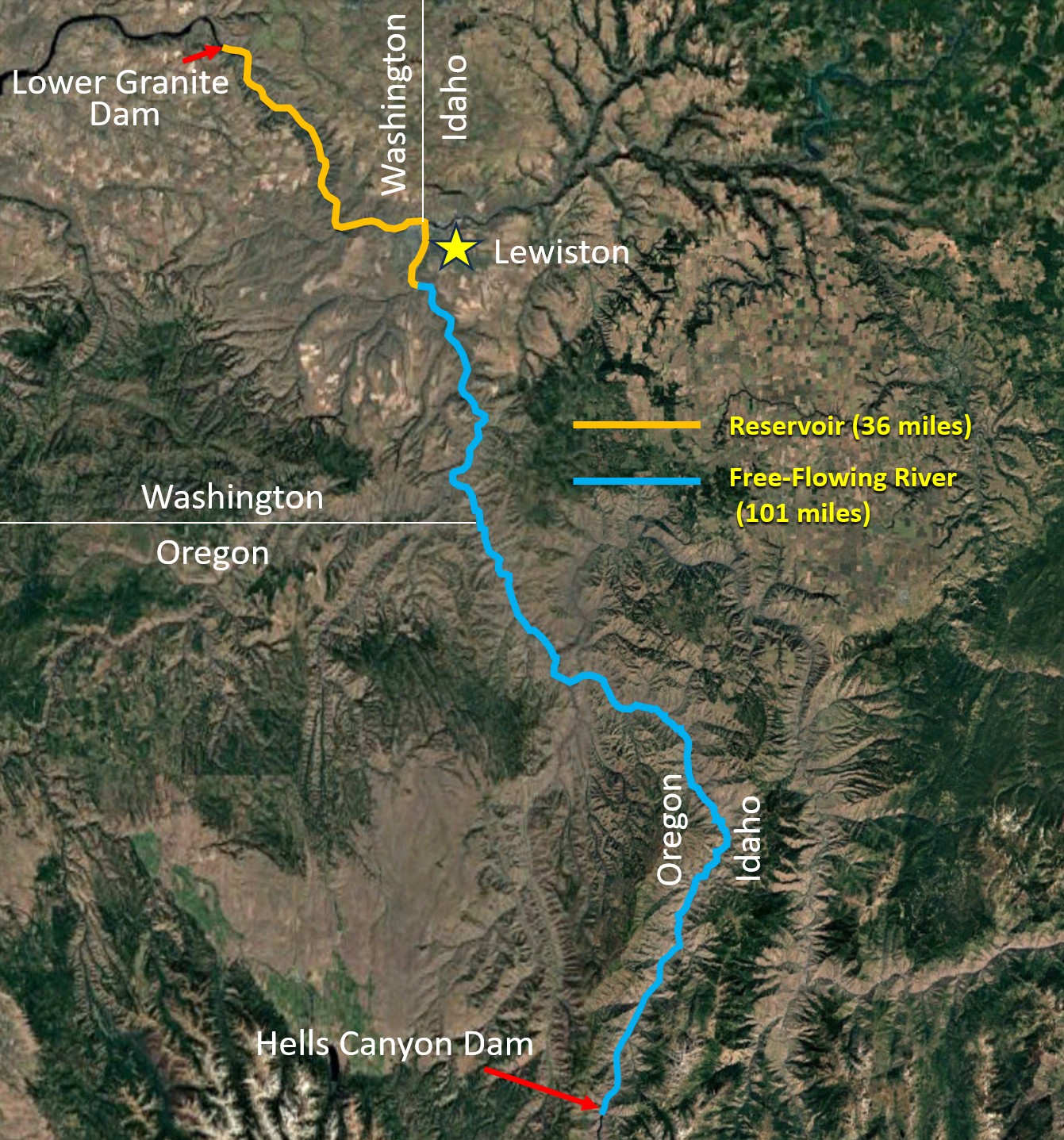
Historically, the Hells Canyon sturgeon population used to embark on migrations that would take them hundreds of miles downstream into the Columbia River (possibly even the ocean) and back. This type of migration allowed these fish to seek out and use habitat types that would be most beneficial during different stages of their life. We know this occurred because, genetically, the Hells Canyon sturgeon population is very similar to those that live in the Columbia River, and we still observe sturgeon passing over the lower Snake River dams as they try to continue the migrations their ancestors once completed to maximize growth and survival. The completion of the Hells Canyon Dam complex in 1967 and the lower Snake River Dam complex in 1975 confined this population to a 137-mile reach between Lower Granite Dam and Hells Canyon Dam (see map below). Those fish that pass over Lower Granite Dam are lost from the system as no sturgeon has ever been observed ascending its fish ladder. 

Map of Hells Canyon sturgeon population

Size Structure and Abundance

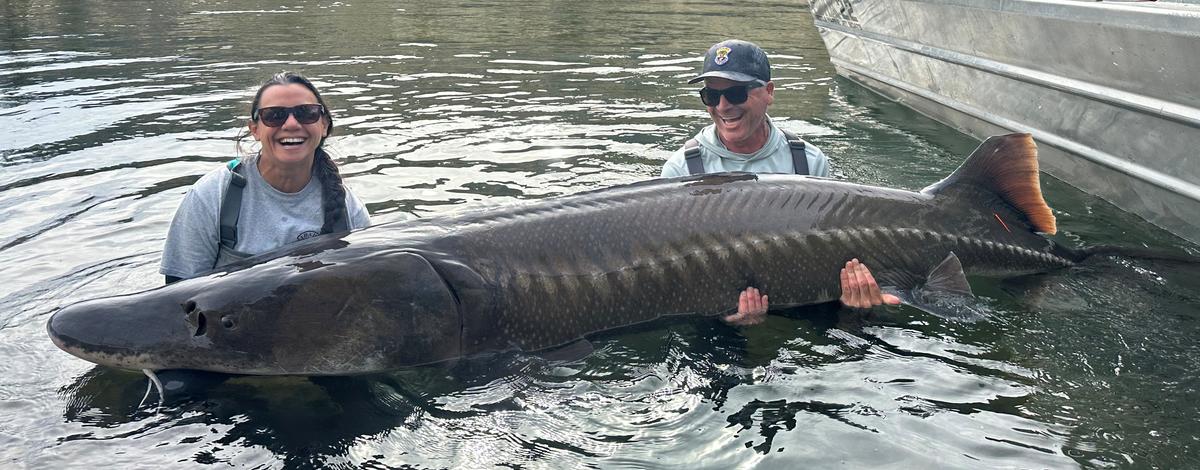
We have been researching the Hells Canyon sturgeon population for over 50 years now. The first study occurred in the early 1970’s and found that few sturgeon over 4 ft occurred in this population due to overfishing. In 1970, the fishing regulations for sturgeon in Idaho were changed to catch-and-release due to the impact anglers were having on these fish. Future surveys showed the catch-and-release regulations made a difference as the abundance of sturgeon greater than 4 ft increased significantly over time. In 2013, researchers caught the first sturgeon in Hells Canyon that exceeded 10 ft long since work began in the early 1970’s. More recently, sturgeon that weighed over 500 pounds have been caught (see photo below of one of these fish) which exceeds Idaho’s state rod-and-reel record of 394 pounds that was caught back in 1956. 

Large sturgeon sampled from Hells Canyon

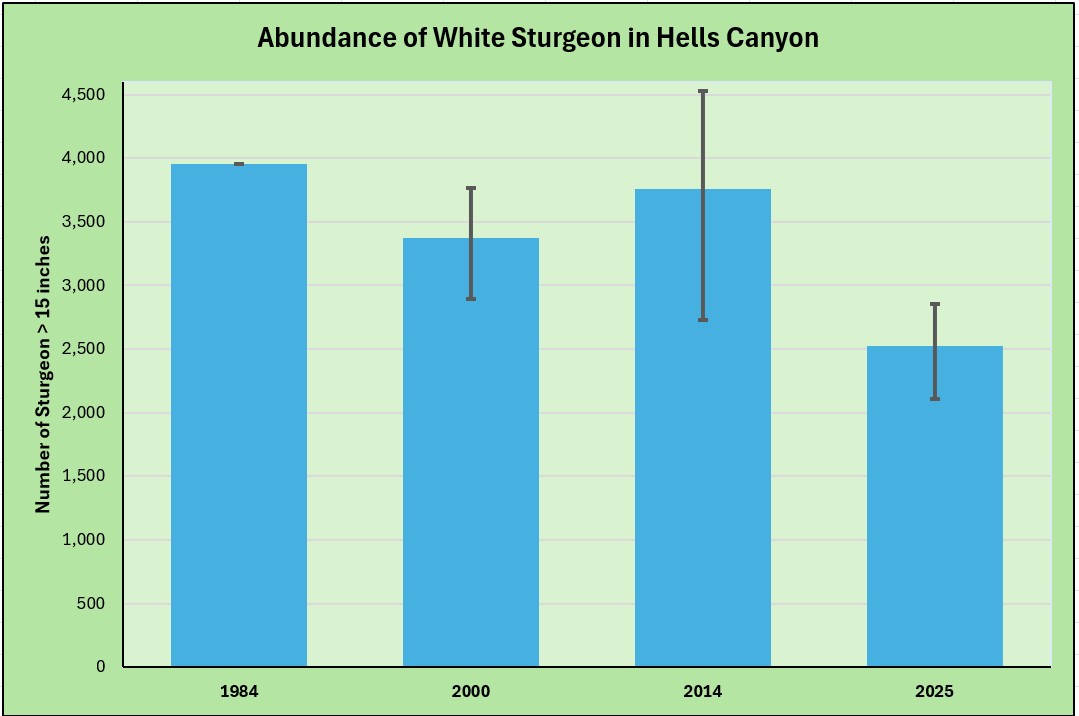
Despite the benefits that the catch-and-release regulations had on the size distribution of this sturgeon population, there was an underlying problem that didn’t become apparent until about 2014. When we started looking more closely at the data, we realized that even though the abundance of spawning sized fish (fish over 6 ft long) was increasing, the number of juvenile fish (fish less than 3.5 ft) had continually been declining since the 1970’s. With this troubling trend, it was evident that at some point in time the entire population would begin to decline. Unfortunately, that time is now. A two-year population survey was completed just this fall (2025), and it shows the entire sturgeon population has declined by 33% over the last 10 years (see figure below). 

Sturgeon abundance in Hells Canyon 1984-2025

Growth Rates

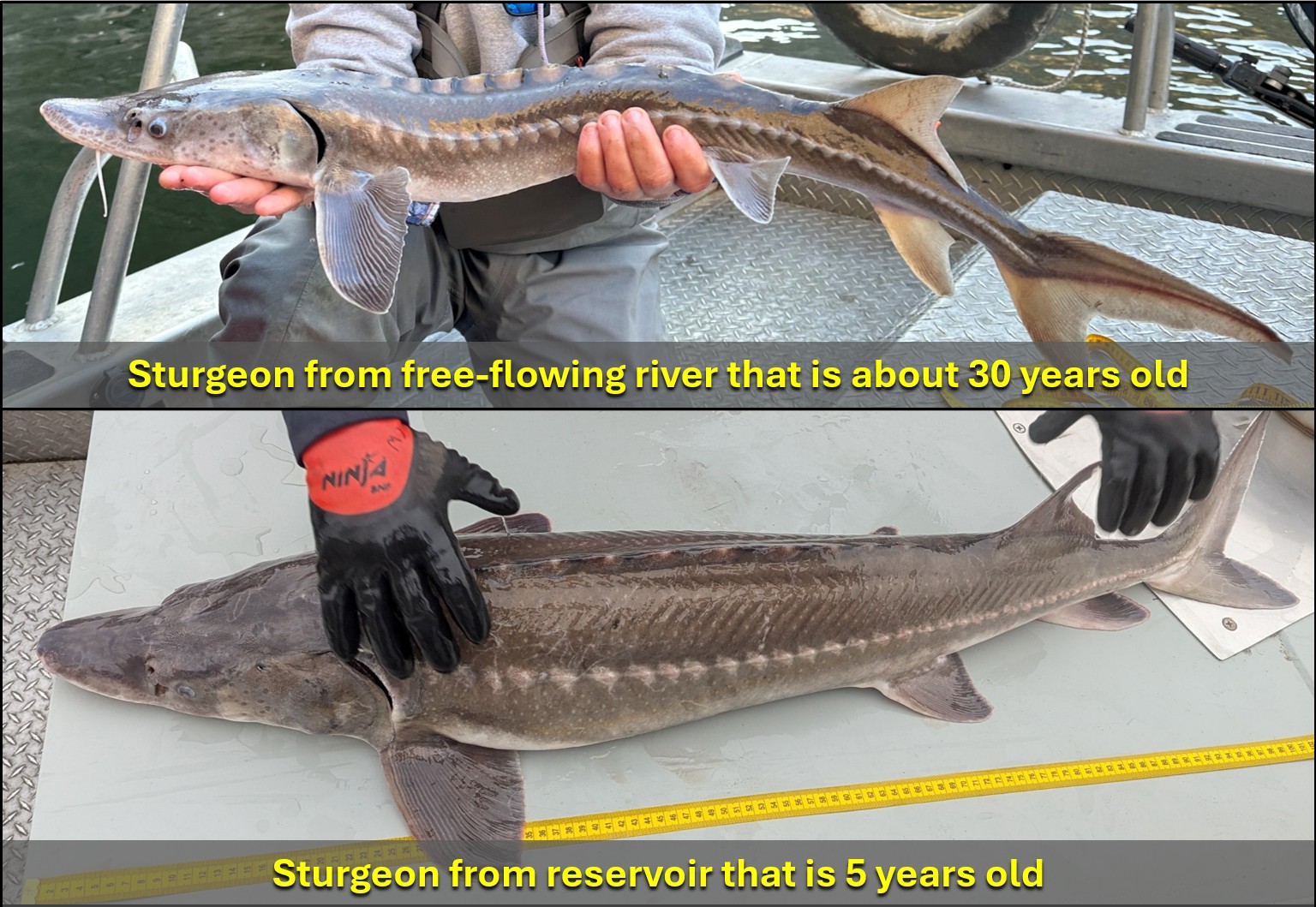
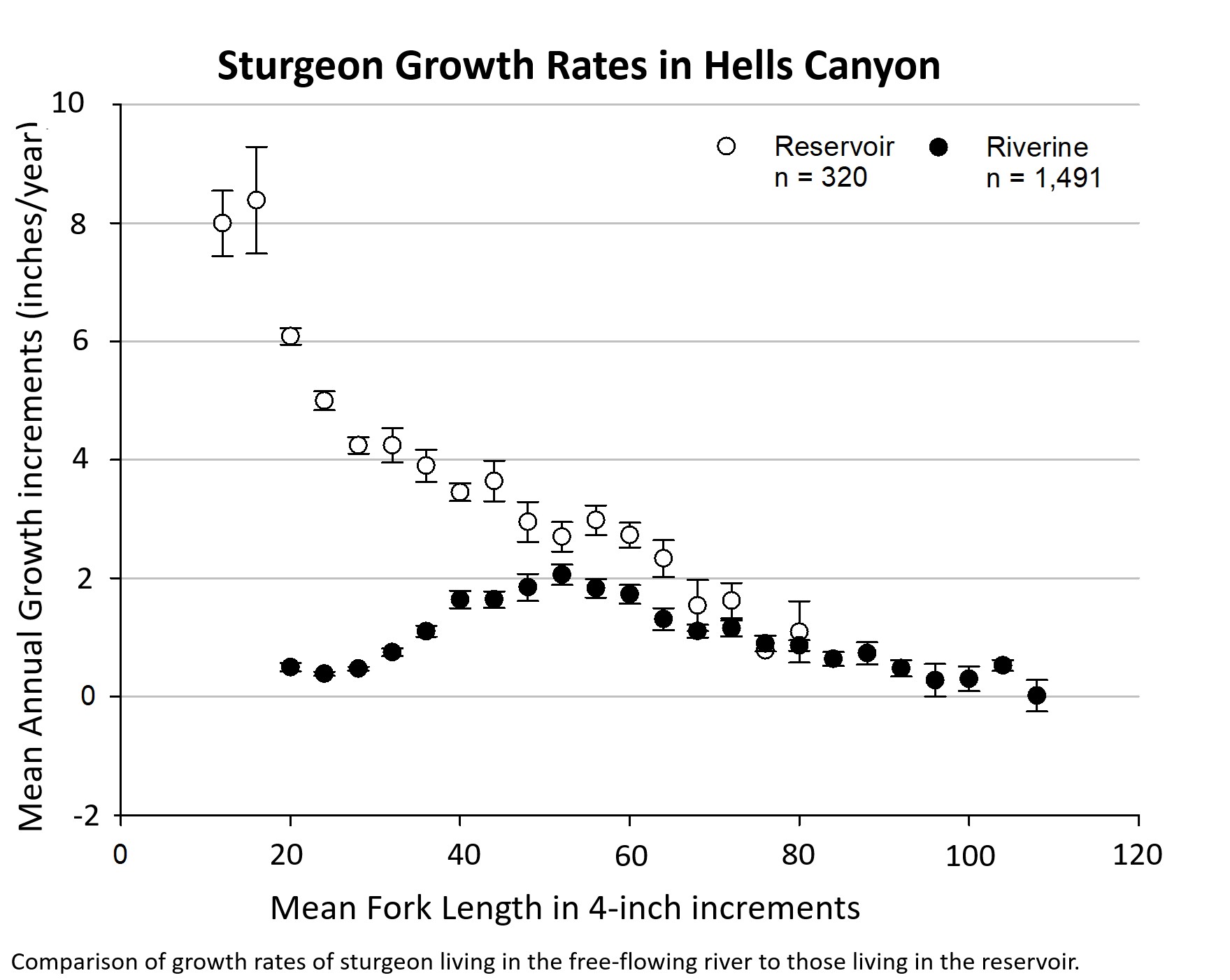
Another interesting thing we have learned about this sturgeon population is that their growth rates are extremely variable depending on where they live. We know how fast these sturgeon grow because we have recaptured numerous PIT tagged sturgeon over the years. Small sturgeon (< 3.5 ft long) that live in the free-flowing river grow extremely slow. In some of the deep slow pools that small sturgeon commonly use in the free-flowing river, they grow less than 1/4 inch a year. Few of these fish will live long enough to grow to sizes (> 6 ft long) when they will begin to spawn. Comparatively, fish that we recaptured in the reservoir that were only 5 years old were larger than some of the 30-year-old fish we caught in the free-flowing river (see picture below for comparisons). This marked differences in growth rates between the river and reservoir can be explained by differences in food availability in these two systems. Once sturgeon reach around 4 ft in length in the river, their growth rate picks up considerably (to about 2.5 inches a year) which will allow them to reach maturity in 10 to 20 more years. We suspect this change in growth rates occurs because they start using different habitats due to increased swimming strength and stamina and because their increased mouth size enables them to eat a broader range of food.

Sturgeon from the free-flowing river compared to the reservoir

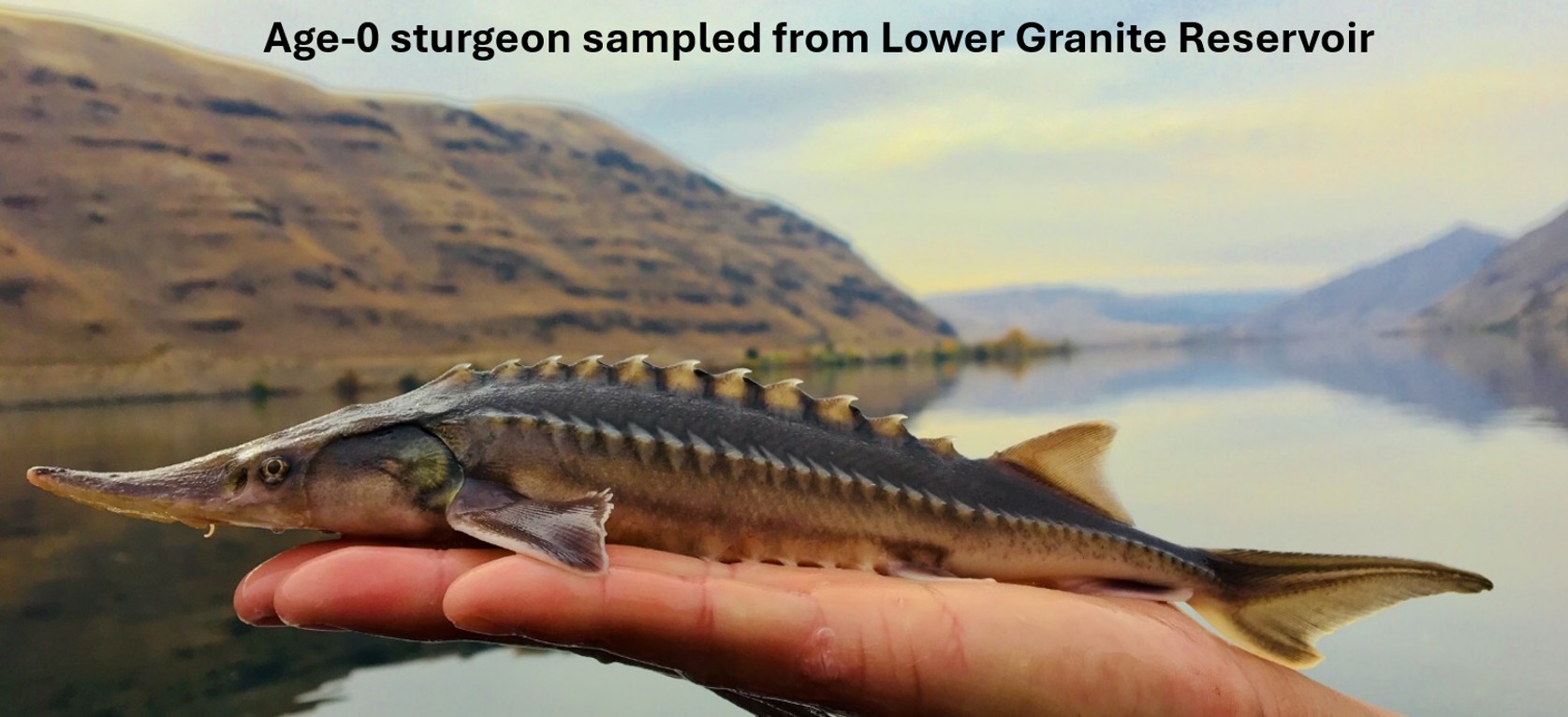
Intensive surveys over the past 10 years have not collected any age-0 sturgeon (sturgeon during their first year of life) and only a couple age-1 sturgeon (one-year-old fish) in the free-flowing river. Although most newly hatched sturgeon are genetically programed to migrate downriver, in the 1970’s some age-0 and age-1 sturgeon were sampled from the free-flowing river. We suspect the reason age-0 and age-1 don’t occur in the free-flowing river now is because the food sources are not available for these young fish to survive.

Age-0 sturgeon gillnetted from Lower Granite Reservoir

Those fish that migrate to the reservoir have a chance to survive as the food sources are available there. Those fish that survive in the reservoir will eventually migrate back up into the free-flowing river where they will spawn. What is interesting is that some of these fish will migrate from the reservoir back into the river when they are less than 2 ft long and barely grow. Others will wait five or more years until they are longer than 4 ft before migrating back into the river. Fish that wait will be able to continue growing at good rates when they migrate back into the river and could reach spawning sizes as early as 20 years old.

Incremental growth rates of sturgeon sampled from the river and reservoir

One of the questions people commonly ask me when they catch a large fish is, “how old do I think it is?” This is a difficult question to answer because it all depends on how long they stayed in the reservoir. A 9 ft long sturgeon could range anywhere from 50 to 100 years in age depending on how long it spent in the reservoir. I suspect there are a few sturgeon in Hells Canyon that are 100 years old and were born before the dams were built. 

Recruitment

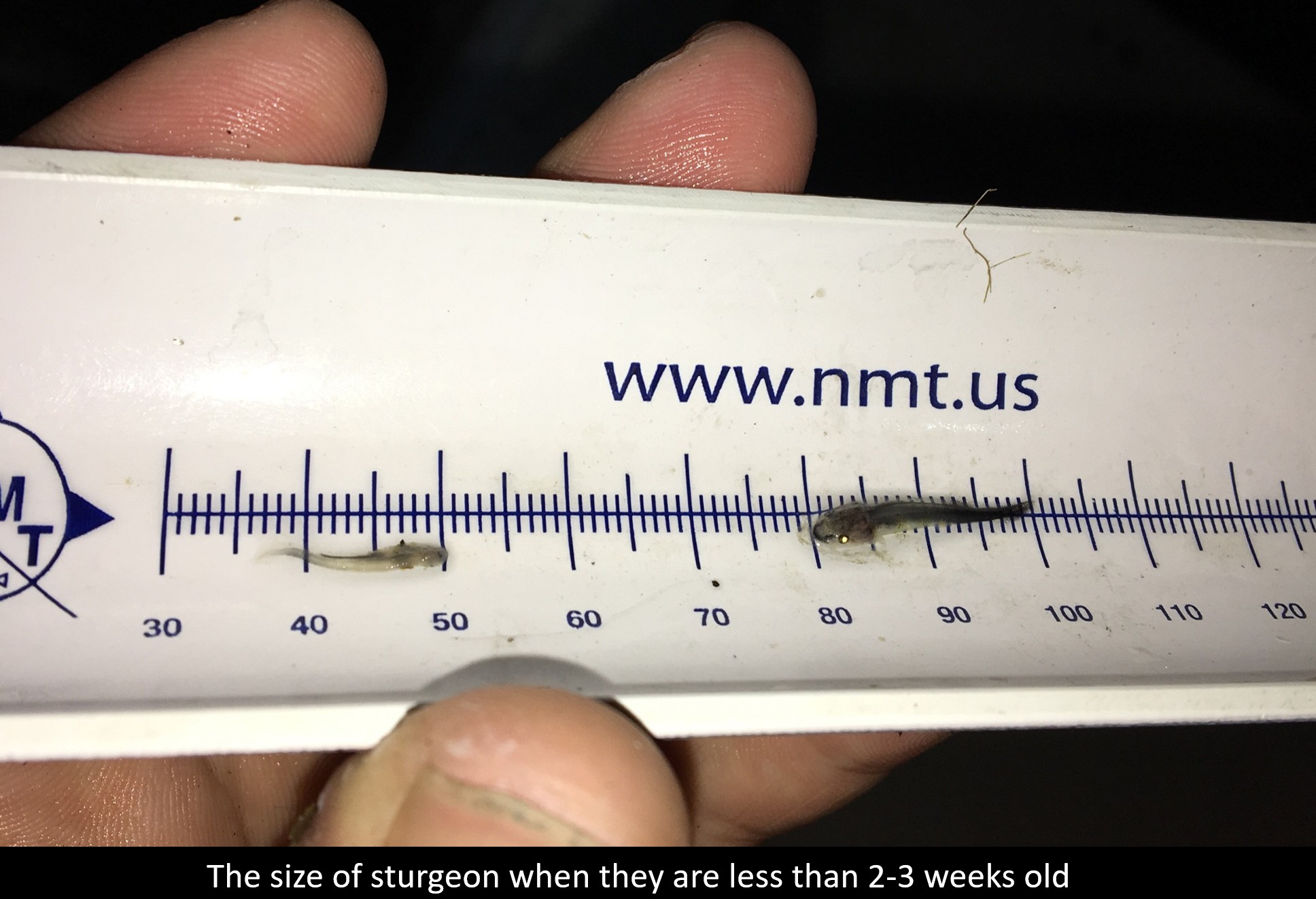
One last thing I want to bring to your attention about the status of this sturgeon population is their ability to successfully produce offspring has changed significantly in recent years. The most vulnerable period in a sturgeon’s life spans from when they are an egg up to the time when they reach 2 to 3 inches long. This is when everything can and wants to eat them and when they are more susceptible to disease and harsh environmental conditions. For this blog, when I mention “recruitment”, I am referring to the ability of sturgeon to spawn and produce offspring that survive through this early period of their life.

Age-0 sturgeon collected in the spring

In the late 1980’s and early 1990’s, research that occurred in Lower Granite Reservoir found that successful recruitment occurred every year regardless of how much river flow there was. The figure below displays gill net catch rates of age-1 sturgeon in Lower Granite Reservoir since 2013. Those years with a red “X” above them are year classes when no detectable recruitment occurred (no age-1 sturgeon were sampled). What this figure shows is that since 2013 there has been no detectable recruitment during half the years. Additionally, there has been “meaningful” recruitment during only one year, 2017, which is the highest flow year we have seen in Snake River since 2013. It appears now that higher flow events are necessary for successful recruitment to occur. This new change is alarming as the type of flow event that appears necessary for meaningful recruitment to occur does not occur very frequently.

Gill net catch rates of age-1 sturgeon from  Lower Granite Reservoir

The combination of a declining abundance of juvenile fish since the early 1970’s, slow growth rates of fish less than 3.5 ft long, and the recent decline in recruitment is alarming. Please read on to understand why these alarming trends are occurring and some of the things we are doing to try and reverse these trends.


WHY ARE WE SEEING THESE ALARMING TRENDS?

Entrainment 

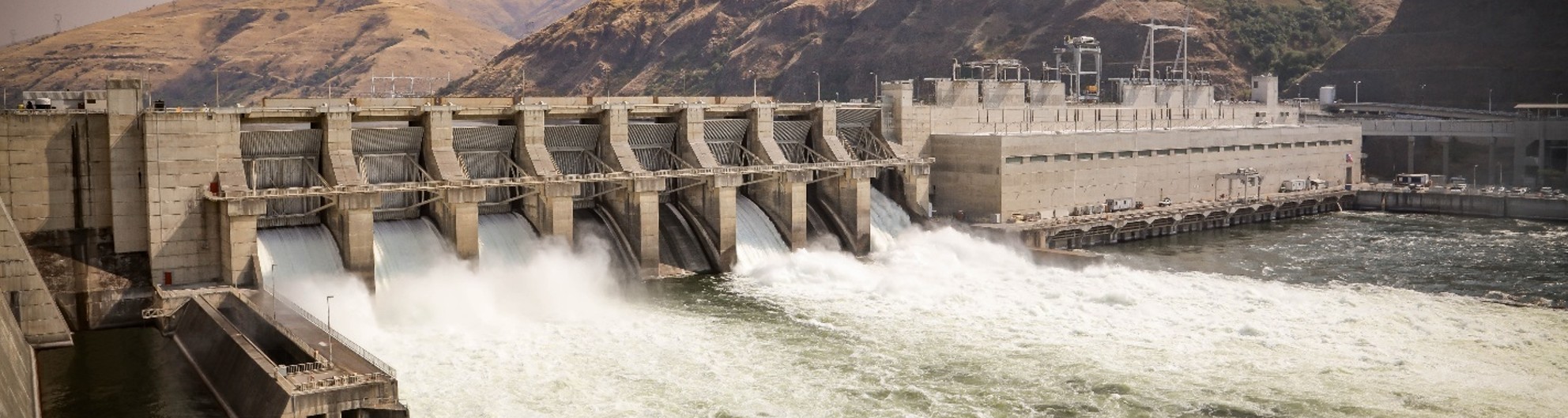
Lower Granite Dam

We know sturgeon entrain (pass over or through) past Lower Granite Dam every year based on PIT tag detections at the dam and observations at the juvenile fish facility. We have never conducted a study to specifically evaluate how many sturgeon entrain past Lower Granite Dam every year. However, using information from different research projects that have occurred on this sturgeon population, we can estimate how significant entrainment over Lower Granite Dam is. This data suggests that 50-80% of the sturgeon that survive past their first few weeks of life in the reservoir entrained past Lower Granite Dam. This is an alarmingly high percentage of fish. Indications are that entrainment has increased in recent years potentially due to increased spill over Lower Granite Dam, so entrainment may not always have been this high. However, various sources of data suggest that entrainment has always been significant and helps explain why the number of juvenile sturgeon in the Hells Canyon population has been slowly declining since the Lower Snake River dam complex was completed. It is my belief that the Hells Canyon sturgeon population has never been self-sustaining since the lower Snake River dam complex was completed in 1975 due to this entrainment. 

Food Limitation

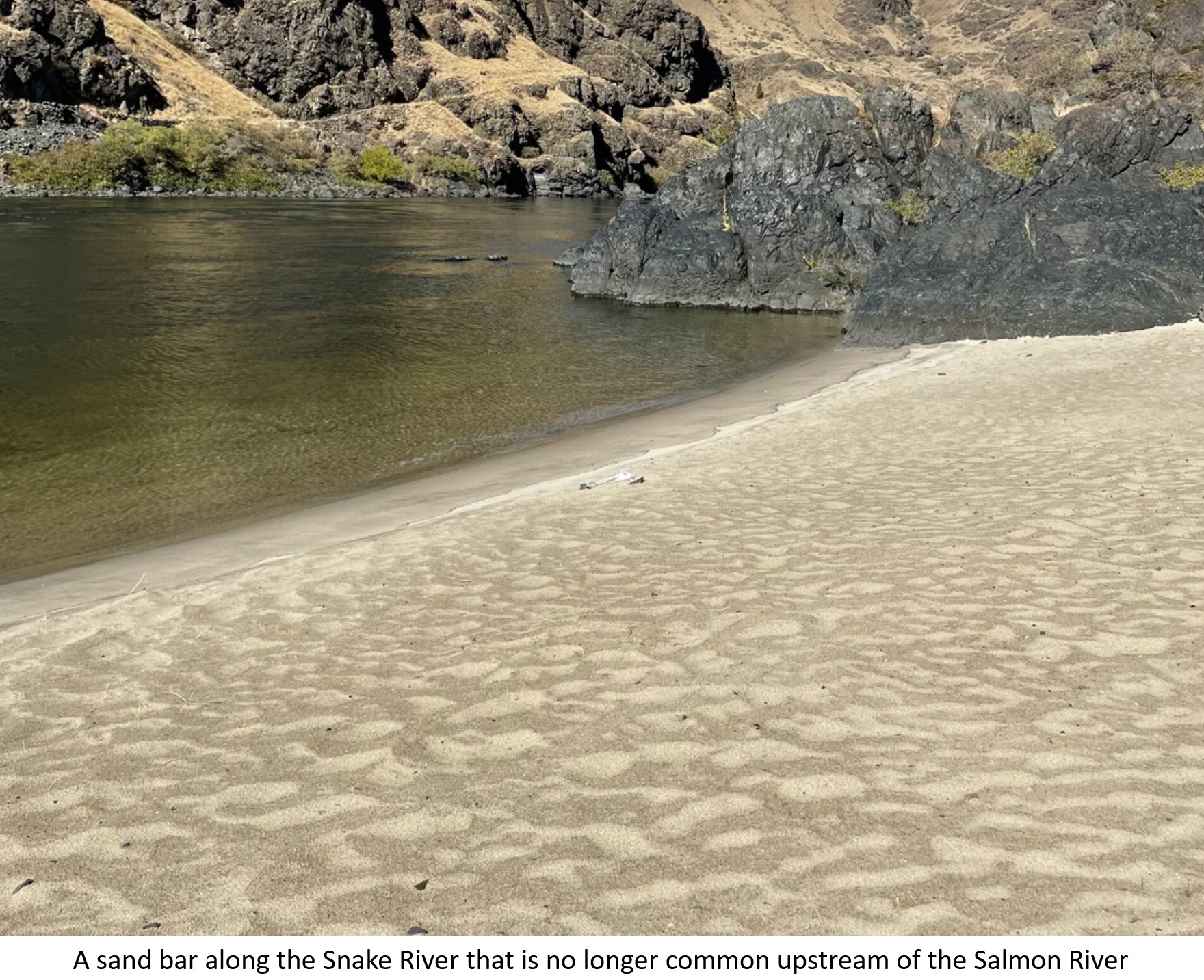
Earlier I mentioned that we suspect the reason age-0 and age-1 sturgeon don’t occur in the free-flowing river now is because sufficient food sources are not available for them to survive through their first year of life. Work conducted in the early 1970’s found that fish born before the Hells Canyon Dam complex was completed grew faster than fish born after. Those who have spent time in Hells Canyon have probably noticed that upstream of the Salmon River, there are very few sand bars. That is because the Hells Canyon Dam complex is capturing much of the sand and other sediments that historically used to move down into this reach of river. Important food sources for young sturgeon depend on these smaller substrates to thrive such as burrowing insects (chironomids, dipterans) and young lamprey (ammocetes). Additionally, with fewer salmon and lamprey returning to the Snake River than historically did, the nutrients and food source they provided for sturgeon are not near as plentiful.

Sand bar in Hells Canyon

Changes in Biota

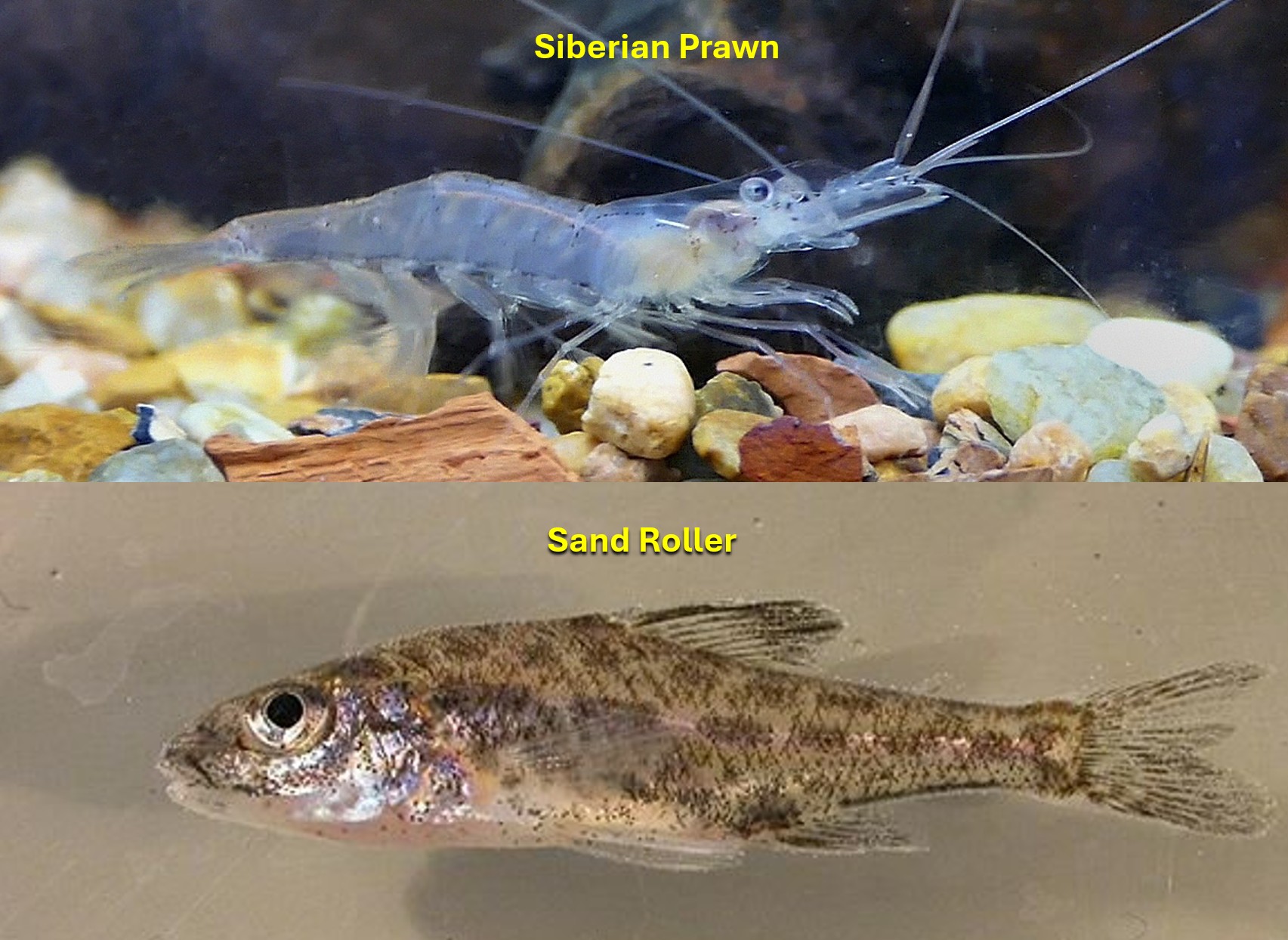
I have investigated many possible explanations for what could cause the recent change in sturgeon recruitment where now only meaningful recruitment occurs during higher flow years. Based on this investigation, one thing stands out that matches up with the timing of when this change occurred and that can explain why we now only see meaningful recruitment in high flow years. This change is the establishment of new biota in Lower Granite Reservoir. This change in biota all started with the establishment of a small half-inch crustacean known as Neomysis mercedis or the “opossum shrimp”. They were first detected in 1994 in Lower Granite Dam and by 2014 billions of these animals lived along the reservoir bottom. These small creatures provide a plentiful and high calory food source for other small animals that will feed on them. Two animals that took advantage of this newly established food source include the Siberian prawn and a small fish called the Sand Roller. The primary food source for both of these animals is opossum shrimp which allowed them to explode in abundance (there are millions of them in the reservoir now) after opossum shrimp became established. Both will live in deep water that newly born sturgeon use in the reservoir, and even though few exceed four inches in length, they will eat small fish they catch – the size of newly hatched sturgeon. The fact that the abundance of these small fish-eating animals exploded around the same time sturgeon recruitment declined makes it apparent to me that they are the smoking guns.

Siberian prawn and sand roller

My explanation for why young sturgeon appear to survive better in higher flows revolves around the fact that both Siberian prawns and Sand Rollers do not like higher water velocities. During high flow events, both will move off to the sides of the reservoir until water velocities decline. When young sturgeon first enter the reservoir, many will seek refuge in the deeper higher velocity area of the reservoir. My working theory is when we have high flows it creates a refuge for these small sturgeon that will last long enough for them to grow to a size where Siberian prawns and Sand Rollers can’t eat them. I suspect a sturgeon will only have to grow to around two inches before that happens which may only take two or three weeks.

WHAT ARE WE DOING ABOUT IT?

Downstream Translocation

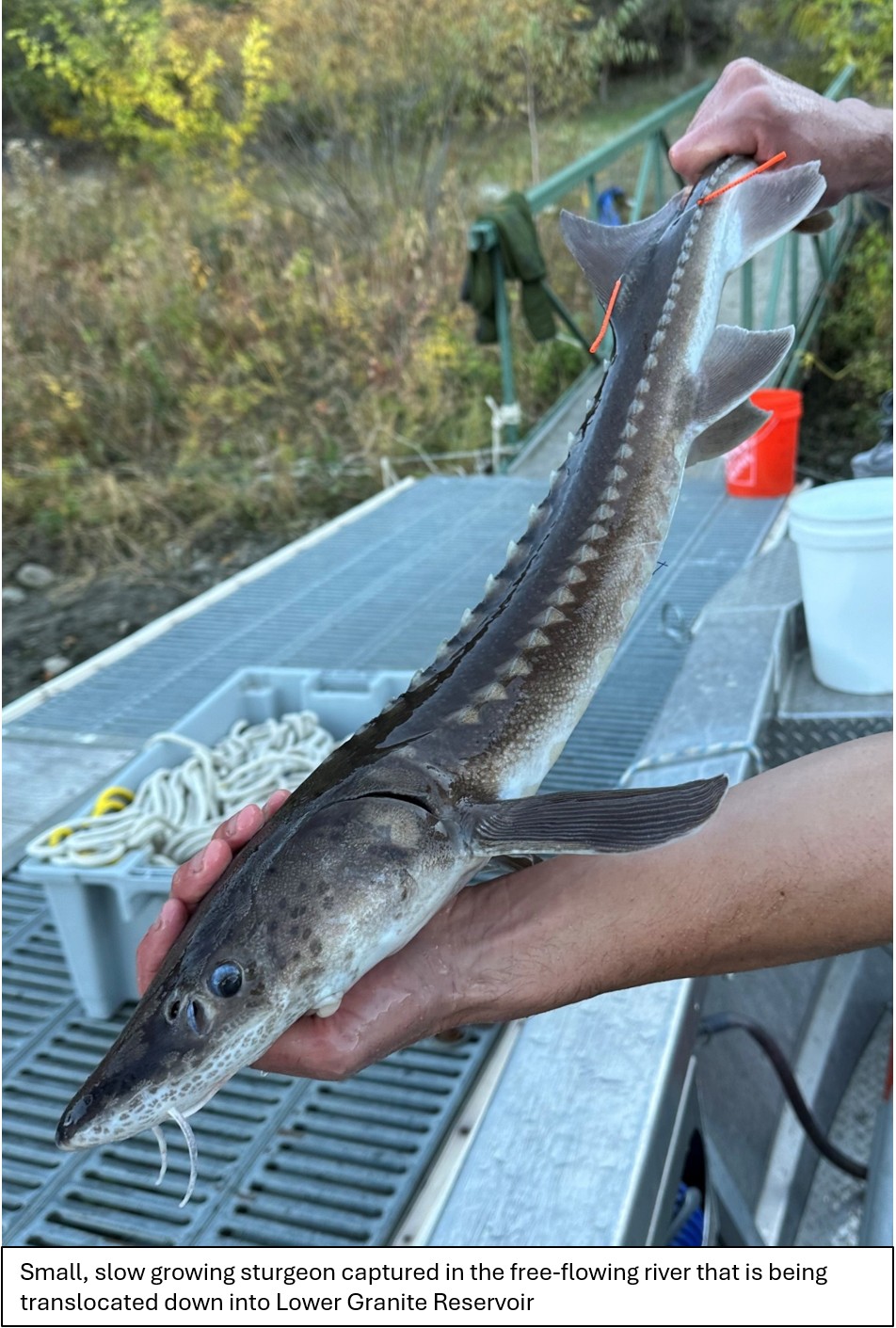
In 2021 we wrote a blog titled “Can We Get Juvenile White Sturgeon To Grow Faster?” (click here to read blog). In this blog, we wrote about a pilot study that was designed to evaluate whether moving small, super slow growing sturgeon from the free-flowing river into the reservoir would result in more of them being able to grow into adult spawning sized sturgeon. Since this initial effort in 2021, we have transported 324 juvenile sturgeon from the free-flowing river down into the reservoir. Over 80 of these fish also had acoustic tags surgically implanted in them to help us understand their movement patterns. 

Skinny sturgeon from Hells Canyon

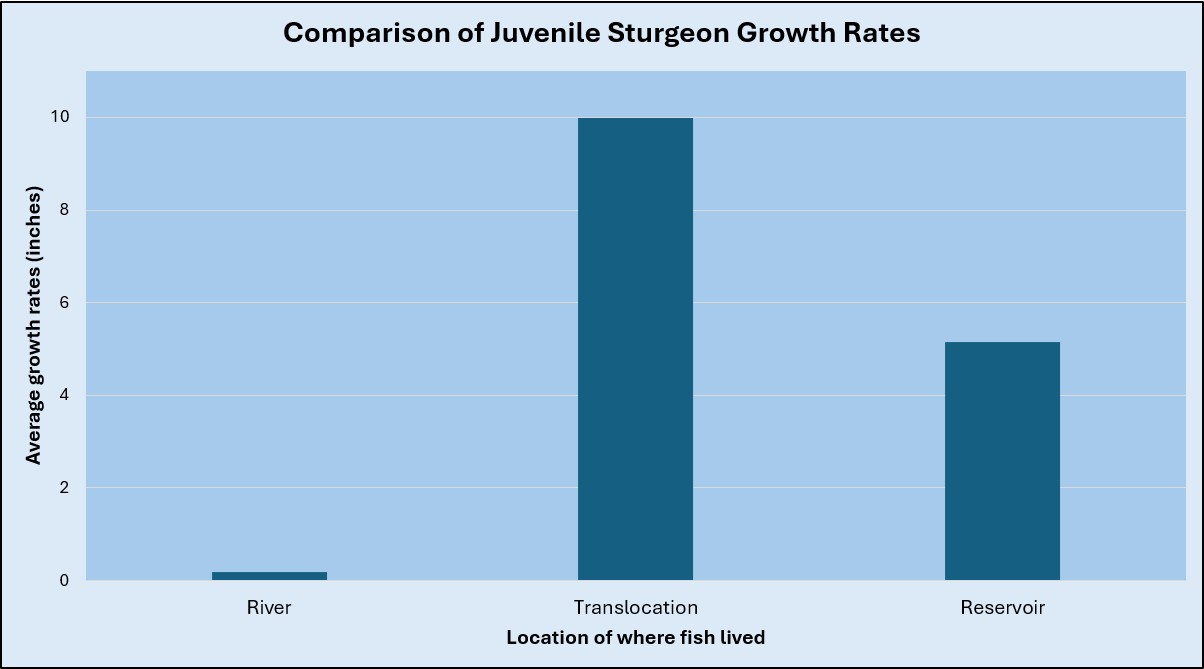
Through gill net and set-line sampling efforts, many of these translocated sturgeon have been recaptured teaching us whether this strategy can be effective in increasing the number of spawning sized fish in the future. One of the amazing things we learned is that the growth rates of fish we translocated downstream increased dramatically (over 50 times faster than before they were moved) if they stayed in the reservoir. The figure below compares the growth rates of translocated sturgeon (2 ft to 3.5 ft total length) to similar sized sturgeon that were recaptured in the river and reservoir. What is amazing is that the fish translocated to the reservoir even grew fasters (twice as fast on average) than fish that were already living in the reservoir. It appears that after hardly eating for years that the translocated sturgeon became gluttons gorging on the abundant food sources that occurred in the reservoir. What is promising is that if the translocated sturgeon stay in the reservoir they will grow past 4 ft in total length in two years. Those same fish if they remained in the river would not have exceeded 4 ft for another 30-60 years. As I indicated earlier, once the translocated sturgeon exceed 4 ft in length, they can migrate back to the river and continue growing at a good rate and reach their spawning size in another 10 to 20 years.

Growth rates of translocated sturgeon

The other important thing we learned about the translocated fish with acoustic tags in them is that about half of them entrained downstream over Lower Granite Dam. This obviously is not ideal because these fish have no way to return back to Hells Canyon without help from us. However, because the growth rates of the sturgeon that remained in the reservoir were so high, the odds they will survive long enough to reach spawning size far outweighs the odds that they would have reached spawning size if we did not translocate them. 

Upstream Translocation

As indicated earlier, recent data suggests that over 50% of each year-class (the year they were born) of sturgeon will entrain over Lower Granite Dam. Evidence also suggests that those sturgeon that try to spawn downstream of Lower Granite Dam produce few to no offspring that survive. That means the vast majority of sturgeon that occur downstream of Lower Granite Dam in the Snake River were born in Hells Canyon. Unfortunately, once sturgeon entrain over Lower Granite Dam, they have no way to return and essentially become a biologic dead end – they will never be able to produce offspring to contribute to any sturgeon population. This understanding has spurred a team of fisheries managers to implement a pilot study that started this fall to evaluate whether sturgeon occurring below Lower Granite Dam could be translocated back upstream of the dam and ultimately spawn in their historic spawning grounds (Hells Canyon).

Sturgeon being fitted with acoustic tag

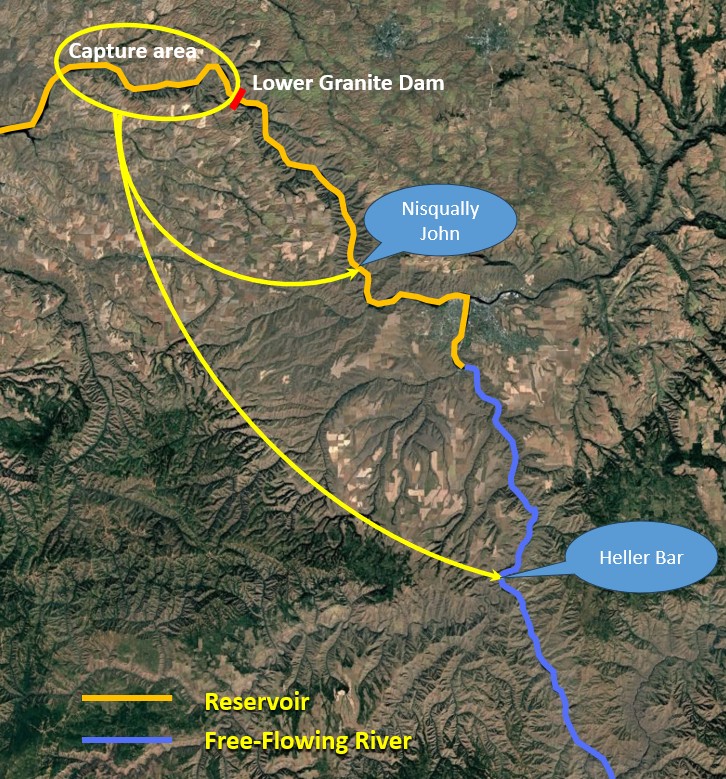
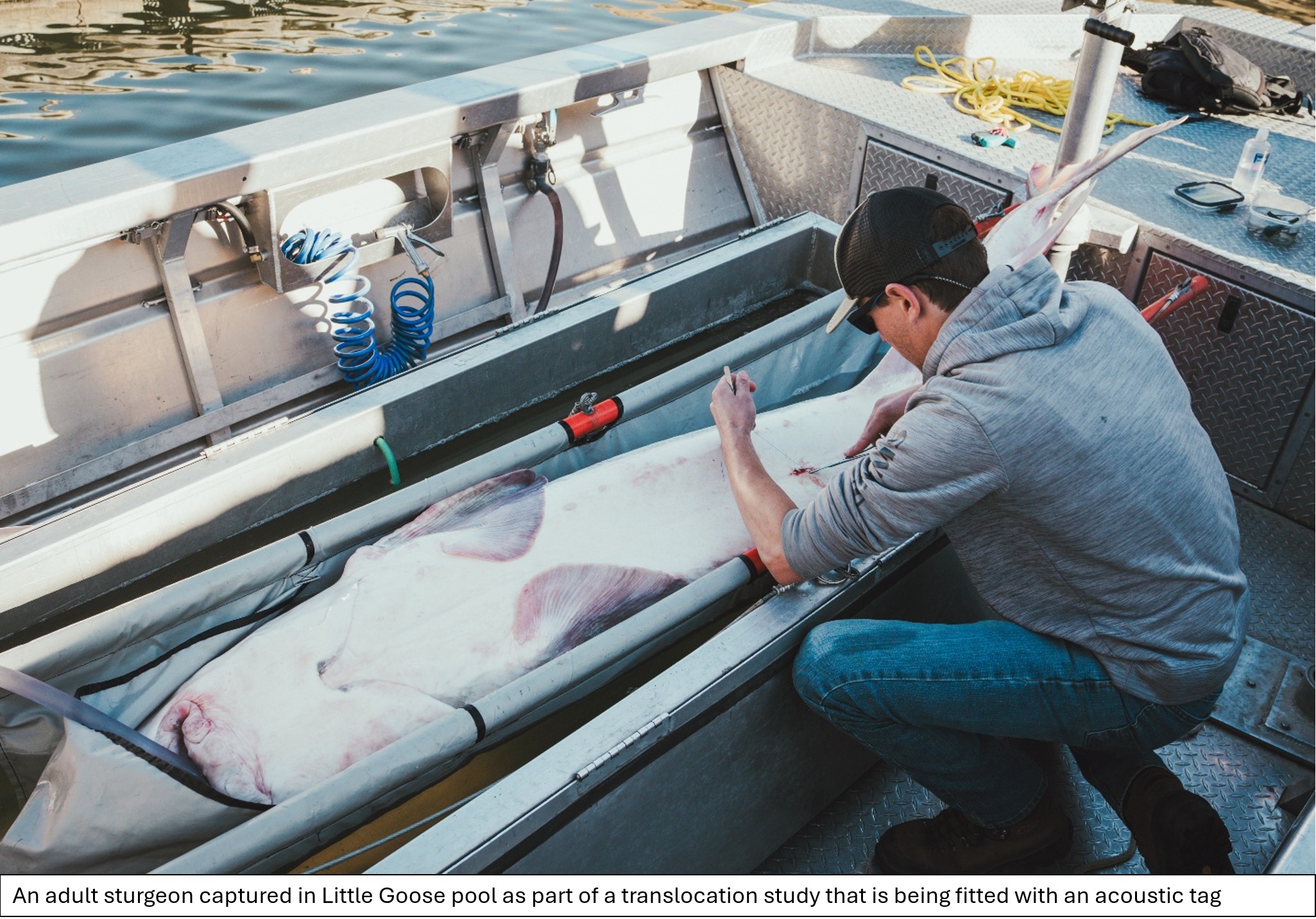
The goal of this study was to insert acoustic tags in 44 sturgeon > 4 ft in length that were captured downstream of Lower Granite Dam (in the Little Goose pool), translocate them back upstream of the dam (see map below), and then track them for the next five years to see if they will remain upstream of the dam and move into known spawning areas during the spawning season. This was a large collaborative effort that started this fall and involved the Idaho Department of Fish and Game, Washington Department of Fish and Wildlife, Oregon Department of Fish and Wildlife, Idaho Power Company, Nez Perce Tribe, and Yakima Nation. 

Map of translocated sturgeon

The start to this pilot study turned out to be a huge success as we were able to exceed our goals. We ended up capturing and translocating 80 sturgeon upstream of Lower Granite Dam. Twenty-one acoustic tagged sturgeon plus another 36 fish that were just PIT tagged were released at Nisqually John boat ramp in the Lower Granite pool, and another 23 acoustic tagged fish were released at Heller Bar boat ramp in the free-flowing river. Twenty-seven of the translocated fish were over 6 ft long and should be ready to spawn in the next few years. The video below shows us releasing an adult sturgeon at Heller Bar to an area where it likely was born many years ago.

The Idaho Power Company has set up receivers in key locations that will allow them to track these sturgeon over the next five years. We are already seeing some interesting movements from these fish. Of the 23 sturgeon released at Heller Bar, 11 have been detected moving to or past the next receiver nine miles upstream. One sturgeon made this 9-mile migration in one day and five days later reached the next receiver 12 more miles upriver. One fish that was released at Nisqually John migrated over 42 miles upstream to Heller Bar in seven days. So far, only one sturgeon released at Heller Bar has been detected in the reservoir (over 30 miles downriver). Much of the receiver data has not been downloaded yet, so I can’t tell you whether any of the fish migrated back downstream over Lower Granite Dam. The movement of these translocated sturgeon will be tracked for at least the next five years and will help us understand whether upstream translocation is important management tool that can be used to help rebuild and stabilize this sturgeon population.
Modeling

Just recently, the Idaho Department of Fish and Game and Idaho Power Company has contracted with a professor at the University of Idaho to develop a model that will estimate the long-term trend in abundance for the Hells Canyon sturgeon population. When completed, not only will this model be able to estimate long-term trends in sturgeon abundance, but we will also be able to plug in different management tools such as upstream and downstream translocations to evaluate whether these actions will be enough to rebuild and stabilize this sturgeon population. Our hope is that we will have a working model in under two years. 
What if Translocating Sturgeon is Not Enough?

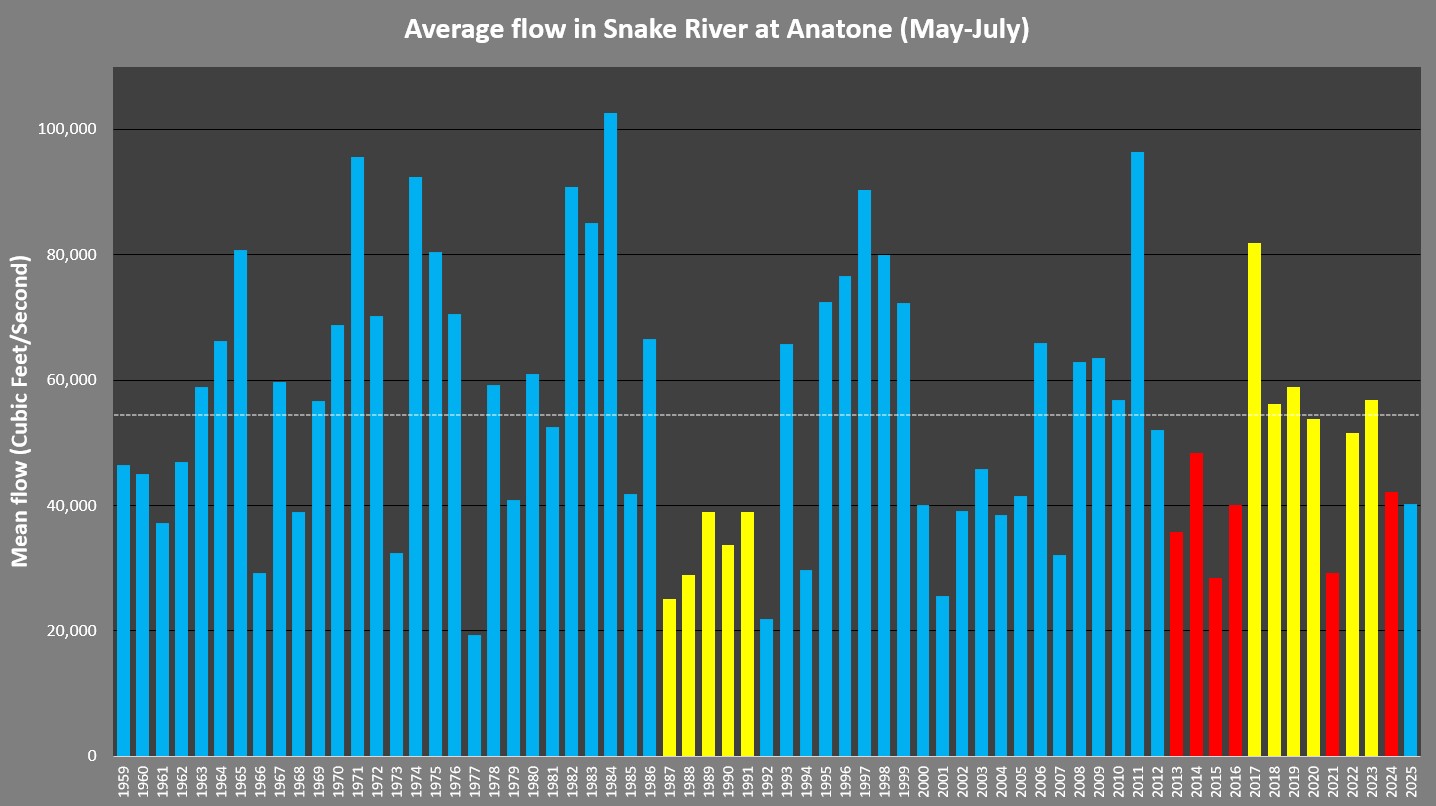
I want to share one last figure with you as it shows a very concerning trend that I want you to be aware of. The bars in the figure below show the average flows during May through July in the Snake River at Anatone (near Heller Bar) from 1959 to present. The reason it displays average flows during May through July is because this is the time when sturgeon spawn, the eggs hatch, and the newly born sturgeon drift down into the reservoir. This is the time period when these young sturgeon are most vulnerable. The red- and yellow-colored bars are the years when we have data that indicates whether there was detectable recruitment or not (survival through this vulnerable time period). The red bars indicate years when we did not detect any successful recruitment, and the yellow bars are the years when we did detect successful recruitment. The blue bars are years when we don’t have data to evaluate recruitment.

Snake River flows May-July

This figure shows that back in the late 1980’s and early 1990’s there was successful recruitment in all years, even in low flow years. Then, more recently, something changed (see section above on “Changes in Biota”) to where we now only detect recruitment in years when flows during May through July are average or higher. Additionally, the only year when we had meaningful recruitment in the past 12 years was 2017 when flow were significantly higher than any of the other years when we evaluated recruitment success. What has me really concerned is that we have only seen two flow-years like 2017 in the past 25 years. If the frequency of flow events necessary to produce meaningful recruitment continues to occur only once every 12-13 years, then it is likely this population will continue to decline even if we translocate all the sturgeon that entrain over Lower Granite Dam back upstream and move all the slow growing juvenile fish downstream. You just can’t maintain a population of fish when meaningful recruitment occurs only once every 12-13 years.

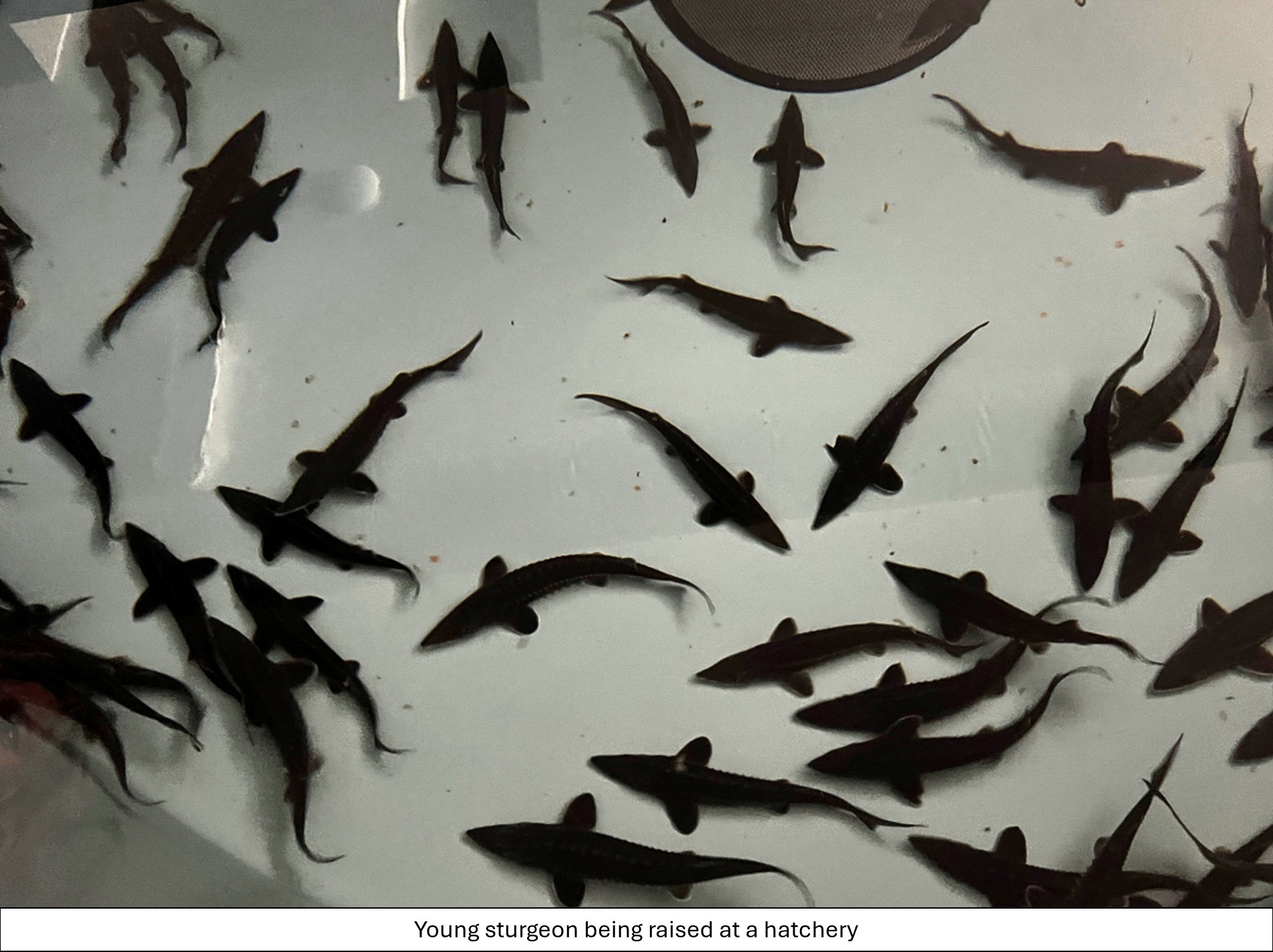
The Hells Canyon sturgeon population isn’t the only sturgeon population experiencing this problem. In fact, one could argue that every single sturgeon population in the Columbia River basin faces problems with limited natural recruitment and declining abundances. In some areas where recruitment failures were so extreme, we have turned to hatchery programs to maintain the populations. Some examples include the Kootenai River, Columbia River upstream of Grand Coulee Dam, and Snake River upstream of Bliss Dam. Each of these areas use different strategies for their hatchery programs, and it takes time to figure out what strategy works best for the natural population and from a monetary and feasibility standpoint. Hopefully these types of investigations will occur soon just in case it is determined that a hatchery program is necessary to rebuild and stabilize this population of sturgeon.

Young sturgeon at hatchery

There was a time not too long ago when we believed that the Hells Canyon sturgeon population was stable, robust, and self-sustaining. Unfortunately, we now know that this is not the case. Unless we start experiencing significant changes in river flows or the biota in Lower Granite reservoir, the decline in abundance that this sturgeon population is experiencing will continue and potentially get worse. I believe there are actions that we can take to rebuild and stabilize this population, but it will take commitment and collaboration between many different entities. Some of the collaborative actions that have been occurring in recent years make me optimistic that the future of the Hells Canyon White Sturgeon are in good hands.