From August to September in Idaho, adult Chinook salmon travel from their ocean feeding grounds to the freshwater streams where they were born to spawn. During these months, Fish and Game employees use careful ground walks and drone flights to survey Chinook salmon redds across the state. So, what is a redd, how are redds made, what are the different parts of a redd, and what does a redd look like?
Chinook salmon spawning: What are the parts of a redd and how are they made?
idfg-Rachael.Valeria
A redd is a gravel nest built by a female Chinook to deposit her eggs in; however, these redds are more complicated than most people think! First, a female Chinook will search for a suitable spot to build her redd, which is usually a gravelly location in the transition zone from a pool to a riffle. She may dig multiple test digs (Figure 1) before she decides on a final location.
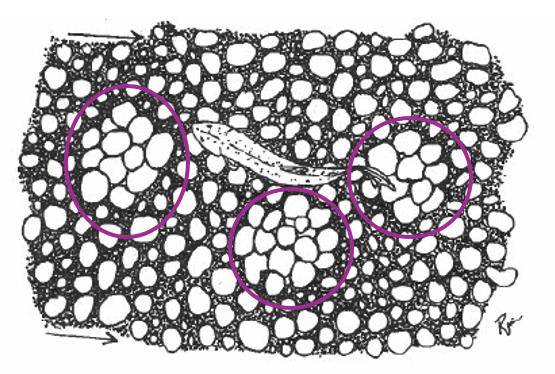
Figure 1: Chinook salmon test digs
Illustration shows an aerial view of a female Chinook salmon with three test digs in the purple circles. These test digs are assessed by the salmon after clearing the finer substrate from the larger gravel that can be shown, but it is not a full redd.
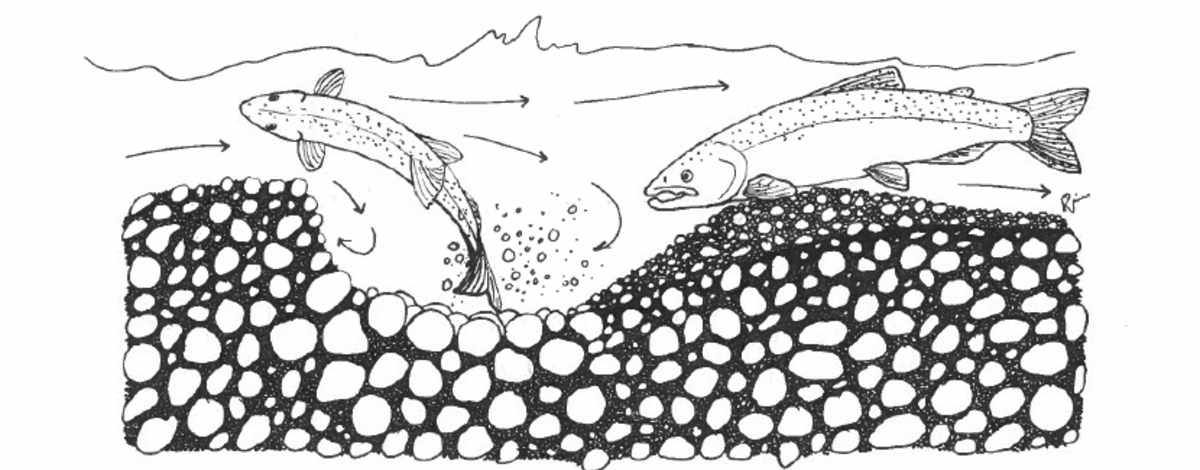
After finding a suitable location that will facilitate a constant flow of water over the eggs, she will clear out fine sediments, which threaten to suffocate the eggs when they are laid in the substrate. The resulting depression is called the pit and fertilized eggs will be deposited into the gravel behind the pit. This area, called the pillow, is where fine sediments are cleared and gravel is pushed into a pile over the eggs. Behind the pillow is the tailspill, which is where cleared fine sediments from the pit and pillow are spread out from the stream flow.
Figure 2 shows a side view of the parts of a redd that are being created and where the eggs are deposited. In drone surveys, redds are viewed from an aerial perspective, like Figure 3.
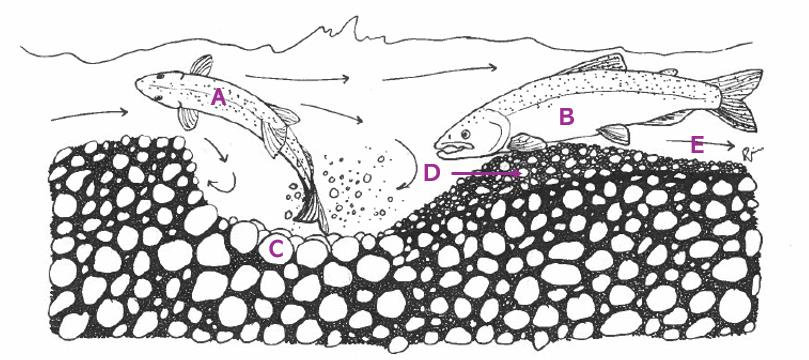
Figure 2: Sideview of redd construction and parts
Illustration of a female (A) and male (B) Chinook salmon in the process of creating a redd. The pit (C) is cleared of fine sediments, and fertilized eggs will be deposited into the gravel behind the pit. The pillow (D) is where fine sediments are cleared and gravel is pushed into a pile over the eggs. The tailspill (E) is where cleared fine sediments from the pit and pillow are spread out from the stream flow.
In drone surveys, redds are viewed from an aerial perspective, like Figure 3.
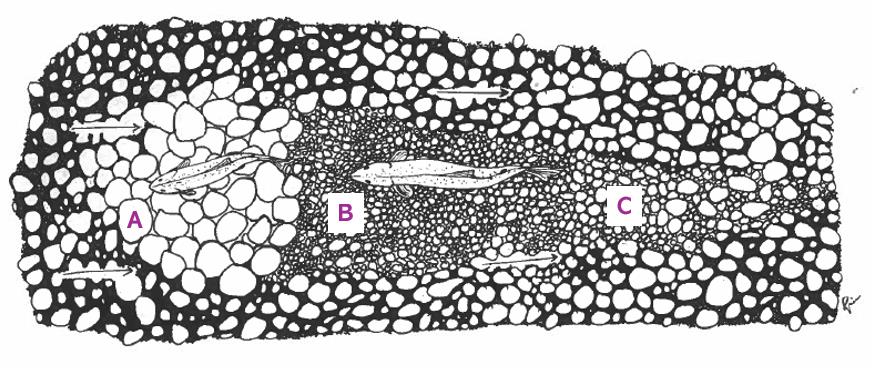
Figure 3: Aerial view of redd components
Illustration of an aerial view of a female (front) and male (back) Chinook salmon in the process of creating a redd. Also marked is the pit (A), pillow (B) where the eggs are deposited, and tailspill (C).
After the pit is dug by the female, she will also dig trenches towards both sides of the pit, funneling water towards the pit (Figure 4). This creates downwelling of water into the finished pillow and over the deposited eggs beneath the gravel. This downwelling helps keep the eggs clear of fine sediments. When the female completes her redd, she will deposit her eggs as a male (or multiple males) deposit milt (sperm) to fertilize the eggs.
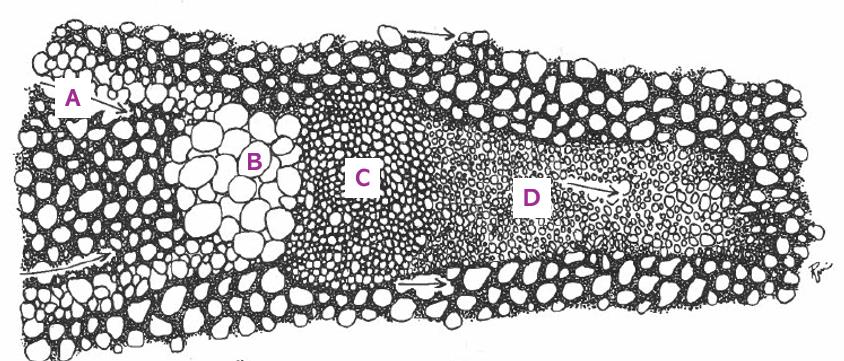
Figure 4: Completed redd components
Illustration of an aerial view of a completed redd, displaying the trenches (A), pit (B), pillow (C), and tailspill (D).
Figure 5 is a picture of a Chinook redd from one of the drone surveys and Figure 6 is a picture of what a Chinook redd looks like during ground walks.
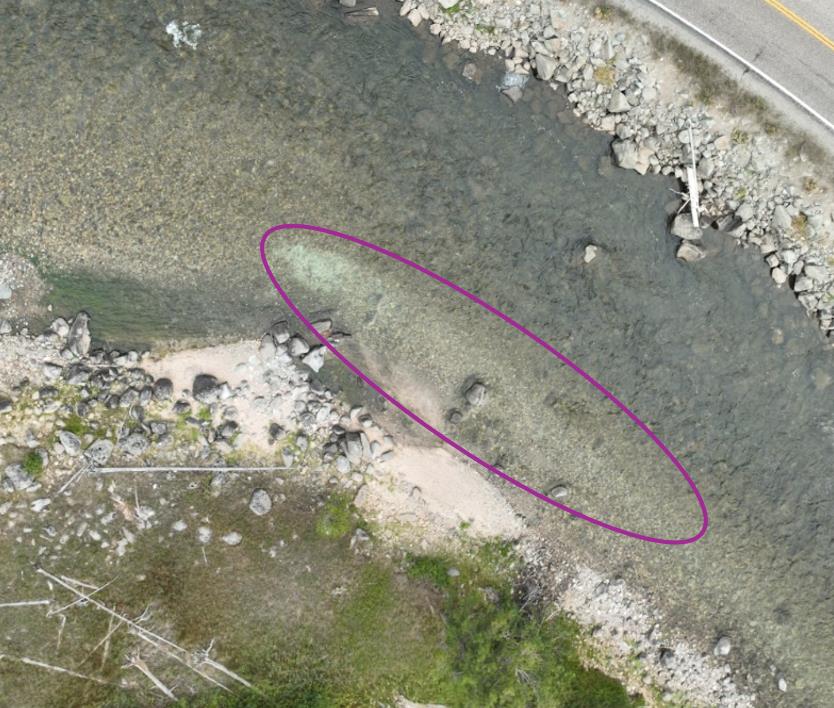
Figure 5: Aerial picture of a redd
Redd is circled in purple.
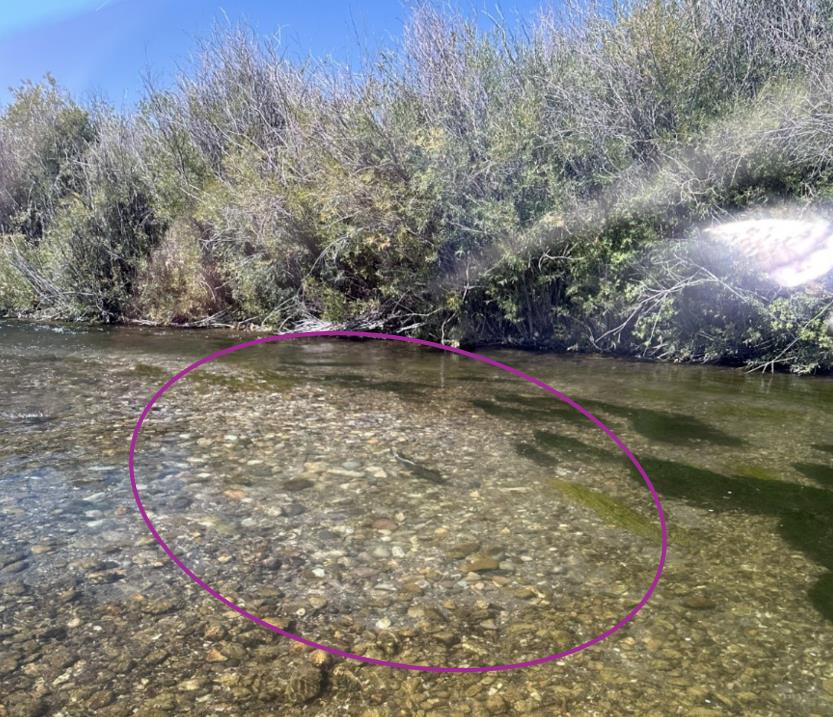
Figure 6: Ground level picture of a redd
Redd is circled in purple
For more information on wild fish, see IDFG’s web page on wild salmon and steelhead; Wild Salmon and Steelhead | Idaho Fish and Game. If you want to read more about salmon spawning, please refer to these other articles; Spring Chinook Spawning Season is in Full Swing | Idaho Fish and Game
Spring, summer, or fall – what’s the difference for Idaho’s salmon? | Idaho Fish and Game
What is a redd? Salmon keep cleaning out a 'nest' for spawning | Idaho Fish and Game
Learn how F&G identifies Chinook salmon redds from the air | Idaho Fish and Game
Fishery biologists are being trained to see redd | Idaho Fish and Game