
Get a front row seat to the birds-eye view of what happens in an osprey nest throughout their breeding season in Idaho. Watch in real time as these awe-inspiring birds of prey perform dramatic aerial courtship displays, bond over carefully delivered fish offerings, and prepare their nest for the eggs to come. Every dive, every call, every surprising moment — streaming live, unscripted, and absolutely unforgettable. Bookmark this page, tell your friends, and get ready to fall in love with ospreys.
The nest camera is located at the Salmon Outdoor Classroom in Salmon, a public space dedicated to providing educational opportunities, community space and wildlife viewing.
Salmon Outdoor Classroom Osprey Camera
Please note: Idaho Fish and Game is committed to providing live streaming footage of these birds for education, research, and public wildlife enjoyment. Please be aware that nature can sometimes be uncomfortable or difficult to watch, and you may witness challenging or distressing events as part of the osprey's natural life cycle. We will only intervene if a bird is harmed by human-caused factors, such as entanglement in baling twine.
Interesting facts about ospreys in Salmon
Osprey (Pandion haliaetus) are one of the most recognizable but unique birds of prey in Idaho. Found worldwide, these striking birds are piscivorous and subsist on only fish.
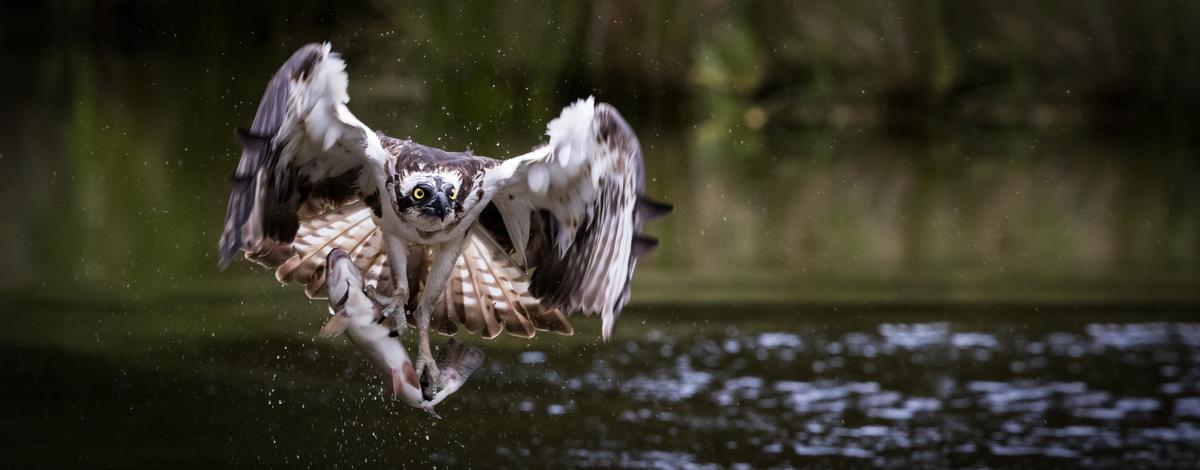
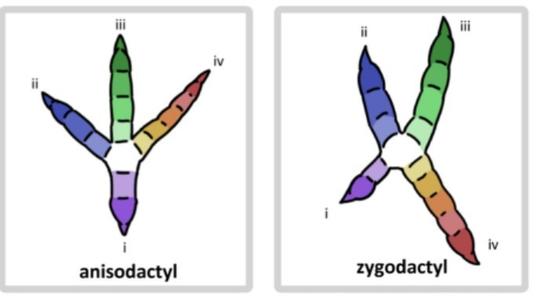
Osprey have the unique ability to switch their toe configuration between ansiodactyl (three toes forward, one back) and zygodactyl (two toes forward, two back). This superpower allows them to catch fish efficiently and then carry them aerodynamically as they fly. (Image from Martin and Sherratt, 2023).
- Osprey arrive in Idaho early to mid-April and begin courtship activities, including bringing new sticks to their nest, aerial displays and defending against intruders.
- Eggs are laid in mid-May, and chicks can be observed in mid-June through mid-August when they begin taking their first test flights.
- You will not see any osprey in Salmon in the winter, as these birds are excellent long-distance migrants, flying as far as South America, to overwinter.
- Males and females do not migrate together and may even winter in different locations, but if both survive the winter and make it back the following spring, their pair bond remains intact, and they will use the same nest and breed together again.
Osprey add to their nests each year; if nests are not blown down via windstorms, the nests can get enormous over time.
- Osprey are attracted to using baling twine in their nests, which can lead to entanglement and death of adults, chicks and fledglings.
- A study in Montana along the Yellowstone River found that 44% of nests had baling twine in them and ~3.4% of all chicks were entangled in baling twine annually (Restani, 2023).
- Regularly cleaning nests of twine and picking up twine so it is not available to the birds are the best ways to prevent this.
Literature Cited
Martin, E.M., Sherratt, E. Grasping hold of functional trade-offs using the diversity of foot forms in Australian birds. Evol Ecol 37, 945–959 (2023). https://doi.org/10.1007/s10682-023-10261-5
Restani, Marco. Individual and population effects of entanglement mortality on ospreys from plastic baling twine in nests. Global Ecology and Conservation 44 (2023): e02496.

Check out Fish and Game’s new 24/7 osprey webcam in Salmon
Love ospreys, the Salmon River mountains, and mindlessly watching YouTube videos at work? Our folks in the Salmon Region have just the thing for you. Launched in April 2026, Idaho Fish and Game’s newest live webcam gives you a bird’s-eye look at ospreys as they go about their day.
