
Hi everyone, October is nearly here, which means many of us are gearing up for steelhead fishing on the Upper Salmon River (USR). With that in mind, this seemed like a good week to provide an update on how this fall’s steelhead return to the Upper Salmon River is shaping up. If you are interested in steelhead returns to other areas of Idaho, then please read the Fall Chinook Salmon and Steelhead Update issued yesterday by IDFG Region 2 Fisheries Manager Joe Dupont.

Upper Salmon River Steelhead Fishing Update (09-26-2025)
idfg-bbeller
Upper Salmon River Steelhead Return
This fall’s steelhead return is tracking to be the third largest return since 2018, but it will likely be lower than either of the past two years (see Figure 1 below). As of September 24, we estimate that 14,511 adipose-clipped steelhead destined for the Upper Salmon River have crossed Bonneville Dam, and the return of Idaho’s A-run steelhead at Bonneville is now approximately 95% complete. As mentioned in the Idaho's Steelhead Fishery Update from September 2nd, one release group raised at Magic Valley Hatchery and released into the Upper and Little Salmon rivers was not PIT-tagged due to disease concerns. Because that group was not PIT-tagged, we cannot estimate the number of steelhead returning from it. However, if their survival rates were similar to past years, the USR return could increase by up to another 2,000 one-ocean steelhead.
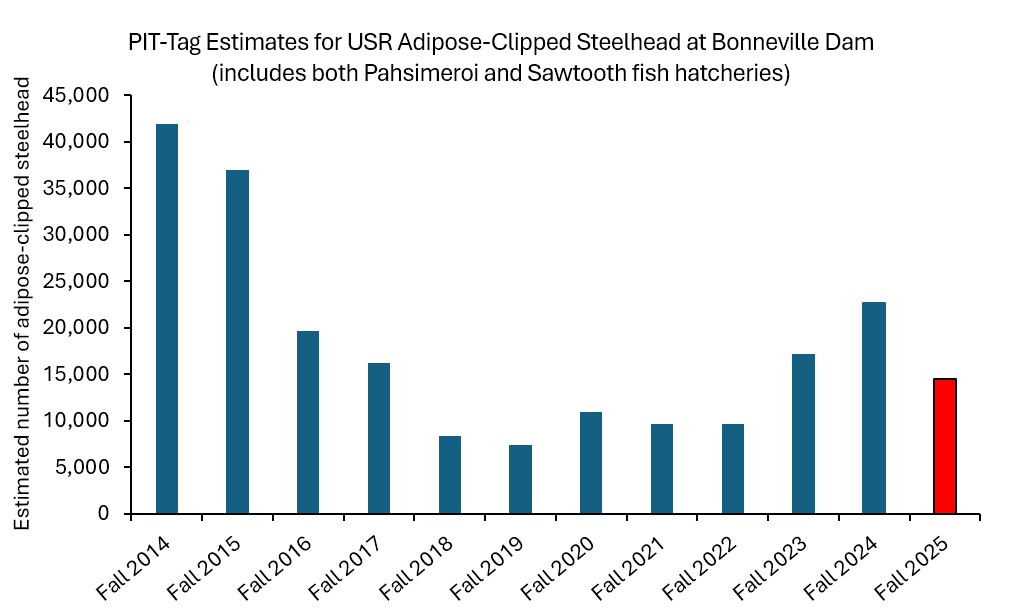
Another aspect of this year’s steelhead return we want to highlight is the proportion of fish that spent two years in the ocean versus just one. As many of you probably recall, last year’s run was dominated by larger, two-ocean steelhead (about 80%). This fall’s return is closer to average for the USR, with an estimated 34% being two-ocean fish. For anglers, that means you can expect to see more fish in the 22-26 inch range.
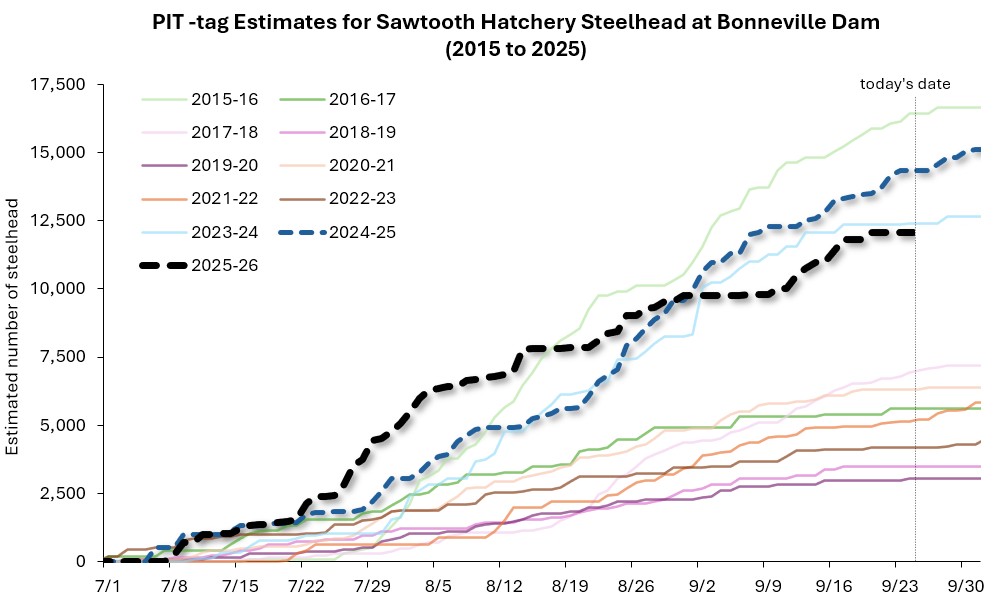
The last thing to mention about this fall’s steelhead return is the timing of the run past Bonneville and Lower Granite dams. Although USR steelhead arrived somewhat early at Bonneville Dam this summer, above-average water temperatures in the Columbia River delayed their upstream migration, and their timing at Lower Granite Dam has lagged behind the past two years. Figures 2 and 3, below, show the cumulative passage of Sawtooth Hatchery steelhead at Bonneville and Lower Granite. These figures show how current year counts at Bonneville started ahead of any of the past 10 years, but passage at Lower Granite is now behind the last two years. This may result in fewer fish arriving to the USR by mid-October, but there’s also a chance that they make up some of that lost time now that they’re pushing upstream again.
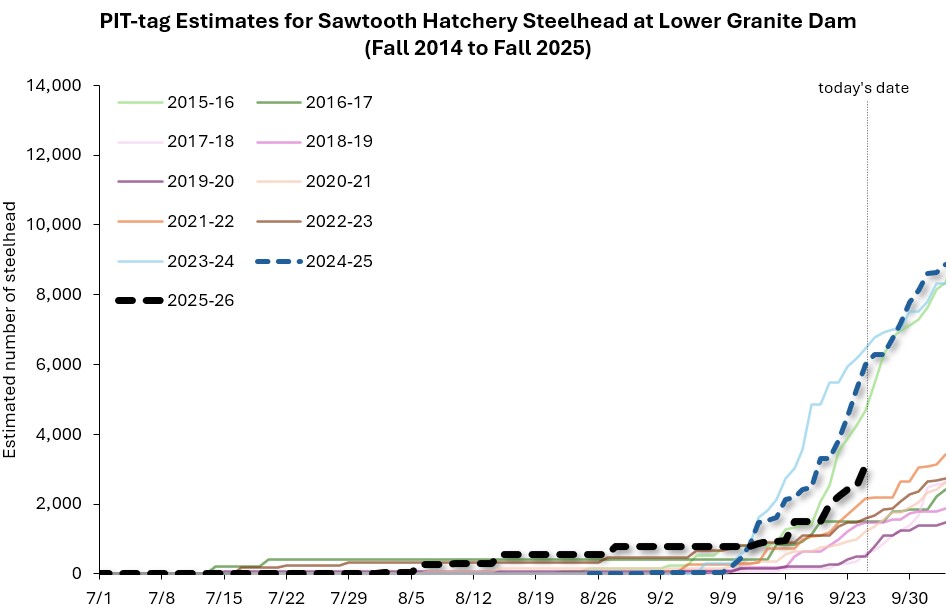
As of September 24, about 2,688 USR steelhead have crossed Lower Granite, including more than 1,000 in just the past three days. During the last five years, approximately 80% of USR steelhead that pass Bonneville also pass Lower Granite. This proportion is referred to as the “conversion rate.” If we assume a similar conversion rate for this year, we would expect almost another 9,000 USR steelhead to pass Lower Granite in the coming weeks. Because many steelhead have not yet passed Lower Granite, we will continue providing updates on the conversion rate and estimated counts in future reports.
That’s all we have for this week’s update. Creel personnel will start interviewing anglers during the first week of October, and we will begin issuing weekly fishing reports during the week of October 7. In the meantime, if you have questions or would like more information, please call the Salmon Regional Office at (208) 756-2271.