idfg-badge

Idaho Fish and Game

WalleyePicture2

Tagging and learning about walleye in the lower Snake River

idfg-mdobos

Anglers are encountering more walleye in the Snake River from Lewiston to Hells Canyon Dam in the past couple of years and some are wondering why.  The first walleye documented in this section of the Snake River was in 2019. Since then, the number of reported walleye has substantially increased and the Idaho Department of Fish and Game (IDFG) has been encouraging anglers to report information about walleye they caught so that we can look at size structure, where they are distributed, and if that changes over time.  Anglers were also encouraged to harvest every walleye caught.  Walleye can have detrimental effects on important fish populations so minimizing predation risk to juvenile salmon and steelhead is critical.  Here’s is an update on what we are learning and also about a new tagging study IDFG is doing where anglers can continue to help with collecting information.  

Most of the walleye have been caught between Asotin, Washington and Heller Bar where the Grande Ronde flows into the Snake River (Figure 1).  We have also received reports of walleye caught in the lower Salmon River almost as far upstream as the town of Riggins, Idaho.  The average size of walleye caught in the past three years was 17 to 19 inches long with several fish between 25 and 30 inches.  In 2025, there were nearly 100 walleye reported being caught by anglers. 
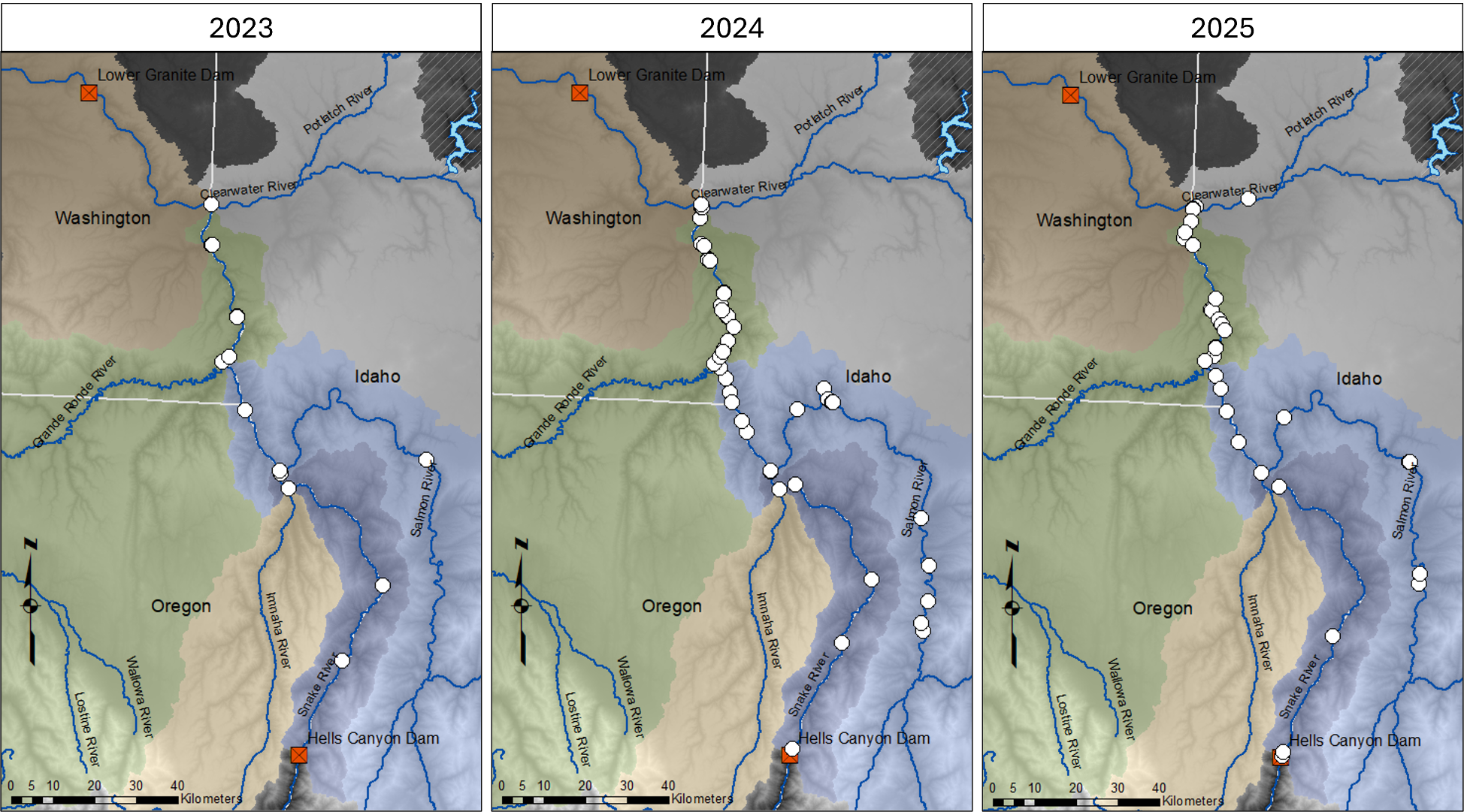
Location of walleye caught in the Clearwater Region and reported to IDFG (2023-20255).
Figure 1. Locations of walleye caught in the Clearwater Region and reported to IDFG in 2023, 2024, and 2025.

Unfortunately, this is not a good sign for salmon, steelhead, and other native fish in the Snake River.  Recent work by Washington Department of Fish and Wildlife (WDFW) in the lower Snake River showed that walleye consume a lot of juvenile salmon, steelhead, and lamprey in the spring as they are moving through the reservoirs to get to the ocean.  So, what has changed to cause the walleye population to grow and expand as fast as it did? 

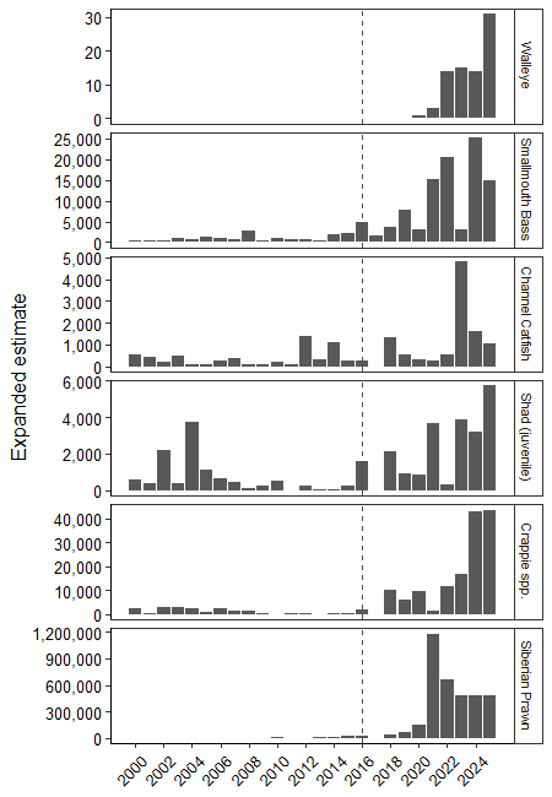
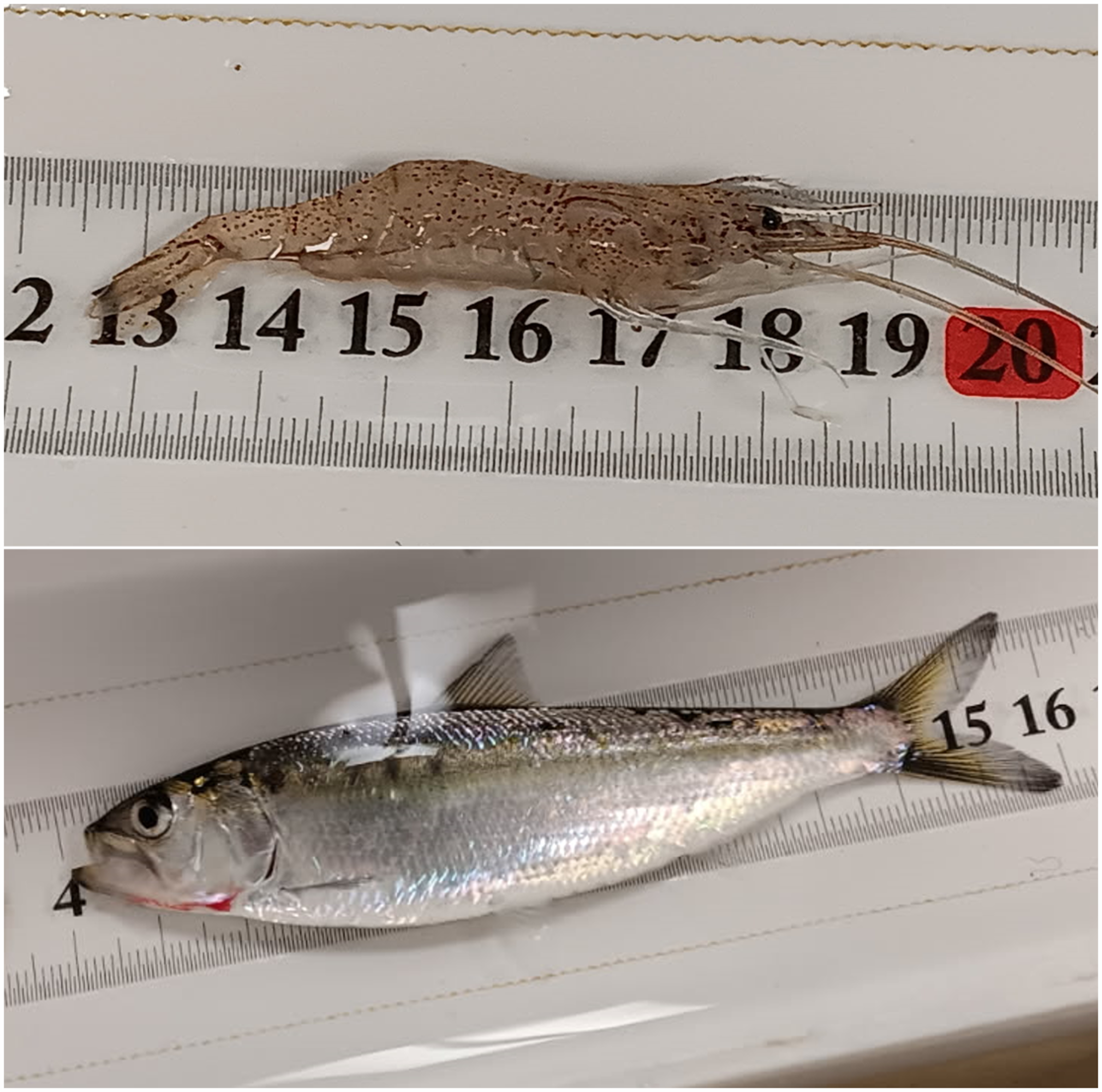
In the past ten years, numbers of several nonnative species in the lower Snake River increased, especially at and upstream of Lower Granite Dam (Figure 2).  The most notable increases were seen in abundances of Siberian prawns which were first discovered in the Snake River in the mid-1990s. These prawns are only 2-3 inches long, but when there are a lot of them, they can become an important food source to fish.  The WDFW diet study found they now provide an important food option for predator fishes during critical times when food was historically more scarce.  American shad are another nonnative species that are becoming more prevalent in the Snake River.  Walleye can now shift from eating juvenile salmonids and lamprey during the spring to prawns during the summer, then juvenile shad during the winter.  A diet of prawns also allows juvenile walleye to better survive and grow to the size at which they convert to eating fish.  We continue to collaborate with other agencies and tribes in the lower Snake River to learn more about walleye and ways to reduce the potential risk to salmon, steelhead, and other important species. 

WalleyeFigure2
Figure 2. Estimated number of select nonnative species counted in the juvenile bypass system at Lower Granite Dam.
SiberianPrawnAndShad
Picture 1. Photo of a Siberian Prawn on the top and a juvenile American Shad on the bottom sampled at Lower Granite Dam. Photo provided to IDFG by Pacific States Marine Fisheries Commission personnel.

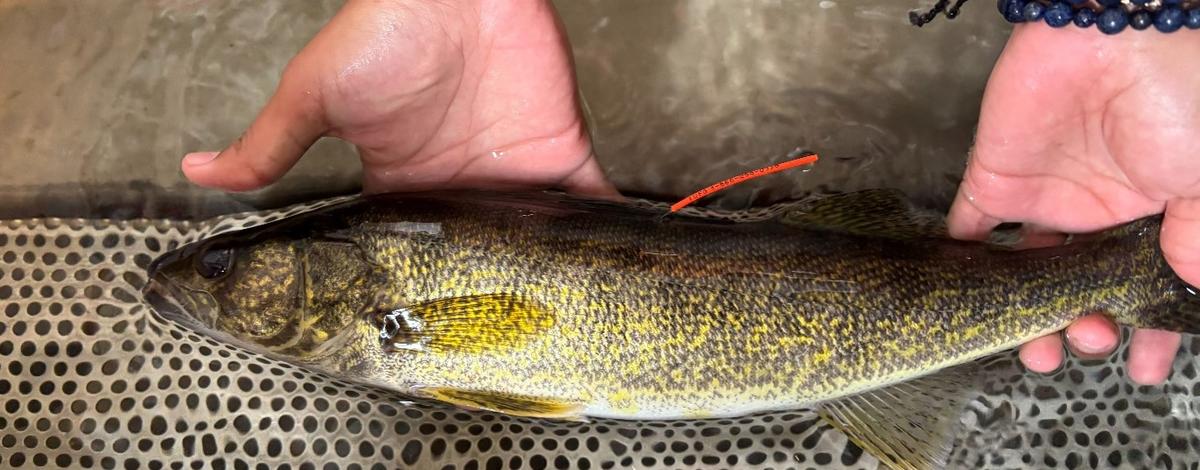
Some of you might be familiar with seeing orange Floy tags sticking out the backs of some of the fishes in Idaho.  This year, you might be seeing some walleye with those orange tags on their backs.  Reports of these tagged fish by anglers will help us better understand how many walleye are in parts of the lower Snake River, the Clearwater River and the Salmon River, and if they continue to expand their range.  It will also help with knowing how much angling and harvest pressure there is on these fish.  Each tagged fish has an ID number and a phone number on these tags you can call to report.  Reporting can help us understand some of their movements after they get tagged.  

Most walleye were caught by people fishing smallmouth bass with swimbaits, jigs, and crankbaits.  People that are targeting walleye do very well bouncing or trolling worms on the bottom or dragging big crankbaits near the bottom.  If you want to help with the cause of removing walleye and having some tasty fillets, fish around the rocky islands or point bars that drop off into slower, deeper water.  Walleye have been caught at a variety of depths so just work your way down until you find them.  There is no size or bag limit of walleye in the Clearwater Region and we ask that if you catch one, that it gets harvested.  If you have any questions, please contact Idaho Fish and Game Fisheries Staff Biologist Marika Dobos at the Lewiston Regional Office by email at marika.dobos@idfg.idaho.gov, or by phone (208) 750-4228.  You can also contact Regional Fisheries Manager Joe Thiessen by email joe.thiessen@idfg.idaho.gov, or by phone (208) 750-4208.

We greatly appreciate all the information that anglers have been providing over the past few years and hope folks will continue to participate with reporting tagged fish they catch. 

WalleyePicture3
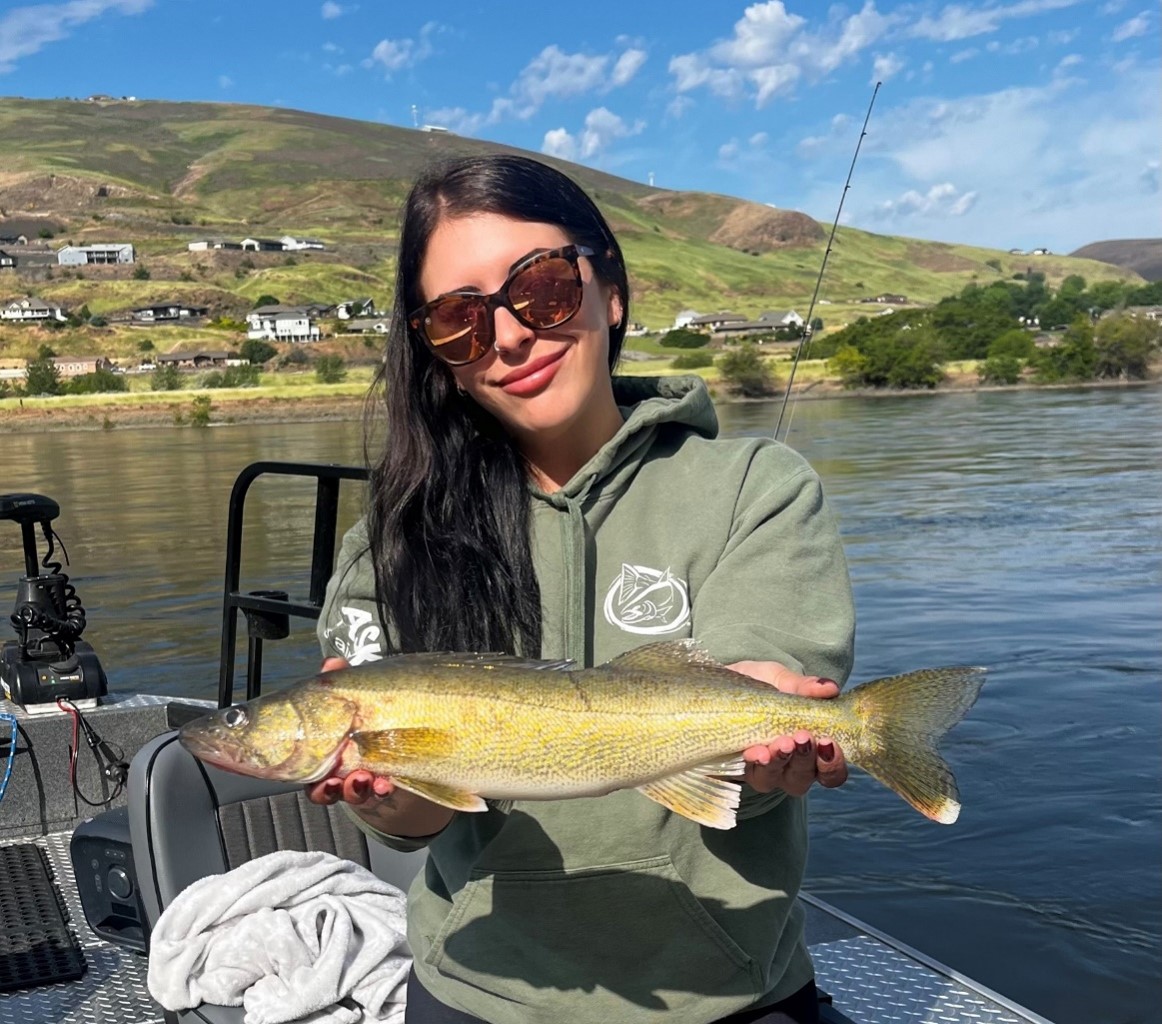
Picture 2. Photo of a walleye caught on the Snake River in 2026. Photo provided to IDFG by anonymous angler.