idfg-badge

Idaho Fish and Game

Elk herd, winter feeding

Part 2: Depredation prevention can keep landowners content and big game herds abundant

idfg-rphillips

F&G constantly works to reduce conflicts between wildlife and private landowners

A couple sits inside a pickup late on a winter night when most people are warm and safe indoors. The wind whistles and snowflakes the size of moths fly by their windshield as they scan the darkness with a spotlight for telltale glowing eyes of an elk herd coming to feed on a haystack. 

A few blasts of an airhorn deter the elk, but not for long. The elk grow braver as theyre tempted by hay. More blaring horns keep them at bay, but it goes on all night, and the elk eventually give up and go back from where they came. The people protecting the haystack are Idaho Fish and Game volunteers who care deeply about wildlife and endure a sleepless night in frigid conditions to protect wildlife and a ranchers haystack. 

This is another situation that occurs in Idaho as Fish and Game, sportsmen, volunteers and landowners work to balance healthy, abundant big game herds with protection for farmers and ranchers from damage caused by wildlife. Its a tricky balance that requires a variety of tools and manpower, much of which goes unseen and unnoticed by people not directly involved. 
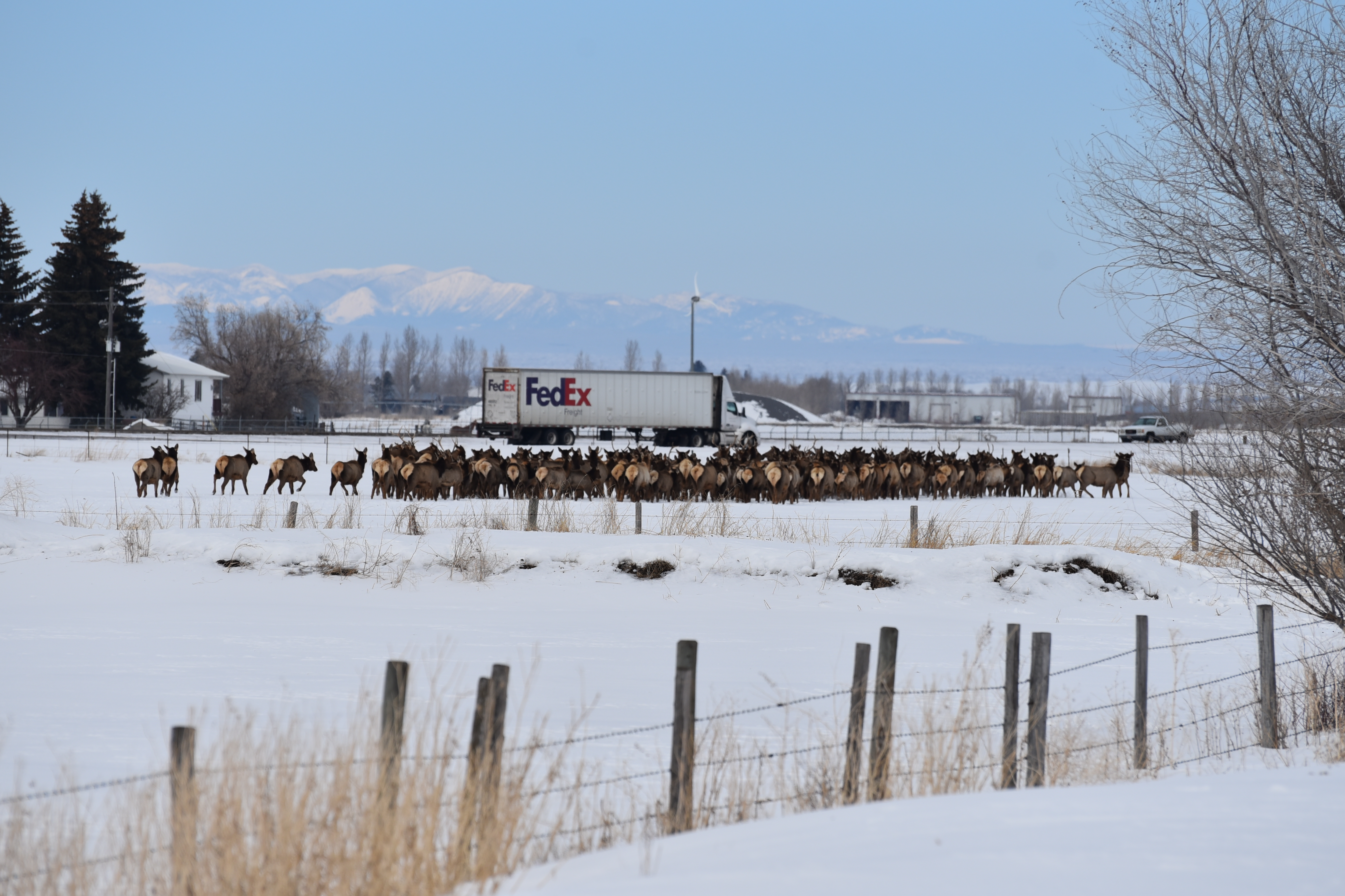
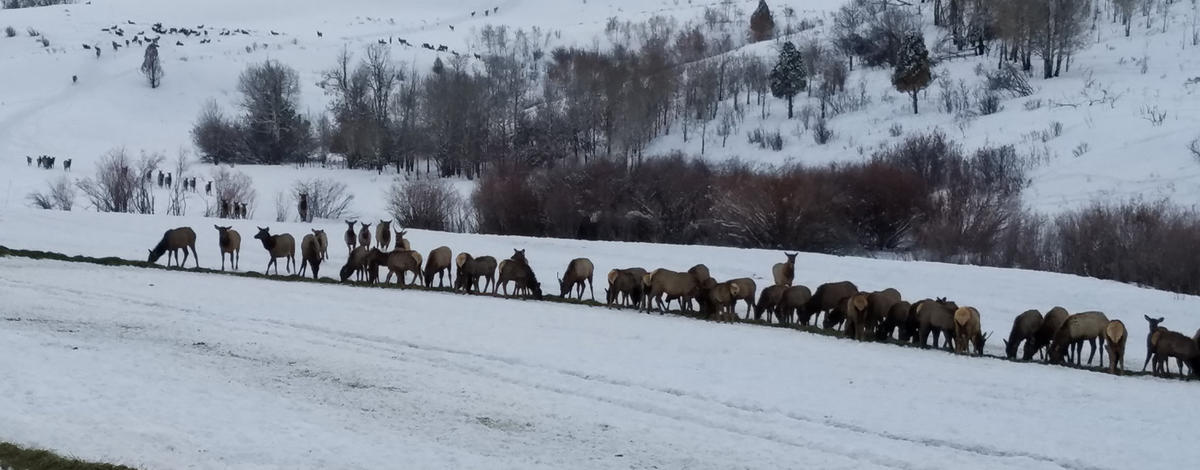
Sugar City Elk

Balancing big game and private land conflicts

The vast majority of Idahoans enjoy and appreciate wildlife, and that includes landowners who enjoy elk and deer on their property, even if they cause some inconveniences, or eat some of their crops. But when that inconvenience starts to affect their financial stability, Fish and Game has to take action. 

Wildlife doesn't recognize property boundaries, and many of Idahos big game herds spend at least part of their year on private lands, often during winter when higher elevations are covered by snow, or during seasonal migrations. Fish and Game tries to maintain landowner support for wildlife on private lands in a variety of ways, both nonlethal and lethal, preferably nonlethal. 

The priority is to prevent conflicts on private lands from occurring in the first place, and the best way to avoid damage is often to ensure public lands can support abundant big game herds. Fish and Games overarching philosophy is to manage wildlife populations that can be supported by natural habitat, except in unique and emergency situations. 

Fish and Game manages over 400,000 acres of habitat on its wildlife management areas, but that’s less than one percent of Idahos public lands. The agency also partners with federal, state, and other land managers to improve, protect, and maintain healthy wildlife habitat on far more acreage. 

For example, after large wildfires in Southwest Idaho in summer 2024, Fish and Game worked with public land managers to immediately plant beneficial forage plants so migrating deer and elk would have food during winter and be less attracted to nearby agriculture lands. 

To keep wildlife on wildlands and out of crops, Fish and Game staff in each region has numerous programs that work with landowners to troubleshoot problems caused by big game animals. They have a variety of methods at their disposal to build short-term or long-term solutions. However, the work is never really done, because what attracts one herd, another herd will also find attractive.

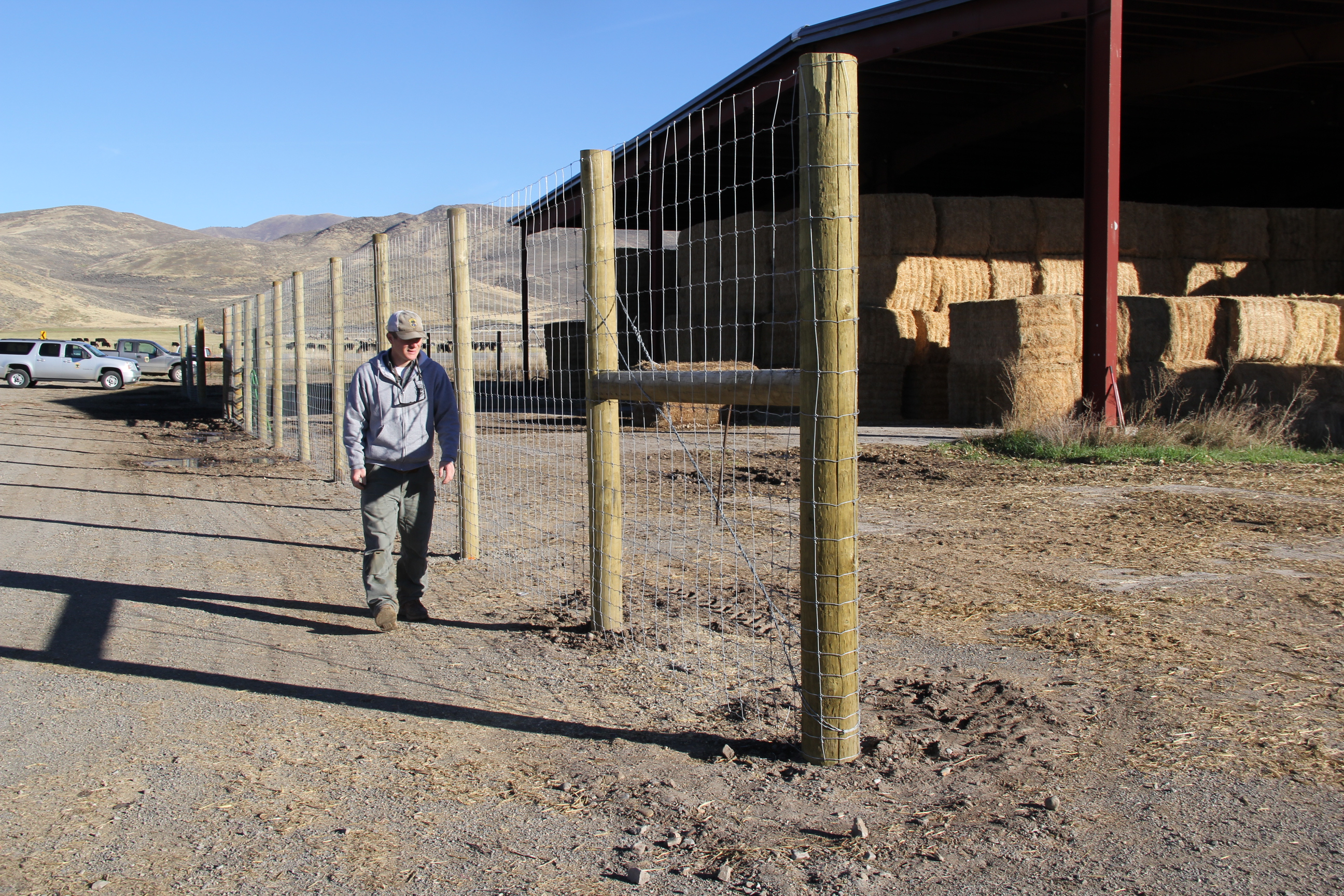
stackyard, Magic Valley, John Guthrie

Fencing

Sometimes, the best solution is to make the food inaccessible to elk and deer. Herds may spot an easy meal and decide to take advantage of it, so to prevent it, Fish and Game can loan temporary fencing materials to keep them out, and hopefully, the animals move along.

Where herds repeatedly return to haystacks and other stored crops, Fish and Game has cost-shared with the landowner to build permanent stackyards where a landowner can safely store their hay. These provide long-term solutions because an easy food source is inaccessible, so animals must go where they can find food, preferably in natural habitat on public lands. 

Hazing

The scenario at the start of this story is repeated dozens of times each winter by Fish and Game staff, volunteers, landowners and their workers. Big game animals can be persistent, so people use flashing lights, air horns, and other deterrents to haze herds away from where theyre causing damage. 

Typically, the animals leave the area (at least temporarily), but may move to adjacent properties, so Fish and Game and volunteers devote many hours (and sleepless nights) to deter animals’ intent on returning to places where theyre unwelcome.  

Lure crops

In specific locations, Fish and Game will plant wildlife forage crops on its land in an attempt to lure wildlife away from adjacent agriculture lands. Fish and Game may also enter into "continued use agreements" with landowners in advance to allow wildlife to reside on their property and keep them away from nearby private lands when depredations are likely to occur. 

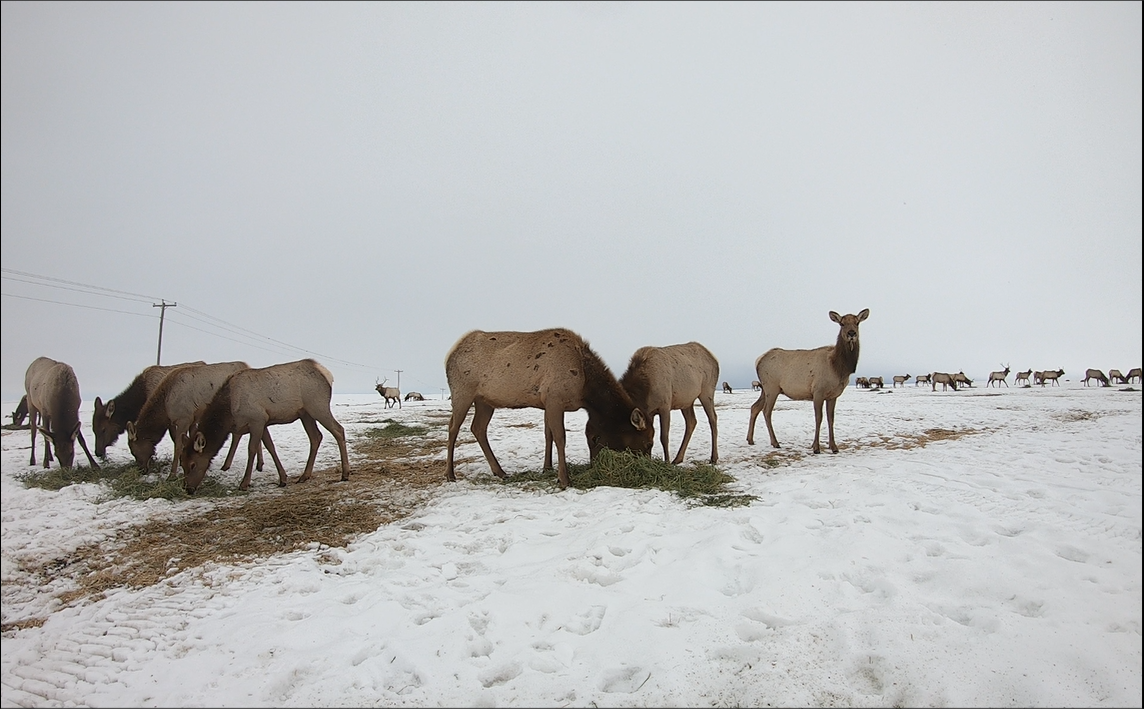
Elk on a hay feed line

Temporary, emergency feeding

In infrequent cases, typically during unusually harsh winters when winter range is covered with deep snow, or wildfires burned winter ranges and robbed them of forage, Fish and Game may temporarily feed big game to keep them away from private lands. 

This is done sparingly and with abundant caution because feeding can create problems of its own, including luring more animals to the area, habituating animals to return the following year (and often in greater numbers), and spreading disease. Fish and Game is very judicious about feeding big game animals during winter unless its absolutely necessary. 

Sometimes, its still not enough

Big game animals in search of food can be extremely persistent, and resistant to hazing and other deterrents. When problems continue, lethal measures – typically public hunting – can reduce the problem, as well as provide a family with a freezer full of game meat.

Fish and Game has a variety of ways to administer hunts to solve persistent depredation problems, and you can read in Part 3 about depredation hunts and other special hunts.