idfg-badge

Idaho Fish and Game

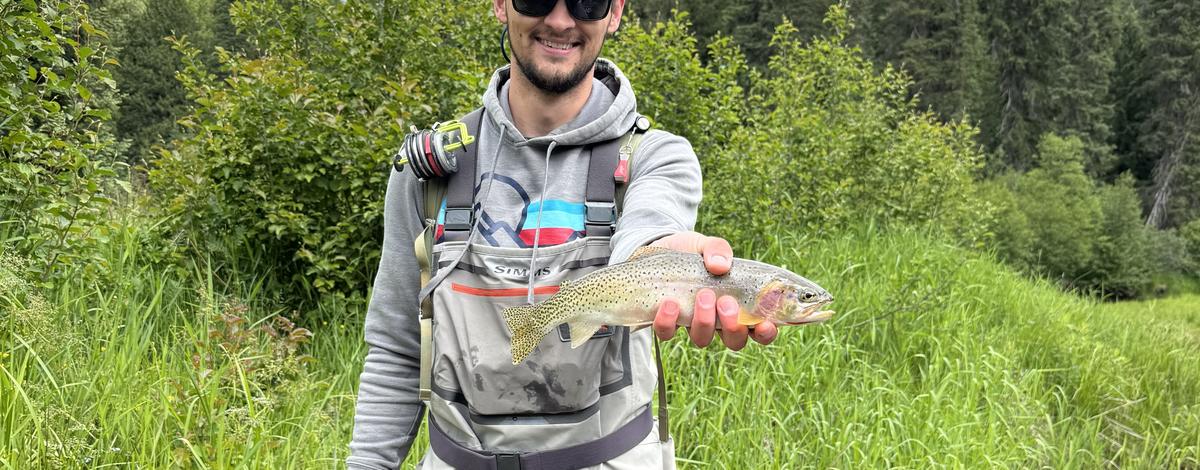
Luke Anderson with his record Westslop cutthroat trout (cropped)

New certified-weight record for Westslope cutthroat trout shocks fish biologists

idfg-cghere

When Luke Anderson headed to the St. Maries River in search of Westslope cutthroat trout, setting a new state record was probably the last thing on his mind. Or was it?

While Luke is officially Idaho's newest certified-weight state record holder, Westslope cutthroat trout in Idaho grow much larger than his 13.6-inch, sub-one-pound fish. Idaho's current catch-and-release state record, caught in Lake Pend Oreille, measured 27 inches, while the certified-weight record just across the border in Washington stands at 4.71 pounds. 
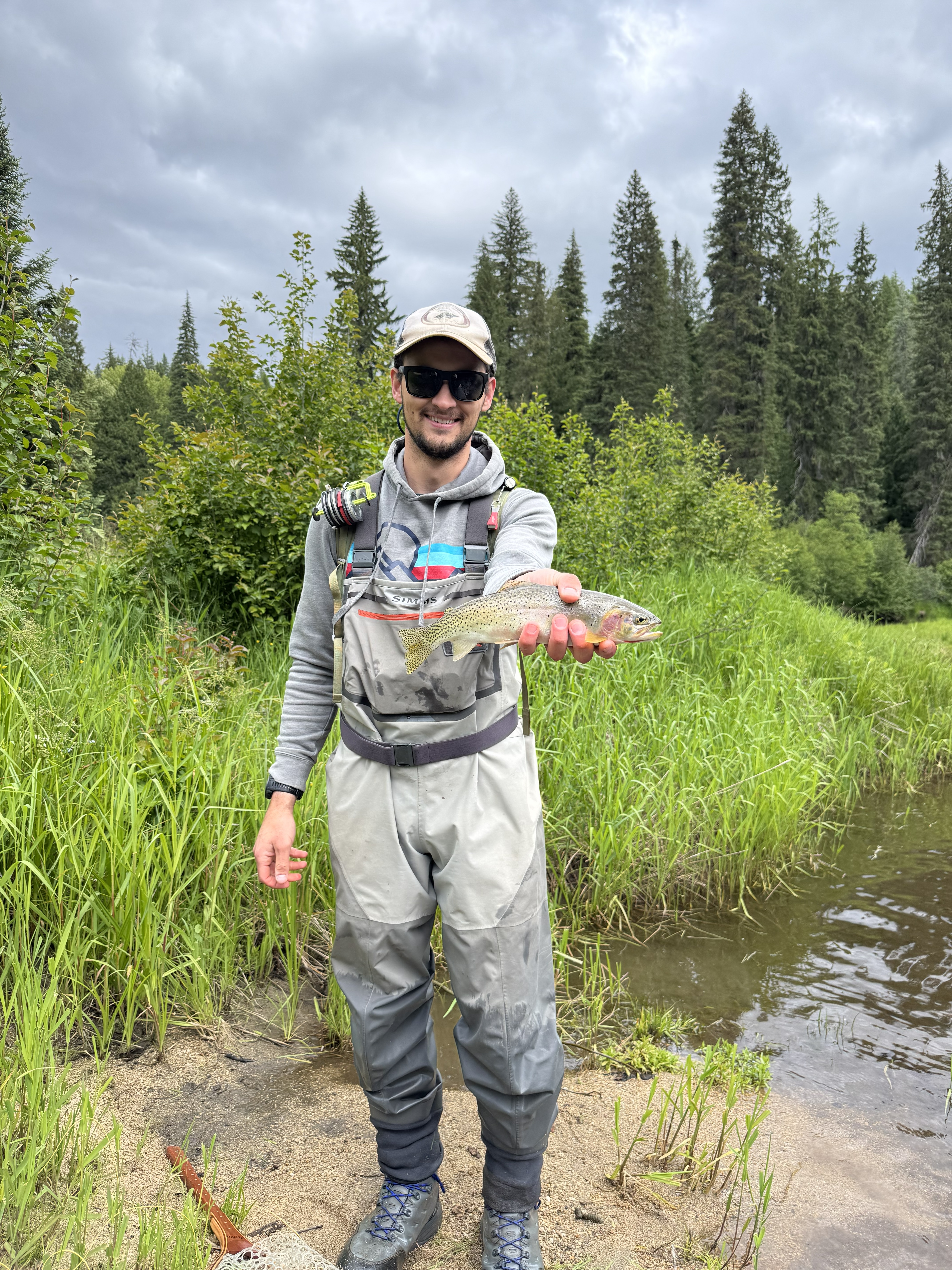
Luke Anderson with his record Westslop cutthroat trout

So why is Idaho's certified-weight record for one of its most iconic native trout species so small? The answer involves decades of fisheries management history, but also includes changes to the State Record Fish Program.  

Changes to the State Record Fish Program 

Until recently, Idaho’s State Record Fish Program only recognized a single category for cutthroat trout. For the longest time, the certified-weight record “cutthroat trout” was the 18.94-pound lunker caught at Bear Lake by Roger Grunig in 1970. 

Starting in 2016, Fish and Game revamped the State Record Fish Program. Changes included the new category of catch-and-release state records, and also included new separate record categories for all four sub-species of cutthroat trout found in Idaho: Westslope, Bonneville, Yellowstone and Lahontan cutthroat trout. 

The standing record from Bear Lake continues to hold the top spot for Bonneville cutthroat trout, but this opened opportunities for three new cutthroats — which have only been available since the 2016 changes. Check out this episode of Fish and Game’s podcast for a deep dive into the State Record Fish Program.

The Fish Management Legacy 

Throughout much of their range, populations of cutthroat trout have seen significant declines since Western settlement began. This was mainly from a combination of factors that included overfishing, habitat loss, and stocking non-native trout. 

Times were different then. Unlike the catch-and-release culture that dominates wild trout fishing today, harvest was widely accepted and often encouraged. Increased angling pressure along with expanding road networks provided easier access to trout streams. Many of those roads were built to support industries such as logging and mining, which had few regulations then. At the same time, non-native trout species such as brook, brown and rainbow trout were being widely stocked, establishing new sport fisheries, but also contributing to the declines of cutthroat trout.  

By the 1960s, cutthroat trout populations were in trouble as fisheries biologists documented significant declines across the state. Activities like logging, mining, building roads, and pollution had significantly impacted trout habitat. Many of the laws that regulated these industries would not become established until the 1970s. The result was widespread habitat degradation that further contributed to Westslope cutthroat declines.

Fishing regulations have limited or prohibited keeping Westslope cutthroat trout in many places, making it difficult for anglers to legally harvest and weigh record-sized fish. 

In the early 1970s, Idaho fisheries managers implemented some of the first restrictive fishing regulations designed to reduce trout harvest, including lower bag limits and catch-and-release across much of Idaho. Over the next 50 years, anglers embraced those conservation measures and wild cutthroat trout populations would begin to bounce back.

At the same time, new landmark environmental regulations like the Clean Water Act, National Environmental Policy Act, the Wilderness Act, and many others began to address some of the habitat impacts. More recently, fisheries managers and conservation partners invested heavily in habitat restoration projects. 

A New Certified-Weight Record 

The results have been encouraging. Today, Westslope cutthroat trout occupy roughly 80% of their historic range within Idaho, and many populations have rebounded substantially. Harvesting cutthroat trout has been allowed in stocked lakes for years, but some additional waters are beginning to see limited harvest opportunities return. For example, regulations on the Selway River recently changed from catch-and-release only to allowing some limited harvest. 

The story behind Idaho's smallest certified-weight trout record is really a story of conservation success. Understanding that history helps explain why many waters still see restrictive fishing rules on cutthroat trout but also leaves us with a greater appreciation for Idaho's state fish and the opportunities we have to enjoy it. 

Luke deserves congratulations for securing his place in the record books, but he’s also a part of the bigger conservation story of one of Idaho's favorite native trout. And if Luke's record inspires a few anglers to challenge it, well, that might not be such a bad thing either.