idfg-badge

Idaho Fish and Game

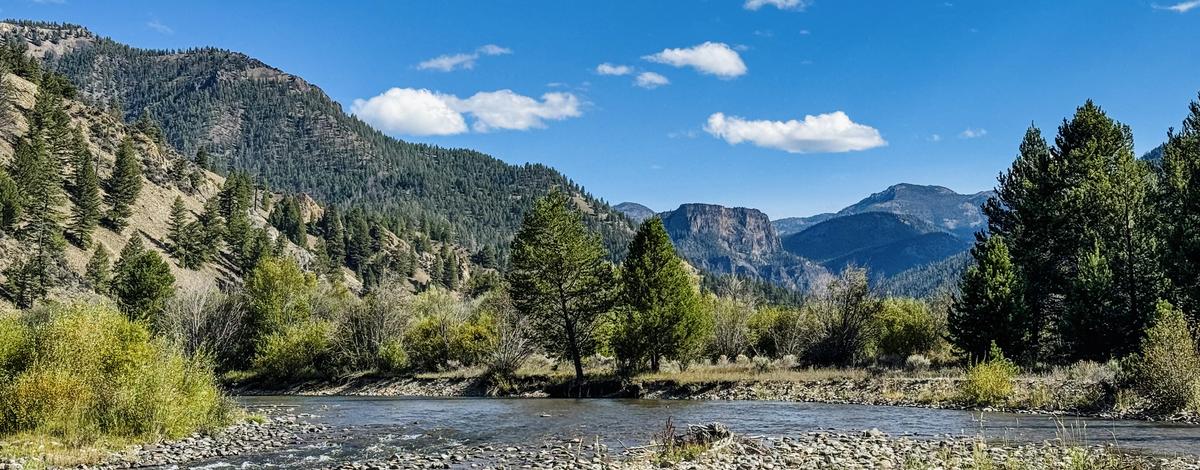
View of Castle Mountain from Camas Creek

Life, Death, and Data: The story of a salmon run in the Middle Fork Salmon River basin

idfg-Maddie.Myers

After spending years growing in the Pacific Ocean, Chinook salmon return to the very streams where they began their lives. Their journey takes them hundreds of miles inland, through multiple dams, strong currents, and countless obstacles before reaching the cold mountain streams of central Idaho.

Each fall, Idaho Fish and Game personnel hike miles of streams throughout the Middle Fork Salmon River (MFSR) basin near Stanley, Idaho, to document one of nature's most remarkable migrations.
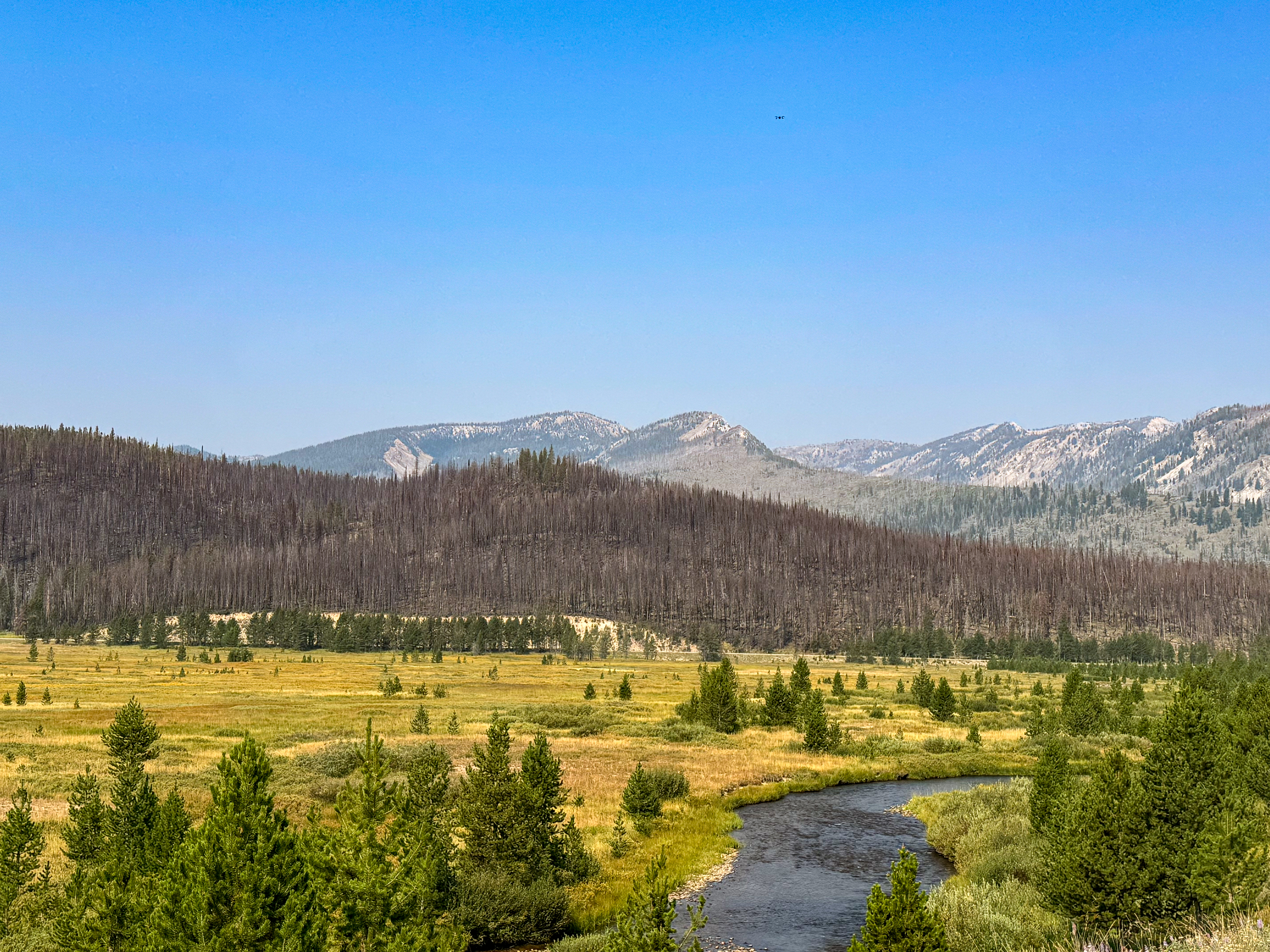
A view of Marsh Creek near Stanley, Idaho
A view of Marsh Creek near Stanley, Idaho.

Why the MFSR Matters

The MFSR basin is an important spawning area for wild Chinook salmon in Idaho. Much of the basin lies within the Frank Church-River of No Return Wilderness, where streams remain largely untouched and provide high-quality habitat for spawning.

Unlike many salmon populations throughout the Pacific Northwest, Chinook salmon in the MFSR basin are entirely wild. No hatchery fish have been released into the basin, making it a unique place for biologists to study naturally produced salmon and track population trends over time.

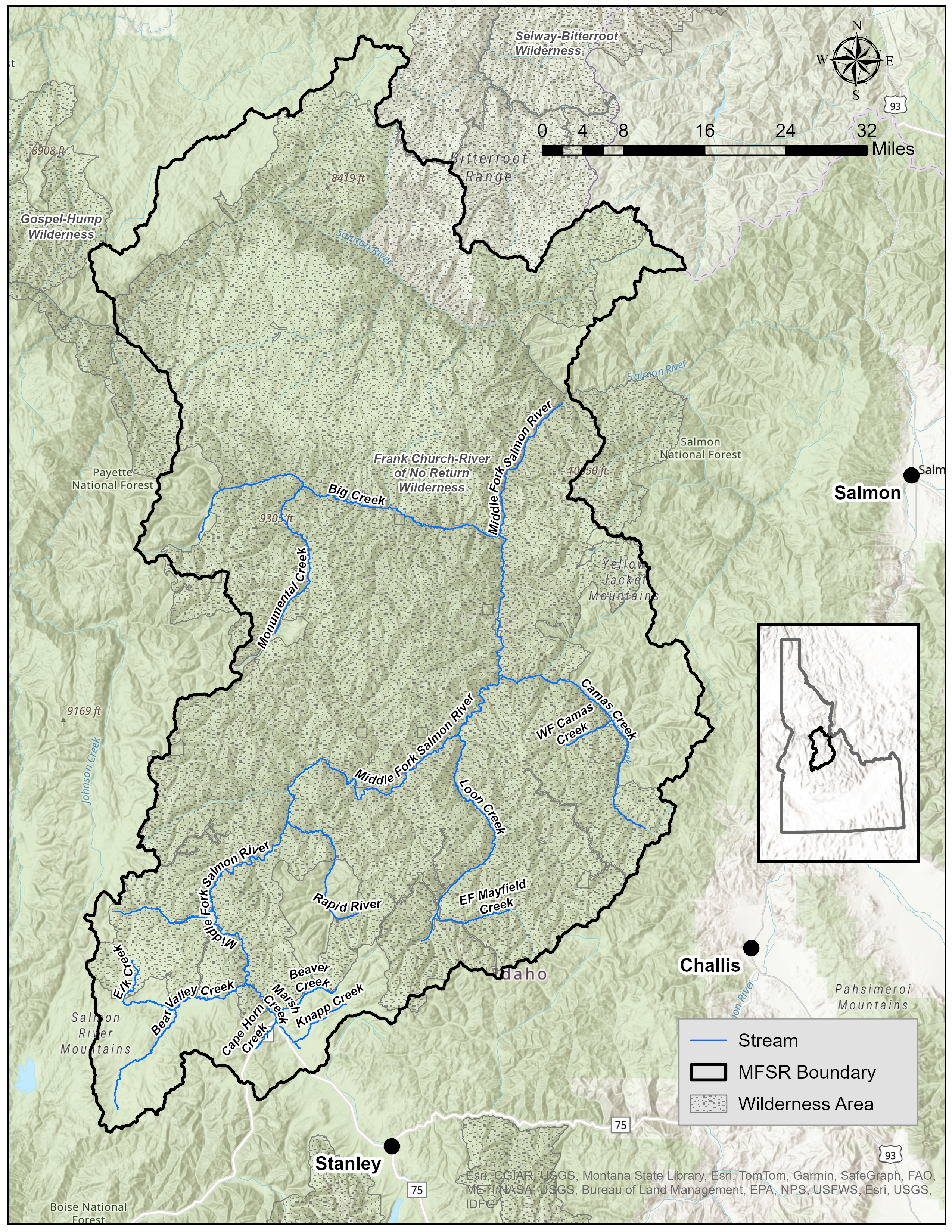
Map depicting the MFSR boundary in relation to Idaho towns and the Frank Church Wilderness
Map depicting streams in the MFSR basin.

Reading the River

A redd is a nest created by a female salmon where she deposits her eggs. Using powerful sweeps of her tail, the female clears and rearranges the gravel to create a suitable environment for egg development. Once spawning is complete, the eggs remain protected beneath the gravel until they hatch.

Each redd represents spawning activity. Counting redds provides biologists with a useful way to track how many salmon are successfully returning to reproduce each year.

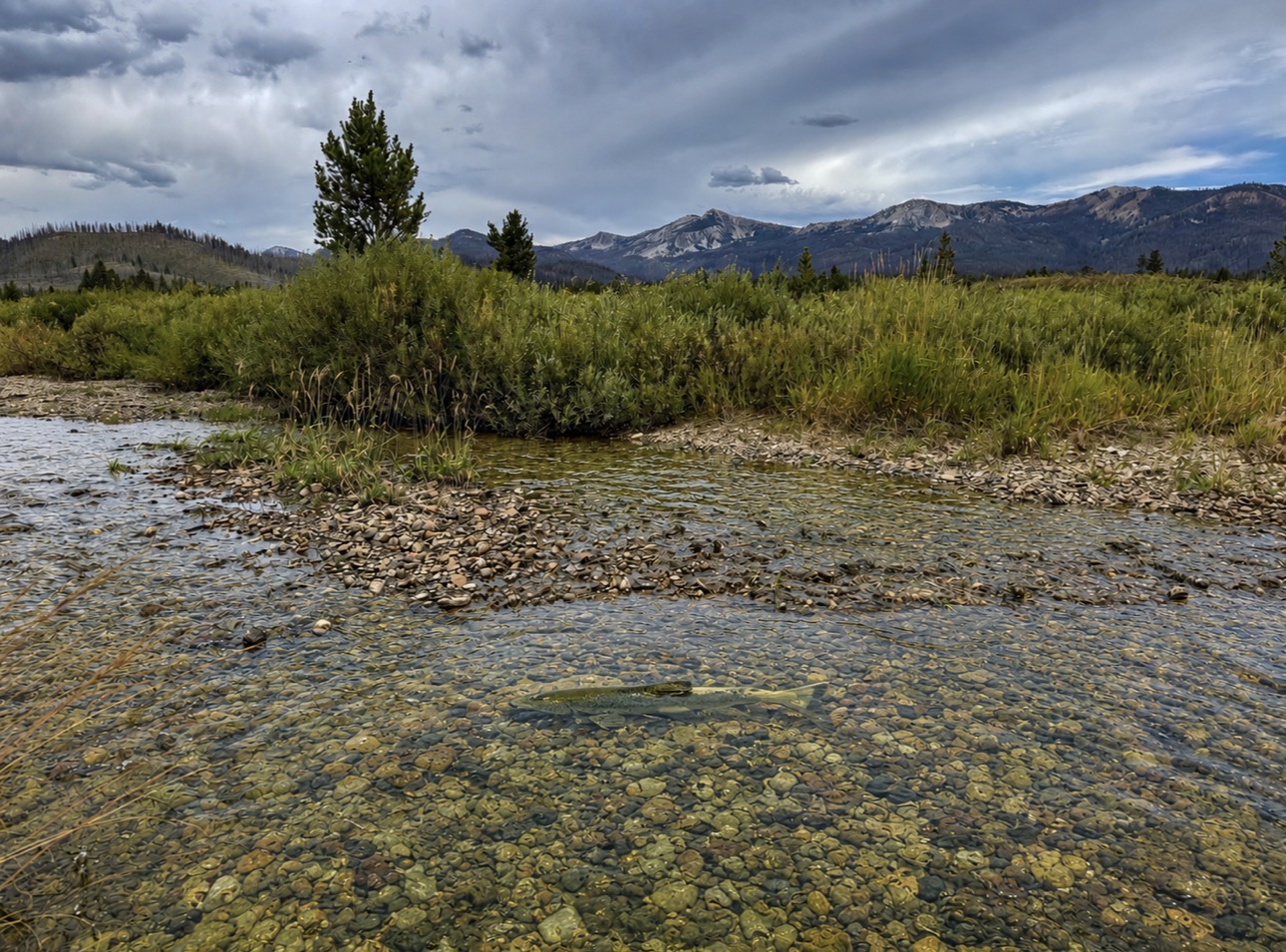
Female Chinook Salmon on a redd in Marsh Creek
Female Chinook salmon on a redd in Marsh Creek.

What the Salmon Leave Behind

After spawning, Chinook salmon complete their life cycle and die naturally. While their journey has come to an end, their role in the ecosystem and in fisheries research, is far from over.

As crews walk streams throughout the MFSR basin, every salmon carcass becomes an opportunity to collect valuable biological information. Biologists record the fish's length, determine its sex, look for tags, and collect tissue samples for DNA analysis. Each piece of information helps build a more complete picture of the population.

These samples allow biologists to learn more than just how many fish returned to spawn. They provide insight into the age composition of the population and help track the genetic diversity and long-term health of Idaho's wild Chinook salmon. When combined with redd counts and other survey data collected each year, carcass sampling helps IDFG monitor population trends and make informed management decisions to conserve these fish for future generations.
 

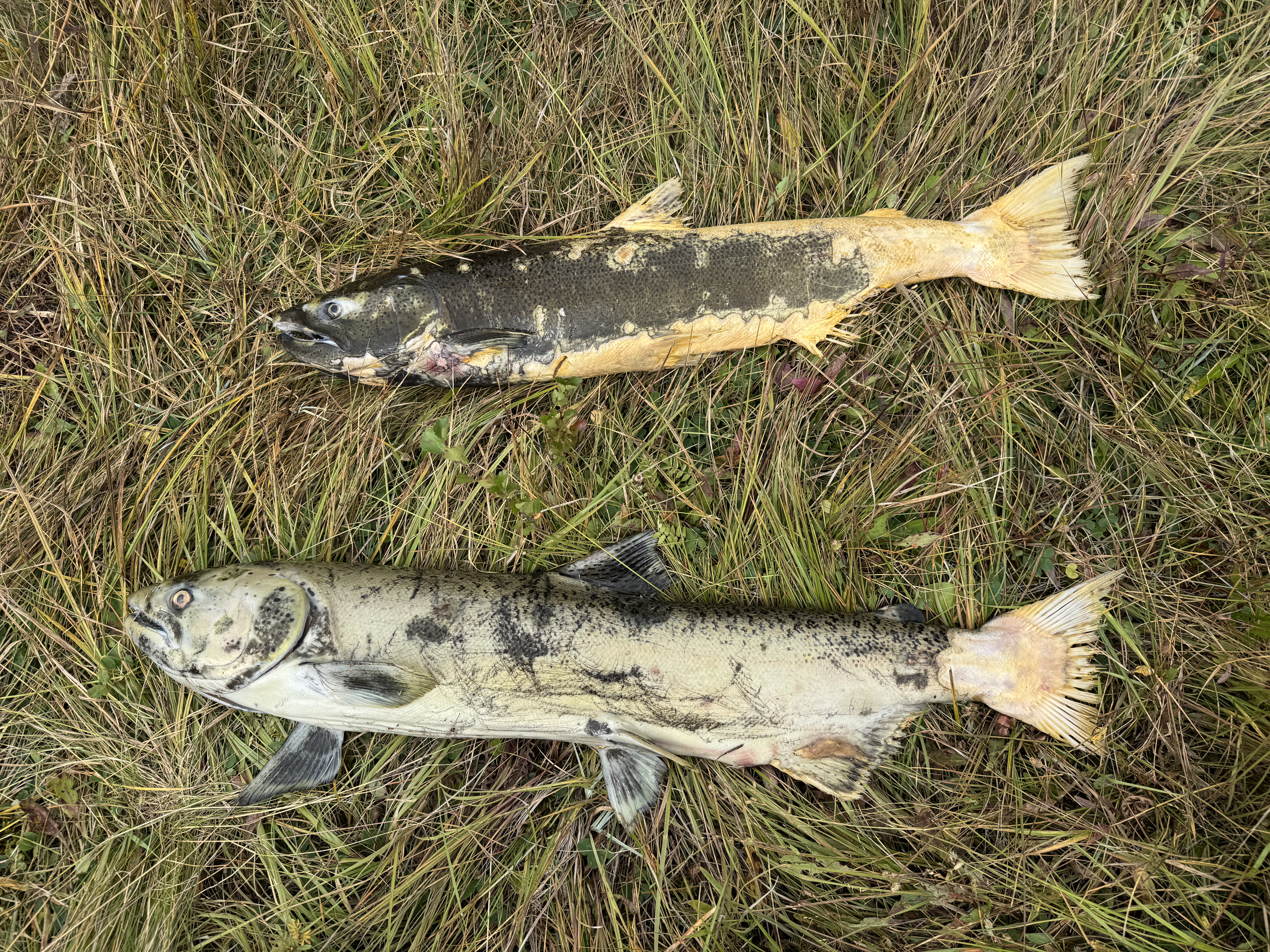
Chinook Salmon carcasses that were moved to the bank for sample collection.
Chinook salmon carcasses that were moved to the bank for sample collection.

Witnessing the Salmon Run

While counting redds and collecting biological samples are an important part of each survey, spending weeks walking these streams also offers a unique opportunity to witness one of nature's most remarkable events. Crews often observe Chinook salmon actively constructing redds, males competing for spawning opportunities, and the striking scenery surrounding the annual salmon run. No two surveys are exactly alike, and every stream offers something new to discover.

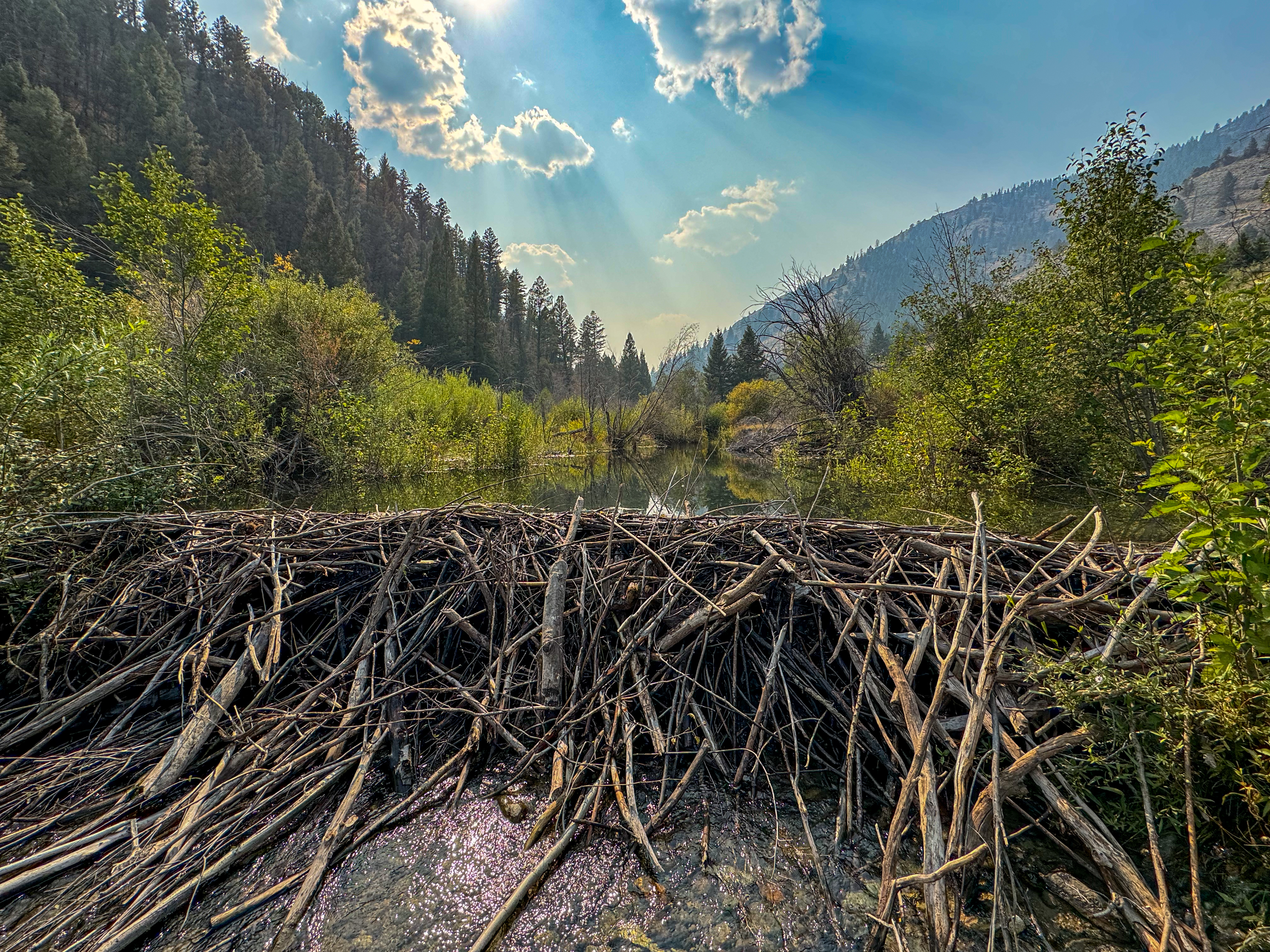
Beaver dam on West Fork Camas Creek
Beaver dam on West Fork Camas Creek.
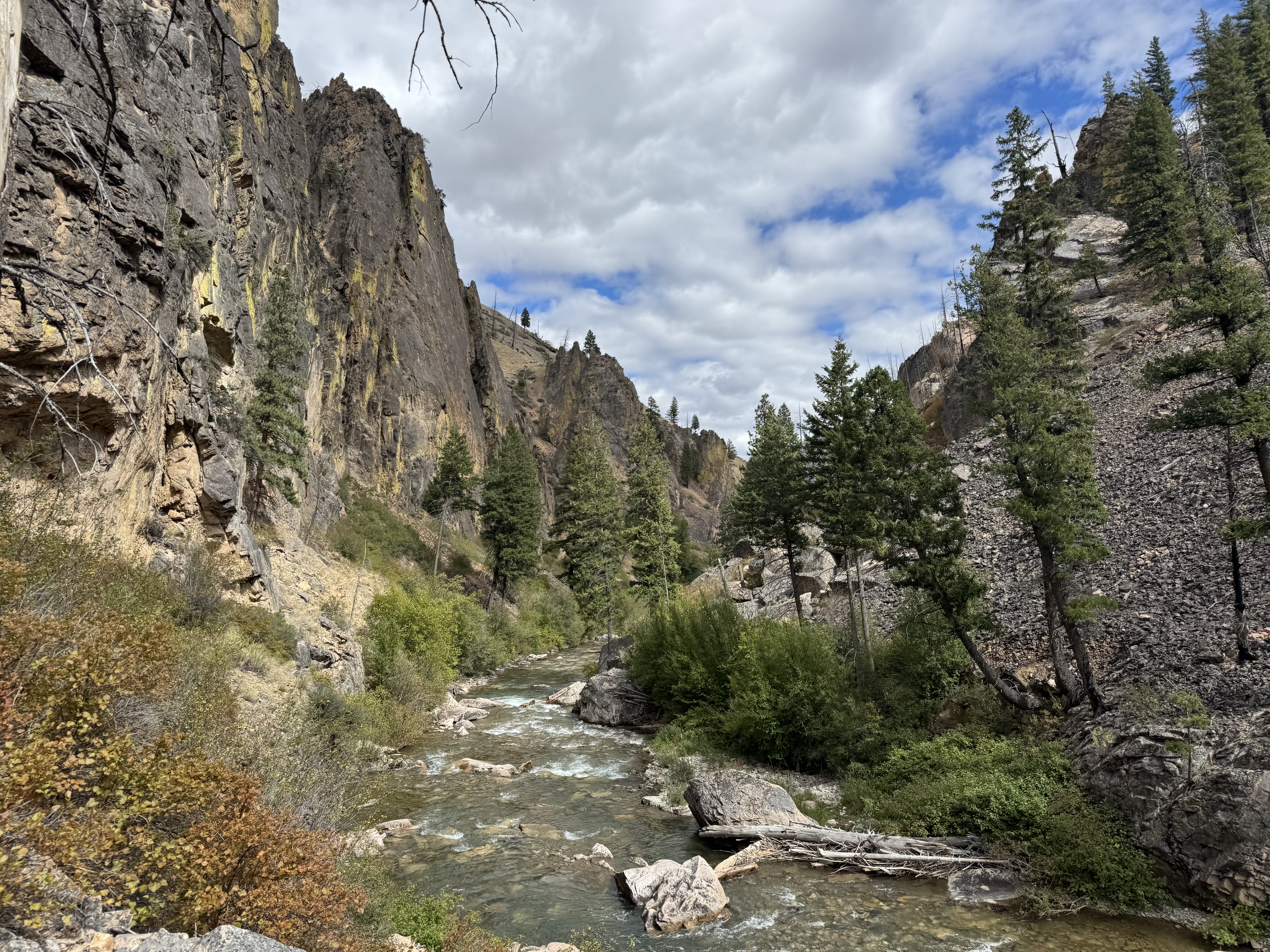
View of the canyon that surrounds Loon Creek
View of the canyon that surrounds Loon Creek.

Why it Matters

Long after the IDFG crews leave the stream, thousands of eggs remain hidden beneath the gravel. The adults have completed their journey, but the next generation has already begun. By counting redds, collecting biological samples, and documenting spawning activity throughout the Marsh Creek drainage, IDFG biologists help ensure that Idaho's Chinook story continues for years to come.