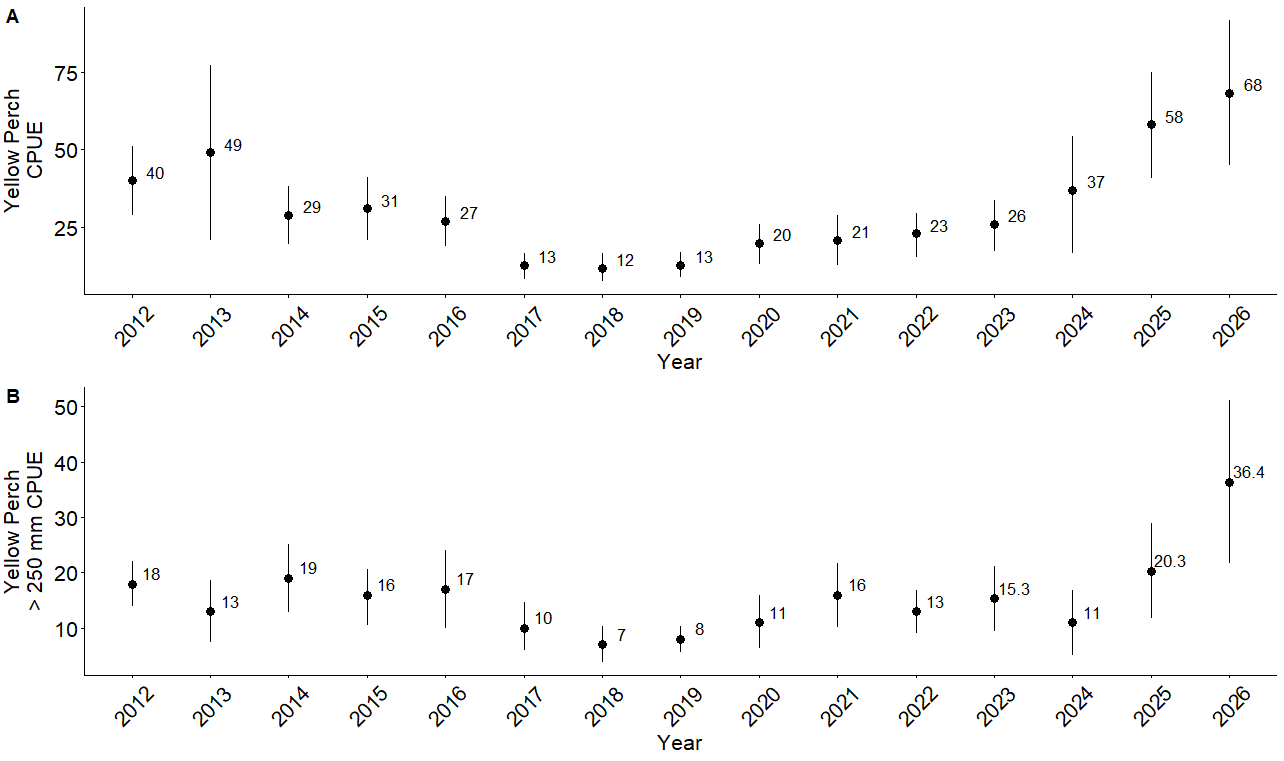
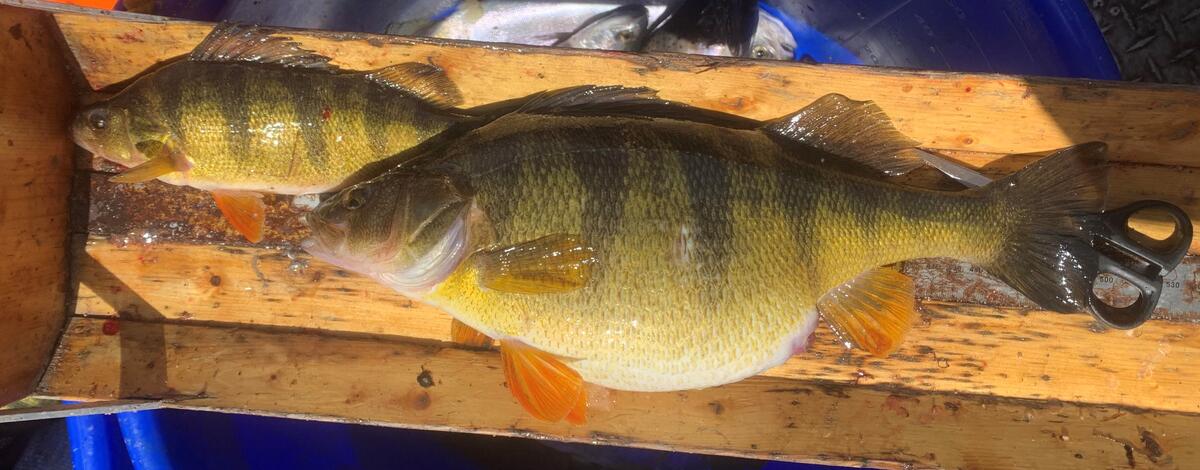
The future of perch fishing on Lake Cascade is looking promising. Annual sampling indicates that catch rates for perch are the highest we've observed since standardized monitoring began in 2012. Growth rates remain consistent with those that produced outstanding trophy-sized perch in the past, and all signs suggest we may be headed into another period of incredible, world-class perch fishing on Lake Cascade.
To understand why we're so optimistic about the future, it helps to look back at the history of the fishery and what our annual monitoring has been telling us over the past 14 years.
A brief history of Lake Cascade's perch fishery
Yellow perch have been in Lake Cascade since at least the 1950s. The reservoir was created in the 1940s with the completion of Cascade Dam, and perch eventually made their way into the reservoir by traveling downstream from Payette Lake, where they had been stocked as early as 1919.
By 1980, Lake Cascade (then called Cascade Reservoir) was considered Idaho's top fishery, with perch comprising more than 70% of the fish caught by anglers. But by the mid-1980s, anglers began noticing a decline in the perch population. By the late 1990s, IDFG surveys indicated that there were very few juvenile perch left in the reservoir.
The yellow perch restoration project
Between 2004 and 2006, IDFG staff implemented a large-scale restoration project on Lake Cascade. The project involved removing nearly 30,000 Northern pikeminnow and stocking more than 860,000 perch transplanted from other regional waterbodies.
The restoration effort was successful, and by 2011, the perch fishery was once again booming.
Standardized annual monitoring begins
In 2012, IDFG staff initiated standardized annual monitoring on Lake Cascade to track catch rates and size structure of fish inhabiting the reservoir. Catch rates — measured as catch per unit effort (CPUE) — provide an index of relative abundance that allows us to track changes in the fish population over time.
The objective was to develop a long-term dataset that would help us understand population trends, anticipate changes in fishery quality, and detect potential problems early enough to respond before they negatively affect the fishery.
That monitoring has provided an incredible amount of insight into the ups and downs of Lake Cascade's perch population.
2012–2019: The road to world-class perch fishing
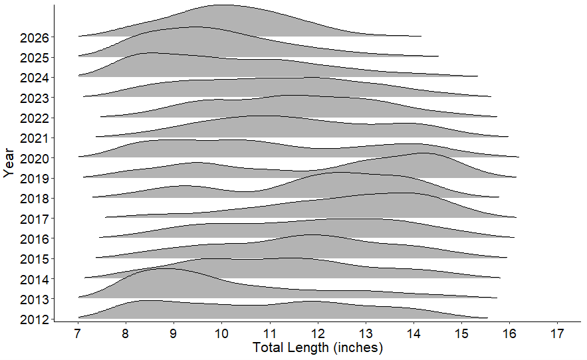
The perch stocked during the restoration project produced a tremendous increase in young fish. This showed up in our first year of standardized monitoring in 2012 when we observed a particularly strong group of 7- to 10-inch perch.
Annual monitoring tracked those abundant groups of fish as they grew. By 2015, many had reached 11–13 inches, and by 2017–2019, they had become the jumbo perch that earned Lake Cascade its world-class reputation.
Those were some outstanding fishing years. Anglers were consistently catching huge perch, and catch rates for fish over 13 inches were almost inconceivably high.