Idaho Fish and Game crews recently captured 37 elk over two days from a nonmigratory herd that has caused significant agricultural damage on private land northwest of Emmett for years, and released 34 of them in the Panhandle Region's Unit 7. All the elk that were moved are cows.

Fish and Game staff move 34 elk from Big Willow drainage in Southwest Idaho to the Panhandle
idfg-bpearson
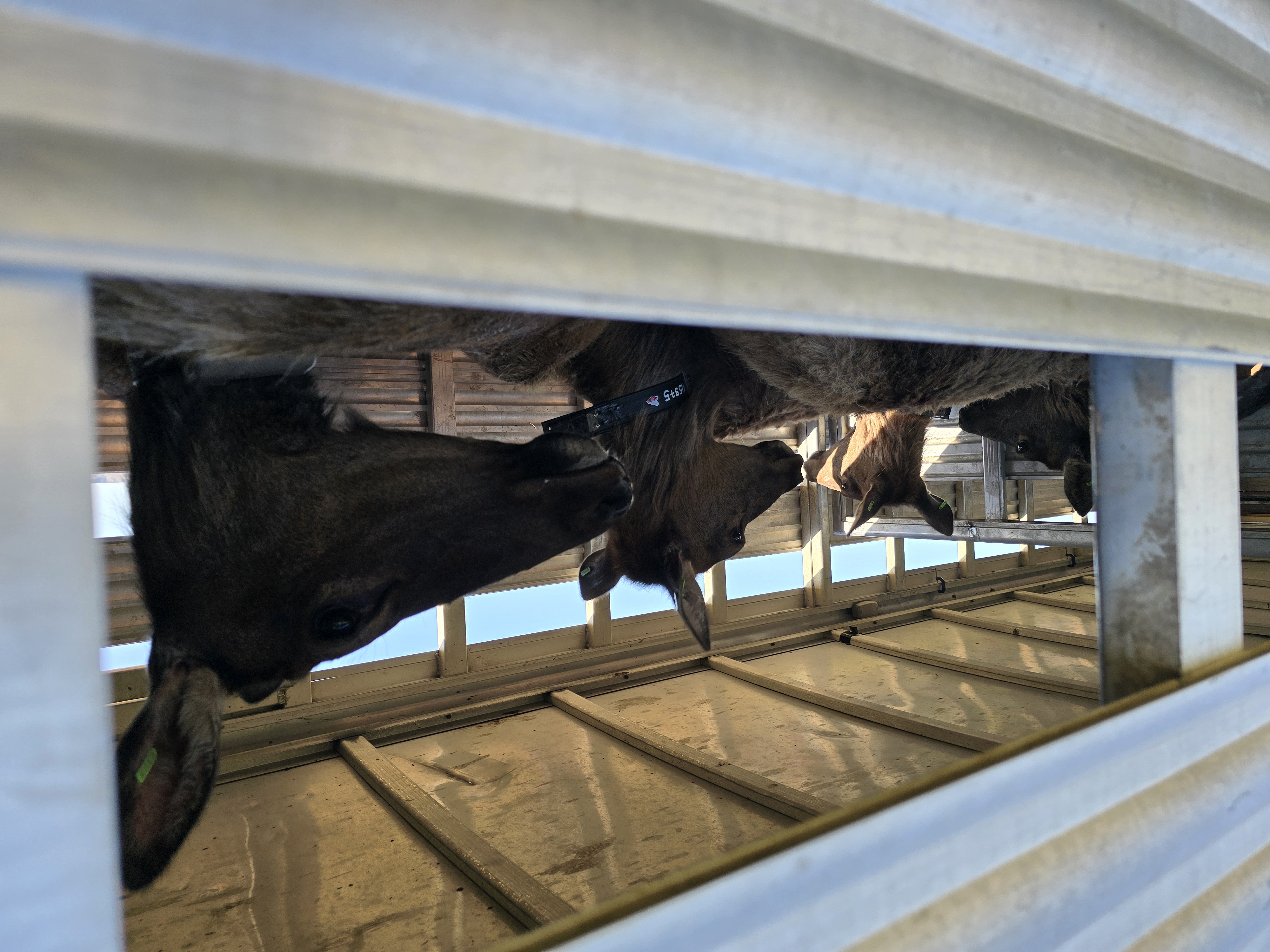
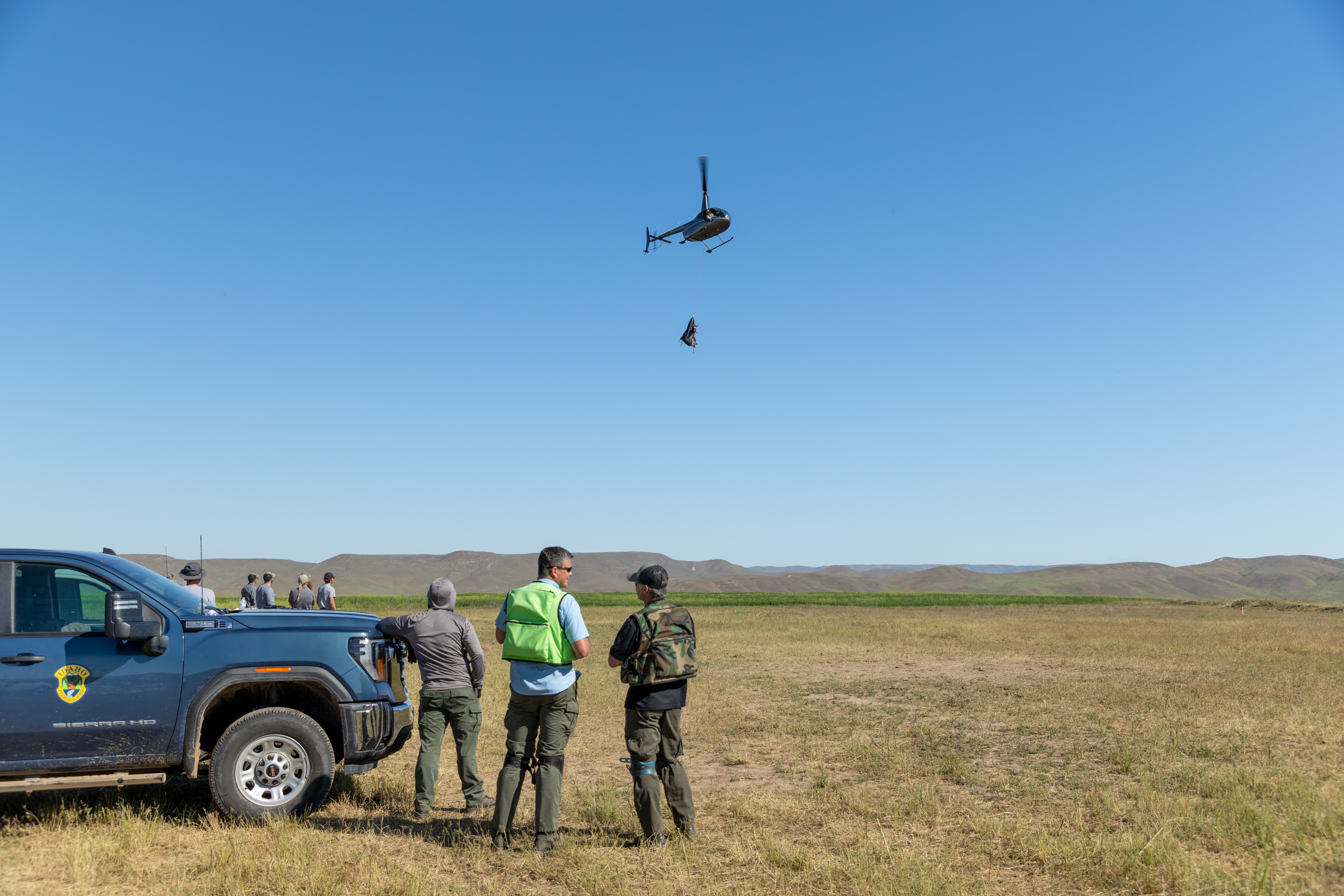
From a helicopter, Fish and Game staff sedated elk with a dart gun. The elk were then carried by helicopter to a processing site, where staff fitted the animals with GPS collars, conducted health checks, loaded them into trailers, and then drove them about 8 hours to the release site in the Panhandle. The operation required substantial staff time, contracted work with two helicopters, and risks to both staff and animals.
Crews captured 22 elk on May 4, and another 15 elk on May 5, from private land in the Big Willow Creek area in Unit 32. Three elk died during transport from capture-related causes, a known risk due to the stress of handling and reaction to sedation, which Fish and Game staff worked to minimize.
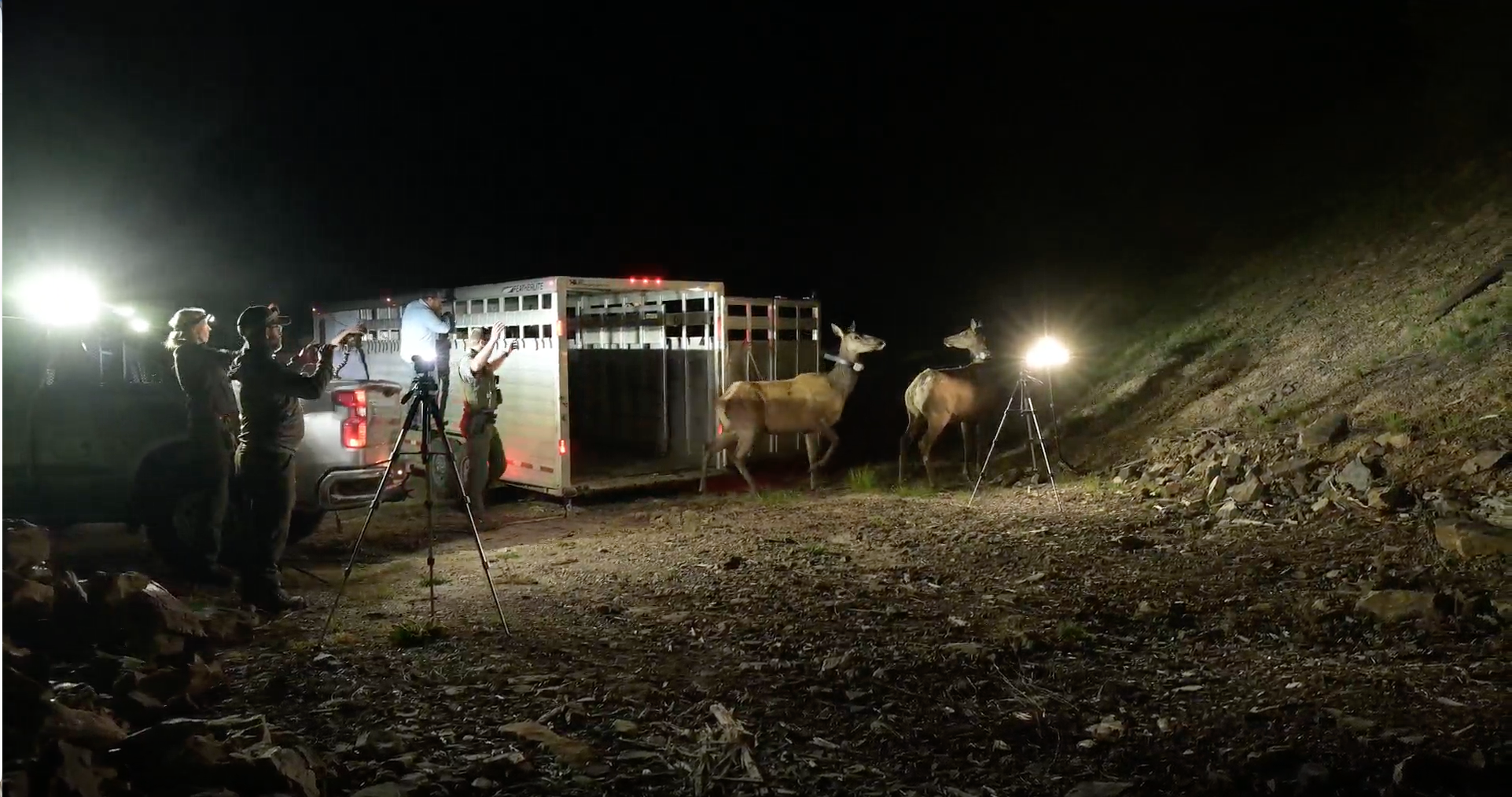
The release site in Unit 7 in the Panhandle Elk Zone is an area where Fish and Game’s current management plan calls for increasing elk numbers. Fish and Game staff will monitor whether these 34 elk remain in Unit 7, integrate with existing herds, and track survival and movements.
Habitat changes, predation, and low calf-to-cow ratios have reduced elk numbers in the area. Those challenges remain, and although adding 34 elk into Unit 7 will not meaningfully increase this elk population, the hope is that these elk will survive, reproduce, and contribute to the herd in the long term.
"This is an experimental approach to addressing depredation, and we want to be honest about it," said Regional Supervisor Josh Royse. "This is a situation where we’ve used every other tool in the toolkit to address this depredation issue, and we haven’t moved the needle. We tried something new, and we will evaluate both the cost and success of this project to decide where and when translocation may be an appropriate tool to reach for again."
Fish and Game staff first discussed this project during the January meeting of the Idaho Fish and Game Commission. The Big Willow resident herd has grown to about 350 animals over the past five years and caused more than $1 million in crop damage among five landowners last year. Hunters harvested about 150 elk on these private properties last year using general-season Weiser River Zone tags and Landowner Permission Hunts. Despite the harvest, annual calf production in the herd remains high and hunting alone hasn't reduced the herd.
Another phase of the project — lethal removal of approximately 60 more elk from this nonmigratory herd by USDA Wildlife Services – is planned for later this summer. Elk will be processed and distributed to Idaho food banks by Idaho Hunters Feeding the Hungry.