idfg-badge

Idaho Fish and Game

Kokanee fishing on Lake Pend Oreille

F&G staff gives kokanee fishing tips to help you better understand (and catch) these unique fish

idfg-rphillips

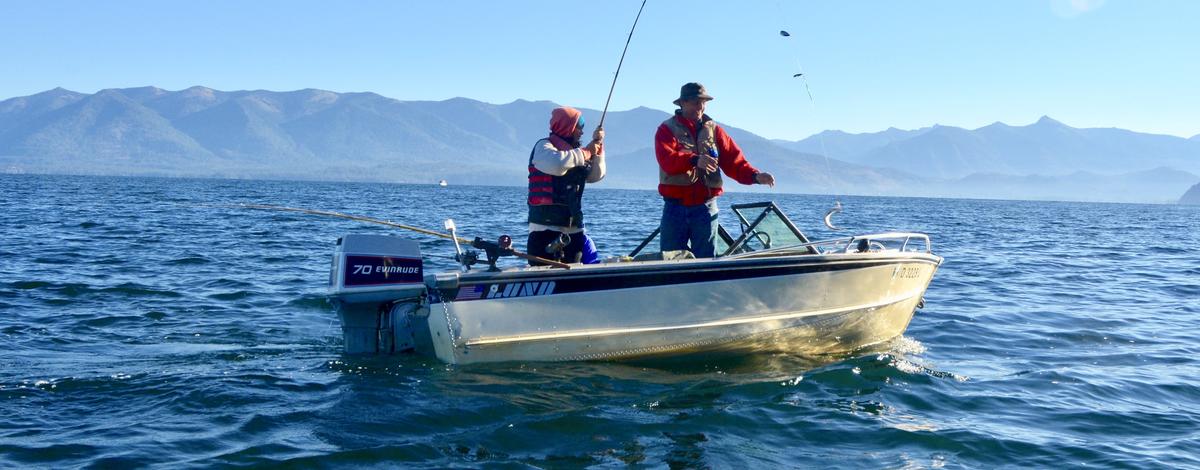
Trolling with specialized tackle is the preferred method to catch kokanee

Kokanee fishing techniques might be described as “familiar, but different.” People catch kokanee primarily by trolling, which is a pretty common method of fishing. But when you think of most species you troll for, there’s usually a variety of ways to catch those fish, including from shore. 

That’s why kokanee are different. Kokanee are “pelagic” which means they spend most of their time suspended in open water. Kokanee’s primary diet is plankton, which also differs from other game fish that tend eat a variety of things.
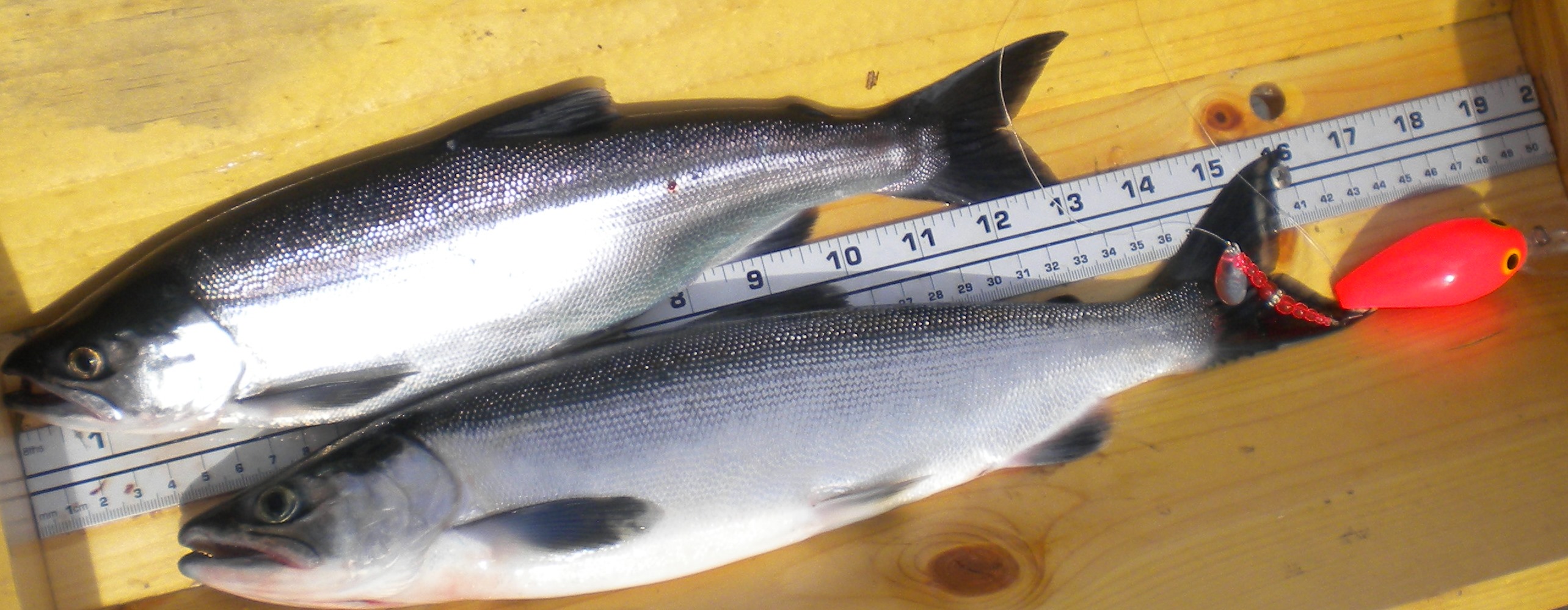
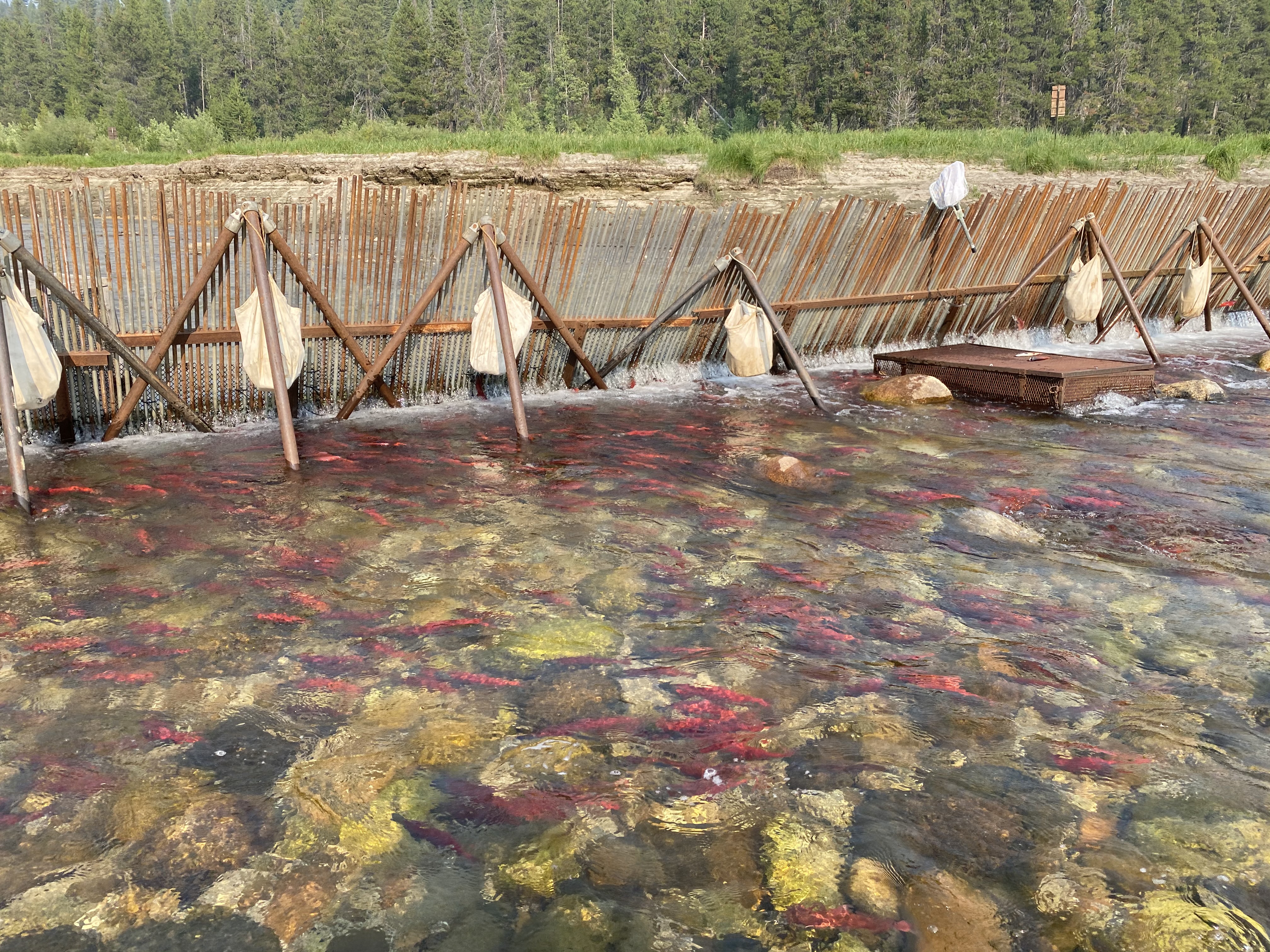
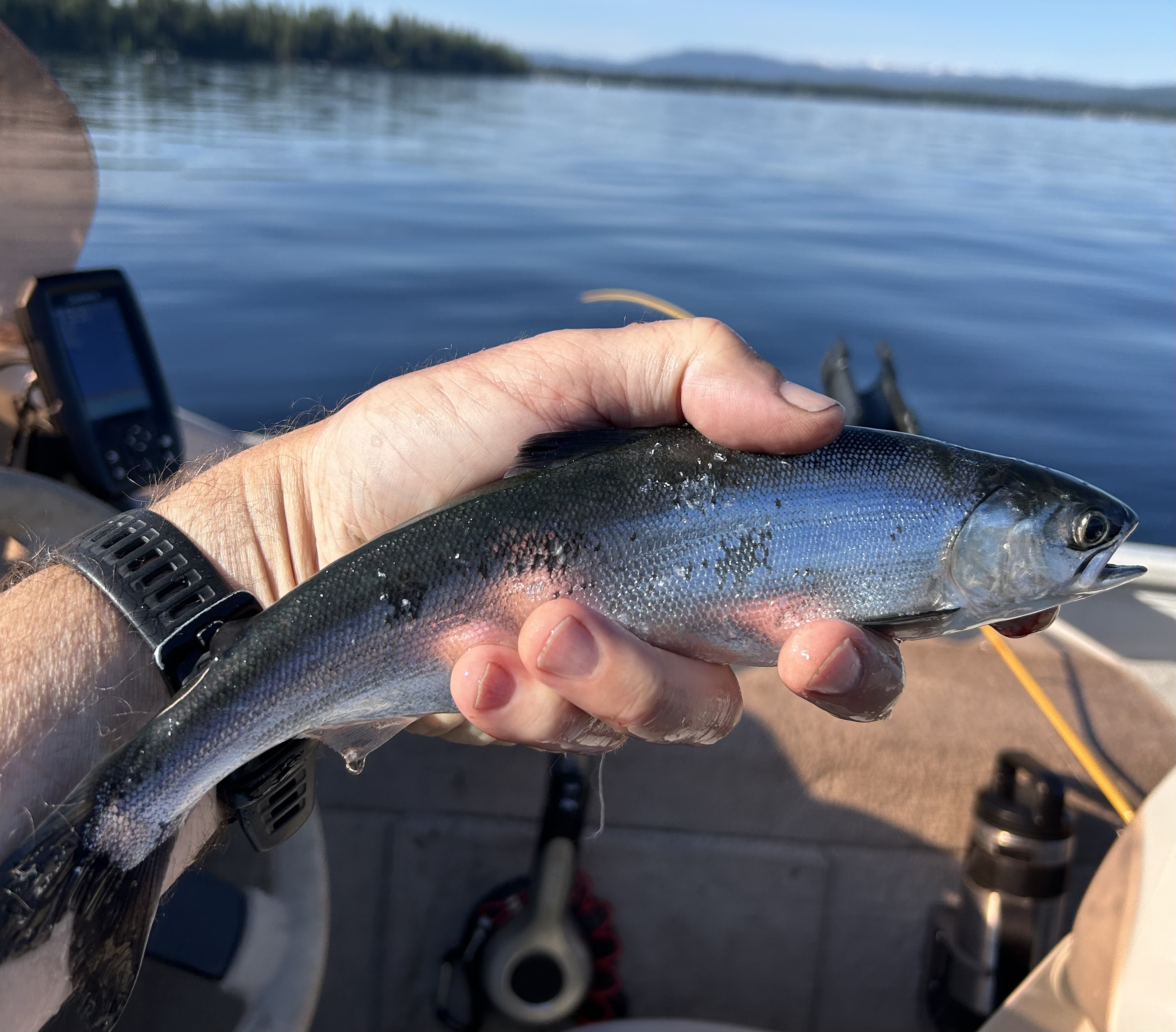
In case you didn’t know, kokanee are landlocked sockeye salmon, which are native to Idaho, but kokanee fisheries are mostly the result of Fish and Game stocking fingerlings in lakes and reservoirs. During late summer and fall, Fish and Game crews capture and spawn adults to replenish hatcheries so they can raise and release the next generation. 

Kokanee abundance (and scarcity) are typically caused by environmental conditions, but through decades of experience, biologists have maintained fairly reliable kokanee fisheries throughout Idaho that attract thousands of anglers. Kokanee populations still fluctuate annually because biologists can’t control the amount of food available for kokanee in each body of water, but they strive to meet anglers’ preferences for kokanee fishing within the natural fluctuations. 

All this is to say that Fish and Game biologists manage kokanee a little differently than other species, and anglers do things a little differently to catch them.

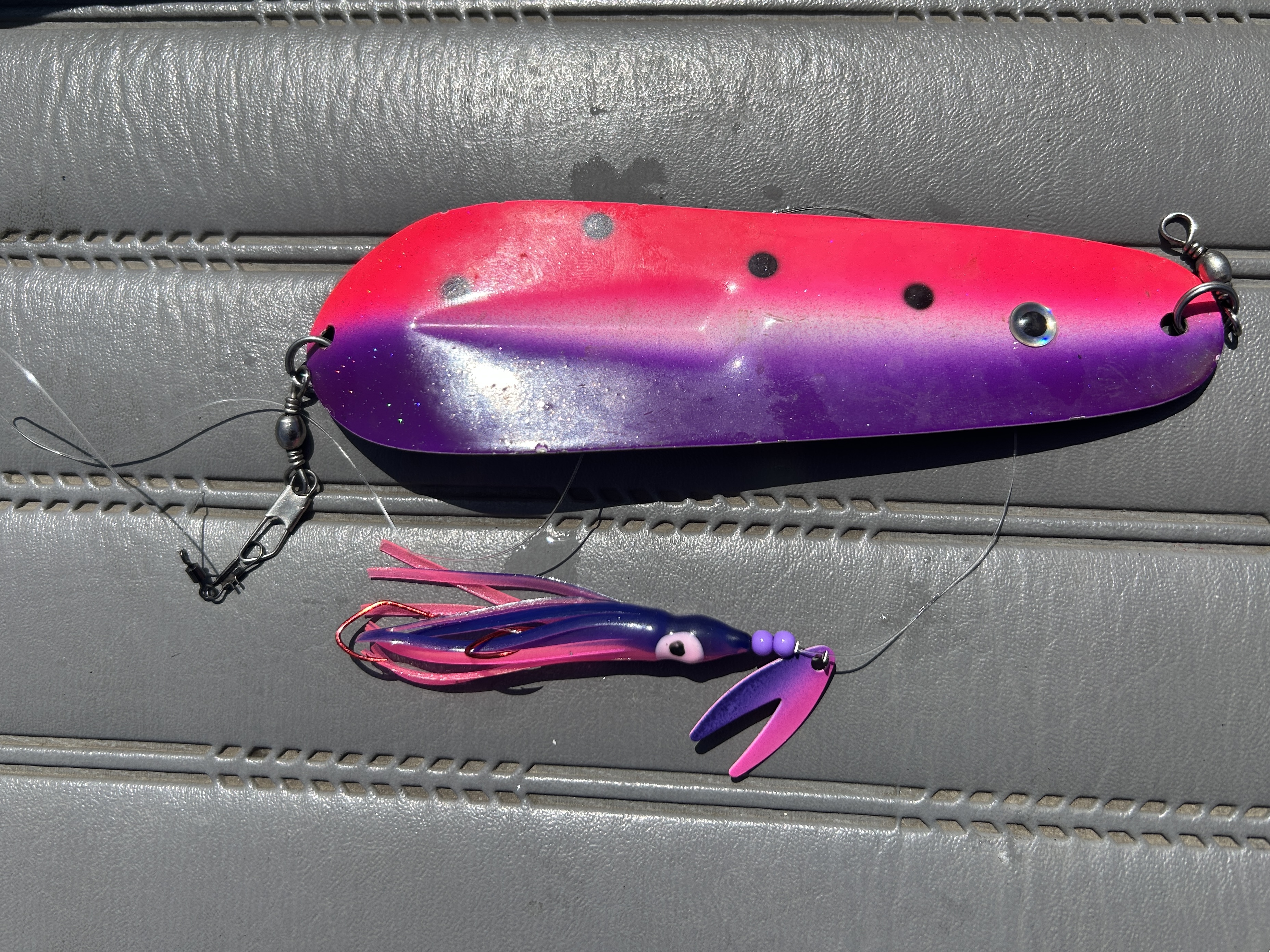
Pink and purple kokanee tackle

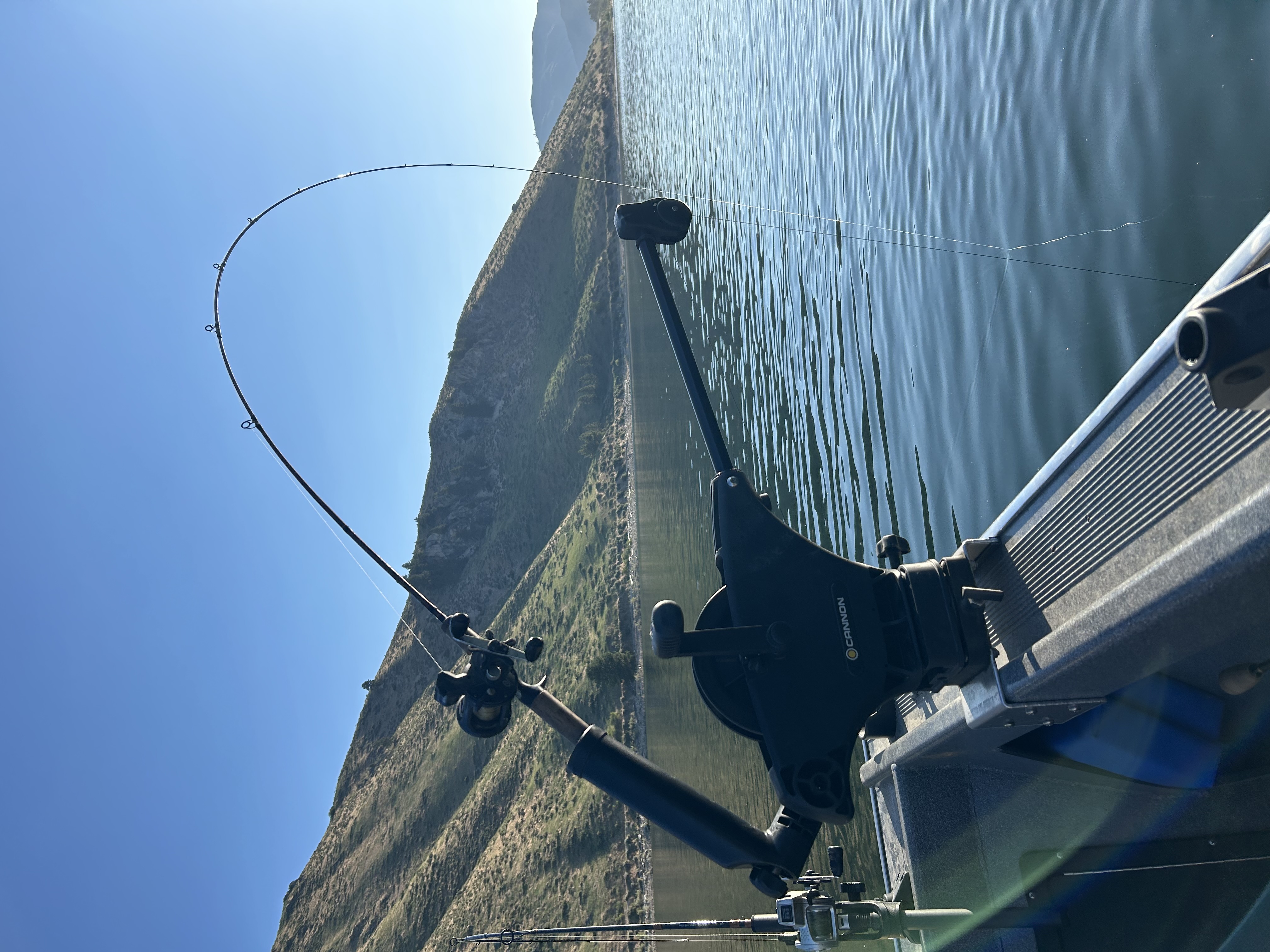
If you’re new to kokanee fishing, you may hear some terms you’re unfamiliar with, such as dodgers (a large, thin, metal lure), snubbers (a rubber or latex shock absorber), hoochie (a squid-like lure) and downriggers (a large reel that lowers and raises a heavy weight). Don’t be intimidated, it’s easy to learn the “language” of kokanee fishing, and you can visit your favorite tackle shop, or do an internet search for basic kokanee gear and trolling tactics.

Fortunately, Idaho Fish and Game staff not only stock and manage kokanee fisheries throughout the state, they also spend time fishing for them. Our experienced (and novice) kokanee anglers at Fish and Game provided these tips to improve your knowledge of kokanee fishing and hopefully help you catch more fish, or just know these unique fish better. 

Downrigger on a boat

Kokanee tackle

Build a whole kokanee system

This includes a rod that is light and sensitive, but capable of trolling a dodger (flasher), lures such as hoochies, spinners, flies, plugs, etc. Add some bait, such as shoepeg corn (my favorite), maggots or worms. Fish always tend to key in on certain color combinations, but those seem to change by water body and trip, so variety is important. Pink, orange, purple and green seem to be the big four. John Cassinelli, Fish and Game Anadromous Fish Manager

Pay attention to leader lengths

If youre fishing with dodger/lure combinations, leader length matters. For lures with no built-in action, such as hoochies, use shorter leaders, which allow the dodger to impart action on the lure. Try a leader length of approximately 1.5 times the length of the dodger. Leader lengths for lures with action, like wedding ring spinners, doesnt matter as much and can be longer (three times the dodger length or more). Rob Ryan, Panhandle Regional Fish Biologist

Try a variety of lure combinations

My go-to combinations are dodger/hoochie, dodger/apex lure, or dodger/wedding ring spinner. Try a variety of color combinations, but have something pink on hand. Rob Ryan, Panhandle Regional Fish Biologist

Start simple and build on it

It’s not mandatory to have a fish finder, downrigger and other gear common to kokanee fishing. You can catch them with a basic dodger/hoochie rig, or a spinner/wedding ring combo, both tipped with corn or other bait. Use weights to get the depth you need. Many kokanee anglers have lots of specialized tackle because it helps them catch more fish, but don’t be discouraged if you’re just starting out. You can catch kokanee with the basics and add gear as you progress. Roger Phillips, Public Information Supervisor

Priest Lake 17

Kokanee trolling tips

The Rule of 100

Most anglers new to kokanee fishing struggle with knowing what trolling distances work best, and don’t know how far behind the boat they should run their gear. The rule of 100” is a good place to start. The water depth and distance behind the boat should add up to at least 100. For example, when trolling 30 feet down, use a 70-foot setback (30 + 70 = 100). A longer setback is usually better when trolling near the surface, or in very clear water, because kokanee may be spooked by boat traffic. Its a rule of thumb, so feel free to experiment until you find what works best for you. Martin Koenig, Sportfishing Program Coordinator

Troll slow

Speeds between 0.9 to 1.5 mph are typically most effective; my go to is 1.2 mph. Rob Ryan, Panhandle Regional Fish Biologist

Temperature (mostly) determines how deep to fish

Kokanee like cooler water and will adjust their depth to stay in it. Early in the season – like April and May (depending on location and elevation) – lakes are often cold from the surface down. That means kokanee can be near the surface. You may not even need a downrigger early in the season because you can present tackle within 5 to 10 feet of the surface. As the weather warms, so will water temperatures. Because cold water is heavier and sinks below the warming surface water, kokanee will often suspend below that warm layer where the cold water starts. This is called the thermocline” and it gets deeper throughout the summer, so youll need to adjust your tackle deeper when the water warms in late spring and summer. Martin Koenig, Sportfishing Program Coordinator

Watch the surface temperatures

When surface water temperatures are 50 to 60 degrees, kokanee are often near the surface. Fishing on or near the surface is the way to go during that time of year. When fishing shallow, put your gear farther away from the boat to increase strike potential. Rob Ryan, Panhandle Regional Fish Biologist

Going deep

As surface temperatures warm, downriggers are great for getting your gear down to the kokanee layer and staying there. Weighted lines combined with trial and error on distance behind the boat will also work to locate kokanee and stay on them. Rob Ryan, Panhandle Regional Fish Biologist

Downrigger distance

Distance from the downrigger ball to the lure usually is not too critical if youre fishing deeper than 25 feet. Rob Ryan, Panhandle Regional Fish Biologist

Key on the combination of speed and depth

When you have to have your gear where the fish are layered (depth), the tackle has to present itself to the fish in a manner that will elicit a strike (speed). So, anglers need to have the ability to fish at various depths (downriggers, trolling weights, or weighted lines) and speeds as slow as 0.8 mph. My rule of thumb is to fish near the surface early in the spring (1-10 feet) and go progressively deeper into early summer (15-40 feet). I fish three downriggers and stagger depths until Im keyed into where fish are holding. John Cassinelli, Fish and Game Anadromous Fish Manager

Vary your speed and direction

Avoid trolling in a straight line and at the same speed.  An s-curve pattern varies the speed of your lures and fish often bite when the boat is turning. A boat speed of 1-2 mph is best, and I typically target 1.3-1.5 mph. Andy Dux, Panhandle Region Fisheries Manager

Using electronics to catch more kokanee

Fish finders are great kokanee fishing tools

Using sonar is a big help to find the depth where kokanee are feeding. It can also fool you into catching other species like trout (or pikeminnows), so results may vary! Other than finding fish, your downrigger balls are usually easy to track on your sonar, so you can see precisely how deep your tackle is trolling. Martin Koenig, Sportfishing Program Coordinator

Make tracks in the water

I like to keep GPS tracks when I troll. If I mark groups of fish, or get a bite, I can also record those locations and troll back through productive areas, or avoid empty water. Most fish finders can also overlay water temperature and speed right on the monitor, which can be a big help. Martin Koenig, Sportfishing Program Coordinator

Don’t always believe what you don’t see

Dont get discouraged if you dont see fish on your fish finder, especially early in the season. Your fish finders view is like a pyramid, with your boat at the top. When kokanee are shallow, you may never see them on your monitor because they can pass outside that narrow cone without being detected. Don’t be surprised if you hook a fish even though your monitor isn’t showing any. Martin Koenig, Sportfishing Program Coordinator

Mark the spot

When you find a school of biting kokanee, mark a waypoint with your boat electronics or a smartphone mapping app, which is an inexpensive alternative. Trolling back through the same school of fish can really improve your catch rate, especially when fish are harder to find. It also gives you a good starting point when you return on your next trip days or weeks later. Andy Dux, Panhandle Region Fisheries Manager

Kokanee, Cassinelli family

Hook and land more kokanee

Keep constant pressure, but not too much

Kokanee have soft mouths, and you can lose a fair number of hooked fish, which is fairly normal, so dont get too frustrated. Reel steady and constant and be quick with the net once fish are close. John Cassinelli, Fish and Game Anadromous Fish Manager

Add a rubber snubber

If youre trolling with gang trolls, use an inline snubber to reduce the number of fish coming off the hook. Rob Ryan, Panhandle Regional Fish Biologist

Get the net! 

Kokanee are notorious for shaking loose right behind the boat. Having a long-handled net will greatly increase your landing rate. Andy Dux, Panhandle Region Fisheries Manager

Other kokanee tips

Get the kids involved

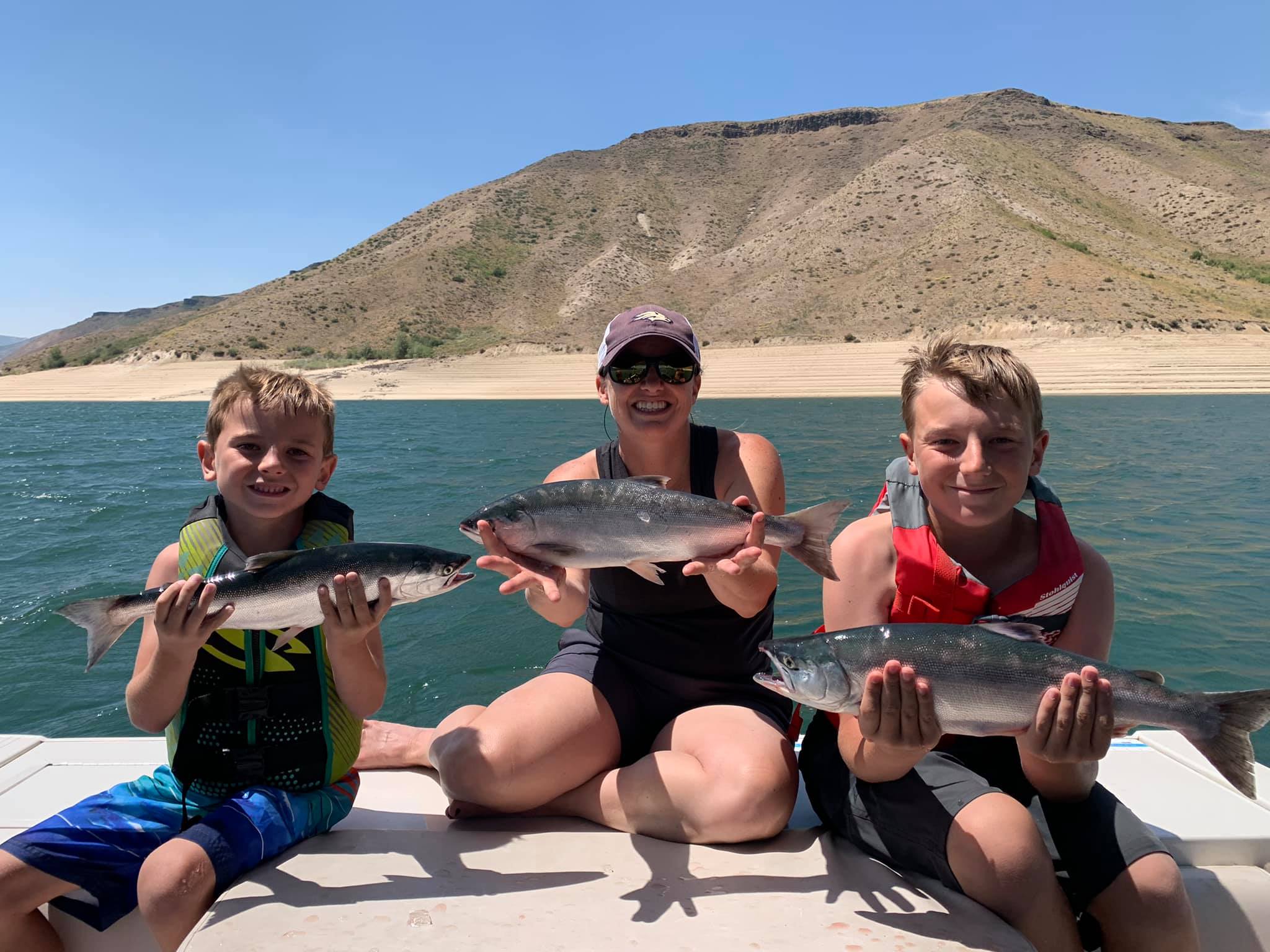
Kokanee fishing can be a great introduction to fishing and get kids involved with tackle and bait and some assistance with a downrigger, or releasing line. Kids can easily catch on and feel like they’re part of the action. Kokanee put up a good fight, and its a fun way to get your kids to drop the snacks and start reeling. And if you have more than one child, hand them the net to assist. Sara Cassinelli, Digital Content Manager

Watch the weather

Expect the unexpected when it comes to weather. One moment youre bundled up, and the next, youre shedding layers and grabbing sunscreen. As most Idahoans know, weather can change rapidly, especially in the spring. Be sure to check the weather reports, including wind forecasts. You might start the day with clear blue skies, only to experience wind gusts, white caps, and pouring rain later. Be prepared for anything. Sara Cassinelli, Digital Content Manager

Hook’em and cook’em

Kokanee are relatively short lived because they typically spawn and die upon reaching maturity, which is typically 3 to 5 years. Not to discourage catch-and-release fishing, but kokanee are among the tastiest fish in Idaho. And like all fish, they taste best fresh out of the water, so plan to eat them as quickly as possible. Fry them over medium heat for a few minutes per side. I like to fry them in a blend of olive oil and butter. They also taste great grilled or baked with your favorite coating and/or spices. Roger Phillips, Public Information Supervisor