idfg-badge

Idaho Fish and Game

press release thumbnail bears in neighborhoods

Drought and natural food scarcity push bears into places they don’t normally go

idfg-cliess

For most Idahoans, seeing a bear in the wild is an exciting reminder that we live in a state rich with wild charm. But seeing one up in a tree in a Nampa neighborhood, roaming a Pocatello backyard, or searching for food around homes in the Wood River Valley is a much different story.

Black bears are generally wary of people and spend most of their time in wild country where they can find the food, water, and cover they need to survive. But this year, Idaho Fish and Game has been seeing bears in places they would not normally be, and dry conditions across southern Idaho and the West are likely playing an important role.

From the Treasure Valley to the Wood River Valley and into southeast Idaho, Fish and Game has responded to a number of problem bear reports this year. The circumstances and outcomes have varied, but the underlying issue is similar: When natural foods become harder to find, bears have to work harder to meet their nutritional needs.

Bear eating out of a tipped over garbage can

And as summer turns toward fall, that need becomes even more urgent.

Black bears must consume enormous amounts of food to build fat reserves before winter. A bear may consume 20,000 calories or more in a day during this period. When natural foods are abundant, bears can meet those needs by moving through their normal habitat and feeding on vegetation, berries, nuts, roots, and other natural food sources.

But that’s not always the case in drought years.

When the landscape has less to offer

This year, dry conditions have made natural food sources more difficult to find not only in portions of southern Idaho but across nearly every western state in the country. Wildlife agencies across the West have been documenting roaming black bears popping up in cities and neighborhoods that they normally wouldn't visit when natural food sources experienced normal years. 

Fish and Game biologists as far back as June 15 specifically warned that bears may move farther and into less typical areas as the summer progresses because natural foods become harder to come by. That does not necessarily mean bears are starving or that every bear seen near a neighborhood is looking for garbage. Instead, it means the landscape is changing the way bears use their habitat.

A bear that might normally find enough food by traveling through a given drainage may have to cover more ground this year. As it moves, it may encounter river crossings, agricultural areas, orchards, subdivisions, highways, or other places where food and water are easier to find.

That’s when things get challenging.

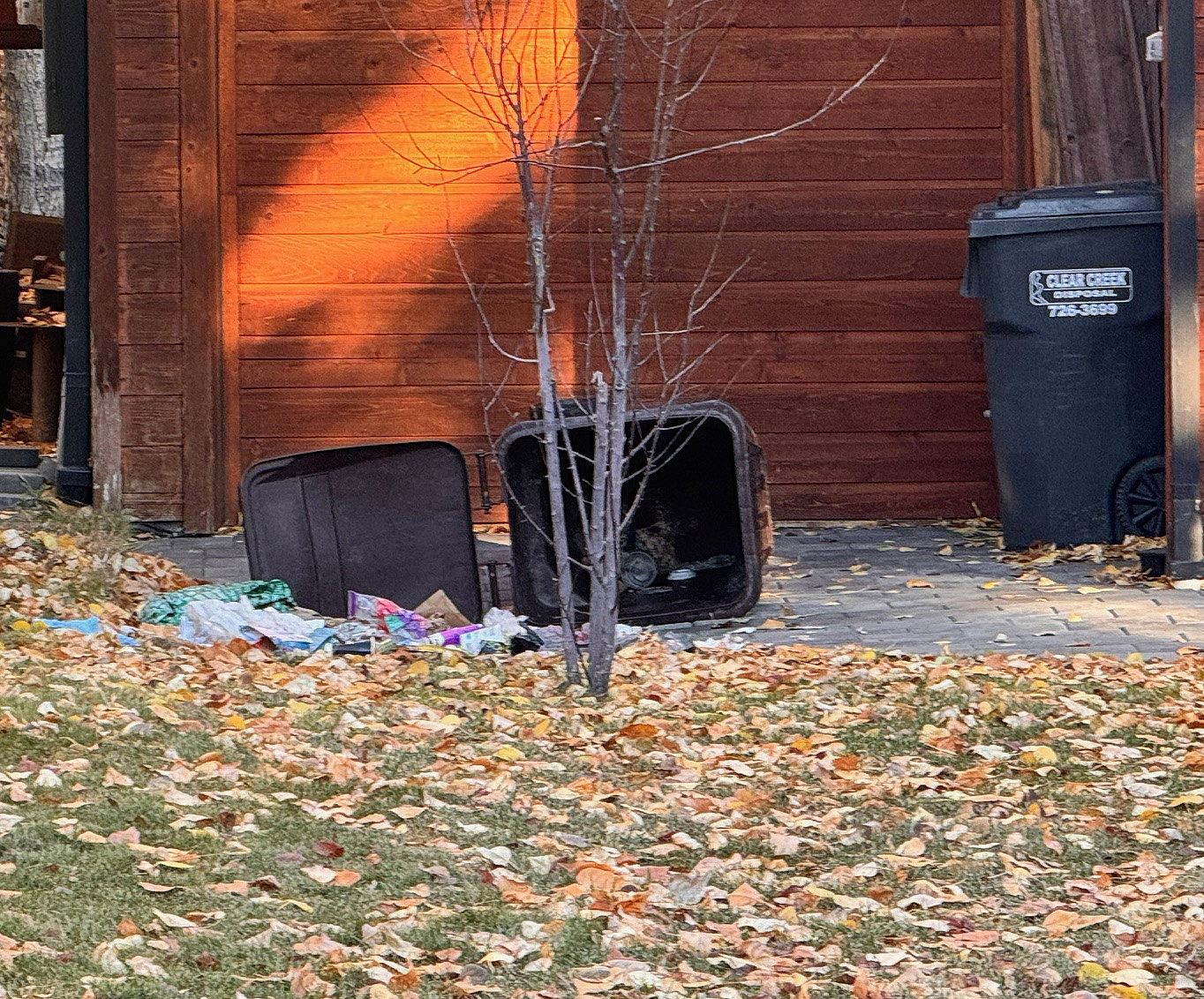
Unprotected garbage carts after a bear scatters garbage around a home in the Wood River Valley
The result of bears getting into improperly secured garbage cans in a neighborhood.

A backyard apple tree, bird feeder, bowl of pet food, barbecue, or garbage can be a gold mine for a bear that has spent hours searching for natural food. And once a bear discovers one of those easy meals, it has little reason to forget where it found it.

That is when a wildlife sighting can turn into a wildlife conflict.

In June, Fish and Game staff in the Southwest Region responded to a young male black bear that had climbed a tree in a residential neighborhood in Nampa. The yearling was believed to have recently separated from its mother and was trying to survive on its own. The bear had not caused problems, had not been getting human food, and still showed an appropriate fear of people. Those factors allowed Fish and Game, working with Nampa police and fire departments, to safely immobilize and relocate the bear to suitable habitat north of Ola — a happy ending for both bear and for staff.

Fish and Game's Southwest Region was already seeing more reports of bears in town than usual, and earlier in the year than usual. Wildlife managers attributed at least part of that increase to drought conditions and warned that additional bears could show up in unexpected places as natural food became more difficult to find later in the summer and early fall. 

In the span of a week, Southwest Regional staff have intervened on three separate bear incidents alone in Boise. On Sept. 2, Fish and Game biologists responded to a black bear cub in the Harris Ranch neighborhood. And subsequently on Sept. 9, wildlife staff intervened on two separate neighborhood bear incidents just down the road near Parkcenter Boulevard and Warm Springs Avenue. One of the bears was captured and will be transported to a bear rehabilitation center, while the bear from the second incident was euthanized.

The same story has been playing out further east.

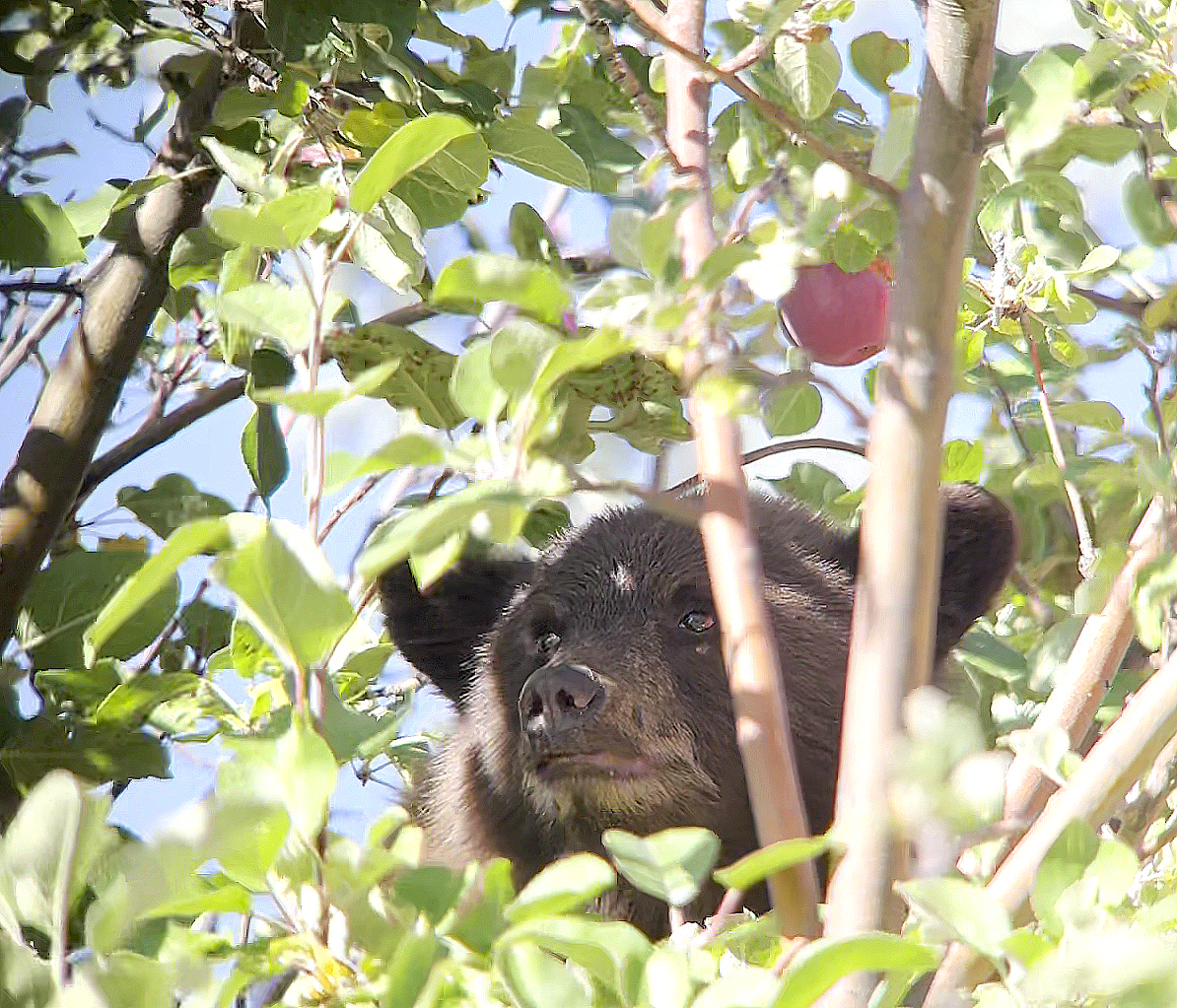
A black bear cub finds an apple tree full of apples in Hailey, Idaho
A black bear cub sits in an apple tree in Hailey, Idaho.

In the Wood River Valley, Fish and Game has received repeated reports of black bears around homes, neighborhoods, and public areas. Many of those bears have been attracted to easily accessible human food — including garbage containers and barbecues. The valley's wildlife-urban interface means bears and people already share the landscape, but dry conditions can increase the likelihood that a bear will venture into developed areas while searching for food.

Case in point, a young black bear turns up in a Pocatello backyard.

On Aug. 31, Fish and Game biologists found a black bear climbing a fence and foraging on berries. It was captured and released in a more suitable, remote location. Biologists said they could not be certain how the bear reached the neighborhood, although it may have followed the Portneuf River corridor while searching for food.

young black bear in tan carrier with closed metal door
A young black bear captured in a Pocatello neighborhood and waiting to be relocated.

The Pocatello and Nampa bears were important for another reason: It demonstrated that not every bear found near people is a “problem bear.”

The bears were not eating garbage, had not entered a structure, had not damaged property or threatened people, and had not become habituated to humans. But because they were close to homes and busy roads, Fish and Game determined that moving them away from town was the safest option for both the bear and the public.

These incidents occurred in different communities and under different circumstances, but they illustrate the same broader point: In a dry year, bears may be traveling farther, using different corridors, and appearing in places where people do not typically expect to see them.

From an unexpected visitor to a problem bear

What happens after a bear enters a neighborhood can depend heavily on what it finds there.

A bear that wanders through town and finds nothing to eat may simply continue moving. In fact, Fish and Game encourages residents who encounter a bear to remove attractants immediately. Even if the bear returns once or twice, it may eventually move on if it consistently finds no food.

The situation becomes much more complicated when a bear receives a food reward.

Bears are intelligent, adaptable critters. If a bear finds garbage, pet food, or another easy source of calories, it can learn that homes and neighborhoods are productive places to search. Repeated rewards can cause a bear to become food-conditioned, meaning it begins associating people and human structures with food.

A bear that initially knocks over a garbage can may eventually learn how to open a garage door, climb a fence, or break into a building. The bear may become increasingly comfortable around people, pets, and homes. As that fear of humans diminishes, the potential for a dangerous encounter increases.

This year's incidents provide a stark example

In July, Fish and Game euthanized a food-conditioned black bear after it broke into an occupied residence in Swan Valley. The bear entered through a window while the homeowners were inside sleeping, searched the kitchen, and ate a pumpkin pie. It returned the following night and obtained another food reward from unsecured household garbage.

At that point, relocation was not an option.

Fish and Game's priority in these situations is human safety. A bear that has entered an occupied residence and repeatedly received human food presents a substantially different risk than a bear simply passing through a neighborhood. That distinction is important because the outcome of a bear encounter is often influenced by what happens before Fish and Game receives the call.

When a bear is reported early, wildlife staff may be able to work with residents to remove attractants and make an area less appealing to the bear. Those early interventions can provide an opportunity for the bear to move on while it still retains its natural wariness of people. If the first report comes after a bear has begun breaking into homes, receiving repeated food rewards or losing its fear of people, Fish and Game is left with fewer options.

It’s easy to fall into the trap of seeing these bear stories as isolated one-offs: A bear got lost, a young bear wandered into town, or a bear found someone's garbage.

But the picture is broader.

Idaho is bear country

Even areas that feel highly developed can sit surprisingly close to wild habitat. The Treasure Valley, for example, may seem far removed from the mountains when viewed from a city neighborhood, but it sits along the edge of Idaho's wild landscape. Fish and Game reminds residents that essentially all of Idaho can be bear habitat. 

The goal is not to eliminate every bear sighting. In many cases, a bear moving through a neighborhood is simply a wild animal trying to find its next meal. The goal is to keep that bear wild.

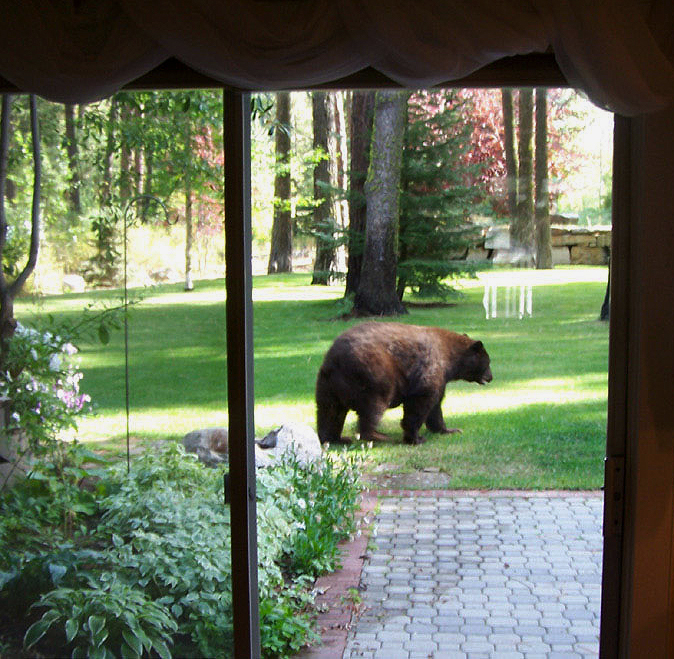
jeffrohlman_bbear2_cropped
A bear wanders through a homeowner's front yard.

The easiest bear conflict to manage is the one that never develops.

Residents in bear country can take several simple steps to make their homes less attractive to a hungry bear. 

  • Garbage is one of the biggest attractants. Store garbage in a bear-resistant container when possible, and make sure lids are securely latched. If a bear-resistant container is not available, keep garbage inside a garage or secure shed until the morning of pickup. Do not leave garbage at the curb overnight.
  • Bird feeders should also be removed during the months when bears are active. Fish and Game recommends removing bird feeders between April and mid-November, then putting them back out after bears have denned for the winter.
  • Pet food should be kept indoors, and coolers, refrigerators and freezers should not be stored outside where a bear can access them. Residents with fruit trees should pick ripe fruit promptly and clean up fruit that falls to the ground. Barbecue grills should also be cleaned and secured rather than left as an easy source of food odors.

These steps may seem small, but to a bear trying to consume thousands of calories every day, the difference between an empty neighborhood and one filled with easily accessible food can be significant.

Most importantly, residents should report bear activity to Fish and Game promptly.

Early notification gives wildlife managers more options. It allows them to determine whether a bear is simply passing through, whether attractants are drawing it into an area, and whether additional action is necessary. Waiting until a bear has become comfortable around people can dramatically change the situation.

Give bears a reason to keep moving.