idfg-badge

Idaho Fish and Game

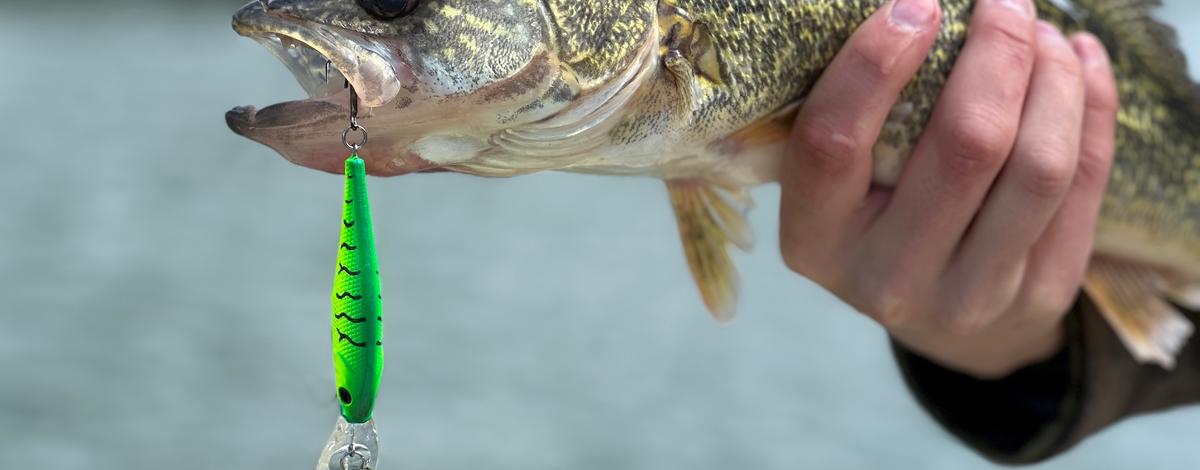
Lake Pend Oreille walleye caught with a crankbait

Catch, kill, keep: With walleye biting and no bag or possession limits on the species at Lake Lowell, Fish and Game asks anglers to take advantage

idfg-bpearson

Fisheries biologists in Southwest Idaho have been getting flooded with calls from anglers catching walleye in Lake Lowell in recent weeks, and while biologists appreciate anglers’ eagerness to report, there’s a simple message for anyone who catches a walleye caught in Lake Lowell: Catch, kill and keep. 

It’s open season on walleye in Lake Lowell, and Fish and Game is asking for anglers’ help to keep this population in check.  

“Unfortunately, based on our fish salvage efforts in the Lowline Canal in recent years, as well as angler reports, we know that walleye are established in Lake Lowell at this point. As such, we no longer need anglers to report if they catch a walleye here,” said Regional Fisheries Manager Art Butts. “We just need them to continue to catch, kill and keep walleye and not release them alive.” 

Fish and Game staff are in the process of updating signage around Lake Lowell to let anglers know that they no longer need to report walleye they catch.  
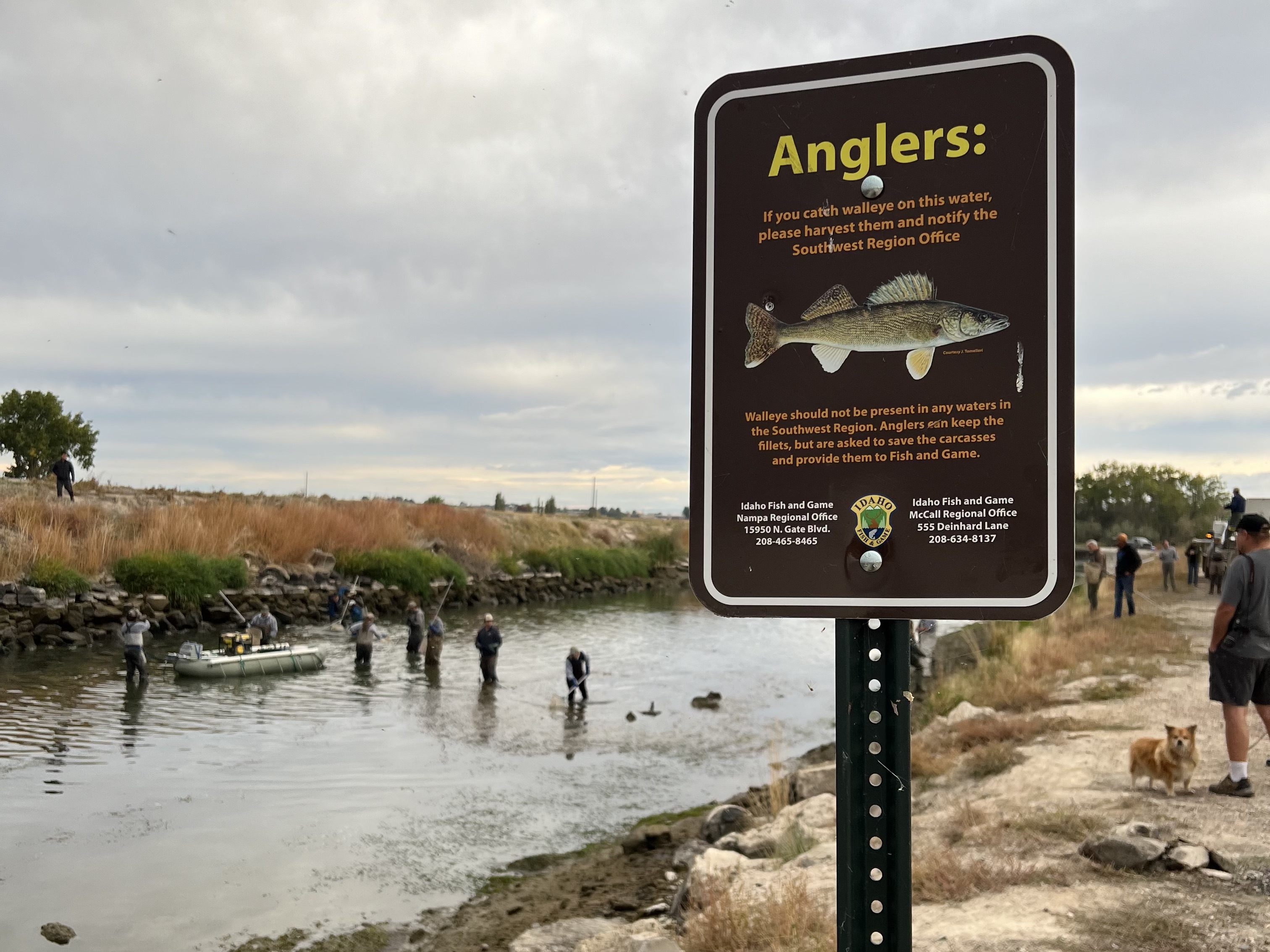
A walleye sign at the Lowline Canal of Lake Lowell is pictured, with fisheries crews working in the background.
Fish and Game staff are in the process of updating walleye signs around Lake Lowell, like this one at the Lowline Canal, to reflect that anglers no longer need to report catching walleye in Lake Lowell. The new signs read: "Please DO NOT release walleye alive. KILL AND KEEP."

“We appreciate the cooperation we’ve had from local anglers, who have understood our concerns about the introduction of walleye into this fishery and have been tremendous in helping us to track the increasing population,” Butts said.  

Butts added that anglers should continue to report any walleye caught in the Southwest Region outside of Lake Lowell.  

A brief history of walleye in Lake Lowell 

In May of 2022, Fish and Game received the first report of a walleye in Lake Lowell – a 17-inch fish that the angler caught while fishing for bass on Caldwell Dam.  

At the time, fisheries managers expressed concern about the potential impacts to the popular largemouth bass fishery, and the possibility that walleye could move naturally to other waters through the canals that flow out from Lake Lowell. At that time, Fish and Game asked anglers to report any walleye they caught at Lake Lowell, and to provide the carcasses.

The following year, Fish and Game staff conducted a salvage effort on the Lowline Canal at Lake Lowell, to collect warmwater species for transfer into Treasure Valley community ponds. During that effort, biologists were also keeping an eye out for walleye, and they certainly found them: 31 walleye of two different size classes were collected in the effort, the majority of which were on the small side – leading biologists to believe that they were successfully reproducing.  

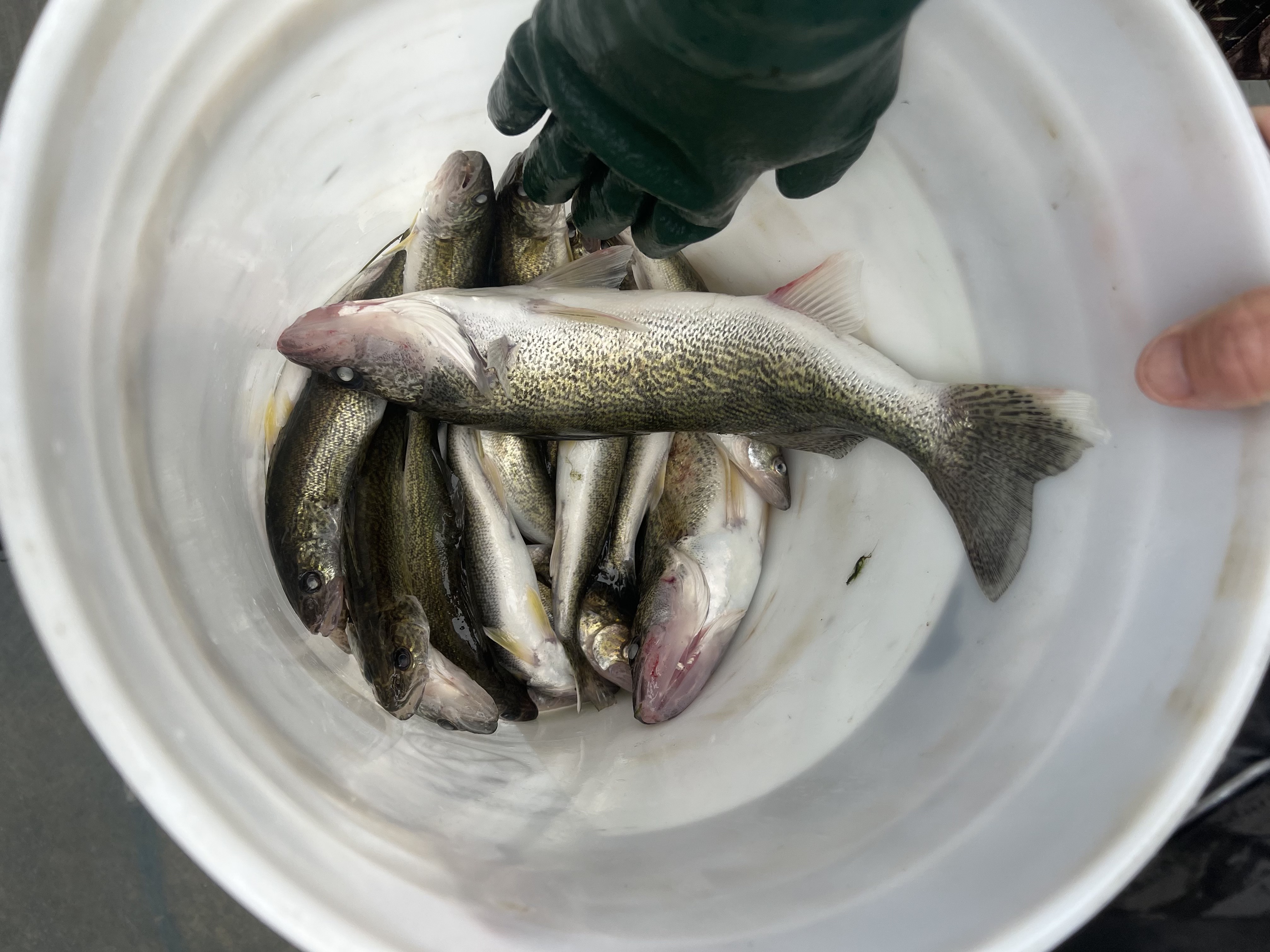
A bucket of several walleye that were sampled and killed during the 2023 fish salvage effort at Lake Lowell's Lowline Canal.

Biologists repeated the effort the following year, and were encouraged by the fact that they didn’t encounter any walleye in that smaller age class – perhaps indicating that walleye had not been able to spawn successfully in 2024 – but that optimism was short-lived.  

Since then, dozens of anglers have reported catching walleye, most of which are in the 16- to 18-inch range.  

Walleye aren’t a bad fish, just the wrong fish for Idaho 

Idaho and walleye just aren’t a good match in most places, and here’s why. Walleye are native to large Midwestern lakes that tend to have large and prolific forage bases of minnows, shiners, chubs and other small baitfish. Those baitfish are not available in most Idaho waters, so walleye are likely to eat other game fish that are highly valued by Idaho anglers. Eventually, those other fish species could be gone, or greatly diminished, and the result could be a bunch of unhealthy, unsustainable walleye populations.  

Fisheries biologists aren’t biased against walleye, they simply recognize that not every species is compatible with every fishery and most of Idaho’s bodies of water just don’t have the forage base to accommodate the current fish species and walleye at the same time. Biologists are listening to anglers who voiced their preferences during surveys, and biologists provide diverse fishing opportunities that are geared toward those preferences, which includes walleye fishing in some waters.

However, in most Idaho waters, biologists aren’t managing a single species, they’re managing multiple species that must be somewhat compatible with each other. Any given water can only support so many fish, and while it’s common for game fish to feed on each other, there’s an opportunity to maintain a reasonable balance between species.  

Biologists take all those factors into consideration before introducing a fish species into any water. Unfortunately, in the case of Lake Lowell, someone decided to illegally release walleye that are now established.