
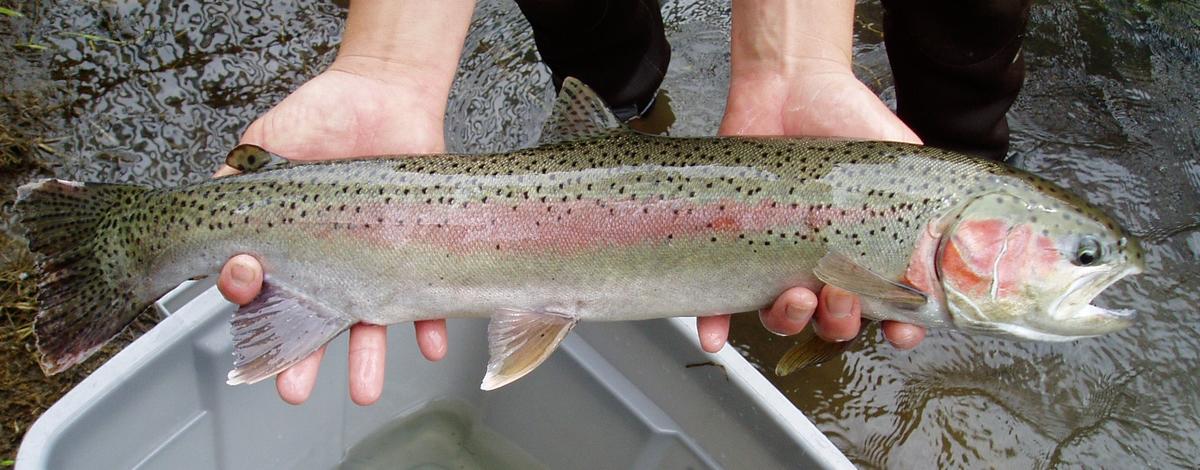
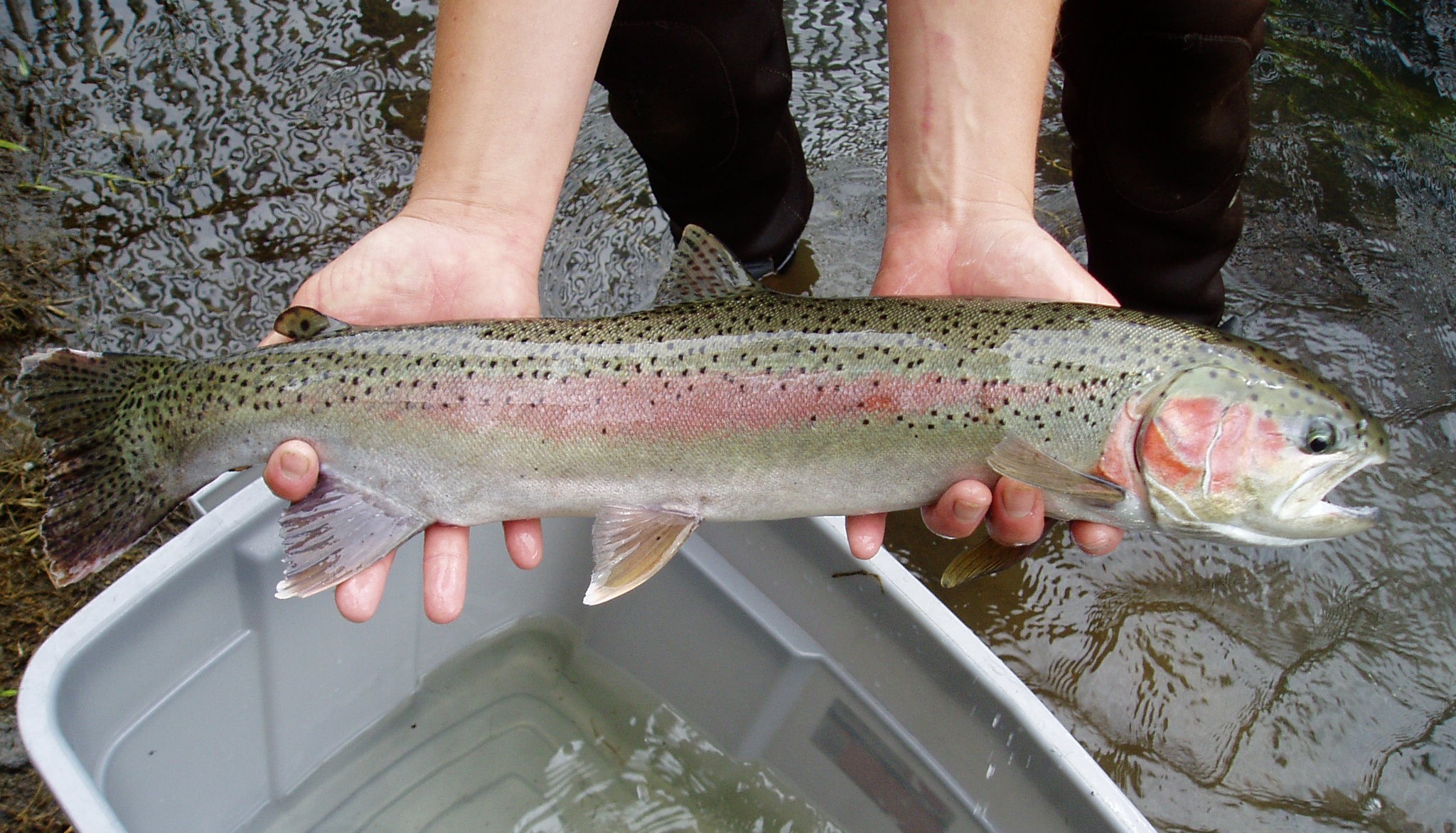
Spring in Idaho is spawning time for Idaho steelhead. Steelhead can survive spawning, unlike Chinook, coho, or sockeye salmon, but similar to Atlantic salmon. A post-spawn steelhead is called a kelt. One of the definitions of this word is “a salmon or sea trout that is weak and emaciated after spawning”. A look at a steelhead kelt shows this, especially for females that have laid all their eggs.
Being a Steelhead Isn’t Easy
idfg-tcopeland
Life in the Rough Lane
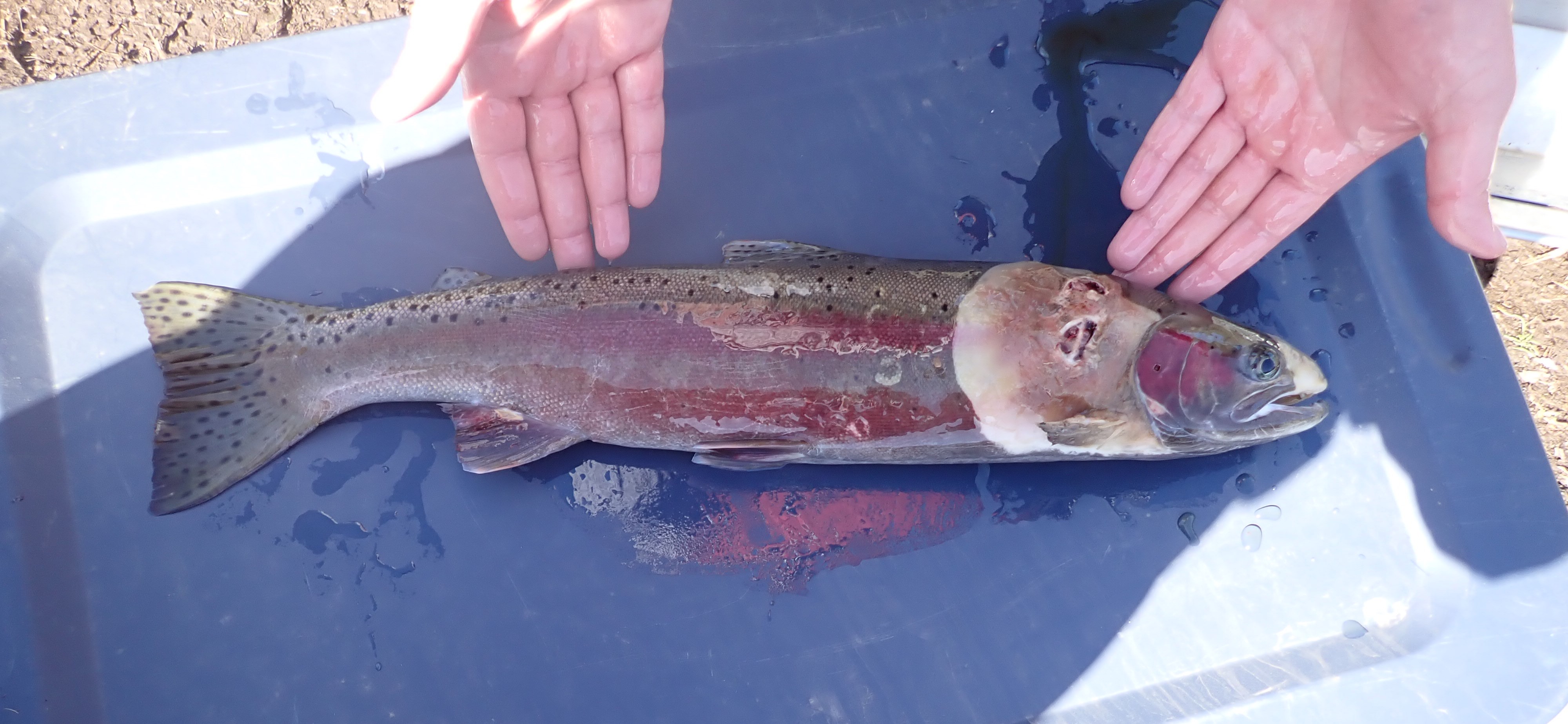
Spawning is hard work. Females dig in the gravel with their tails to make a nest for their eggs. Males fight each other for the right to spawn, biting at each other’s tail and dorsal fins. Once a steelhead has used most of their energy stores, they often get battered on the rocks by high spring stream flows. I’ve seen kelts with scales and skin worn away and holes poked in their sides. This makes them vulnerable to infections.
Steelhead don’t feed after leaving the ocean. Although they will strike at things like fishing lures, their digestive systems shrink and lose the ability to absorb energy and nutrients from what they eat. Steelhead kelts will begin to move downstream towards the ocean and restart their digestive system. This process was observed by Zachary Penney, when he was at the University of Idaho studying the physiology of migrating and spawning steelhead.
Once they are done spawning, steelhead kelts have to refill their gas tanks. They will feed as they move downstream and when they re-enter the ocean, much like when they were a young smolt. The Nez Perce Tribe operates a program to collect and help kelts recover. The fish are held in the hatchery and fed until they are released in the fall during the upstream migration as a way to get more spawners when runs are low. This is a conservation measure because very few kelts make it back to Idaho on their own to spawn again, 1% or less. Those that do bear witness to an incredible story, because it isn’t easy being a steelhead.