idfg-badge

Idaho Fish and Game

Steelhead

2026 Idaho Steelhead Update

idfg-jthiessen

If you’re a steelhead angler you’ve probably been hearing rumors or seen news articles stating that this year’s steelhead return is in rough shape. Unfortunately, those reports are correct. The 2026 steelhead return is shaping up to be one of the lowest on record. As a result, IDFG will be reducing steelhead bag limits statewide as a conservation measure to reduce impacts to broodstock and natural-origin spawners.

Statewide Reduction in Steelhead Bag Limits 

  • Statewide: 2 fish per day
  • Clearwater River and open tributaries: 2 fish per day (only 1 fish greater than 28 inches)

Bag Limit Reduction Effective: End of Fishing Hours on Thursday, September 17.  
 

cade stlhd

Columbia River Basin Steelhead Return

Steelhead in the Columbia River are managed in part according to when they cross Bonneville Dam. Fish destined for Idaho and the Snake River basin typically begin passing Bonneville Dam after July 1, during what is referred to as the A/B Index management period.

In general, A-index steelhead are less than 31 inches in length, while B-index fish are greater than 31 inches. For Snake River stocks, A-index fish include steelhead returning to northeast Oregon, southeast Washington, and portions of the Snake and Salmon rivers. B-index fish generally return to the Clearwater River basin and Upper Salmon River.

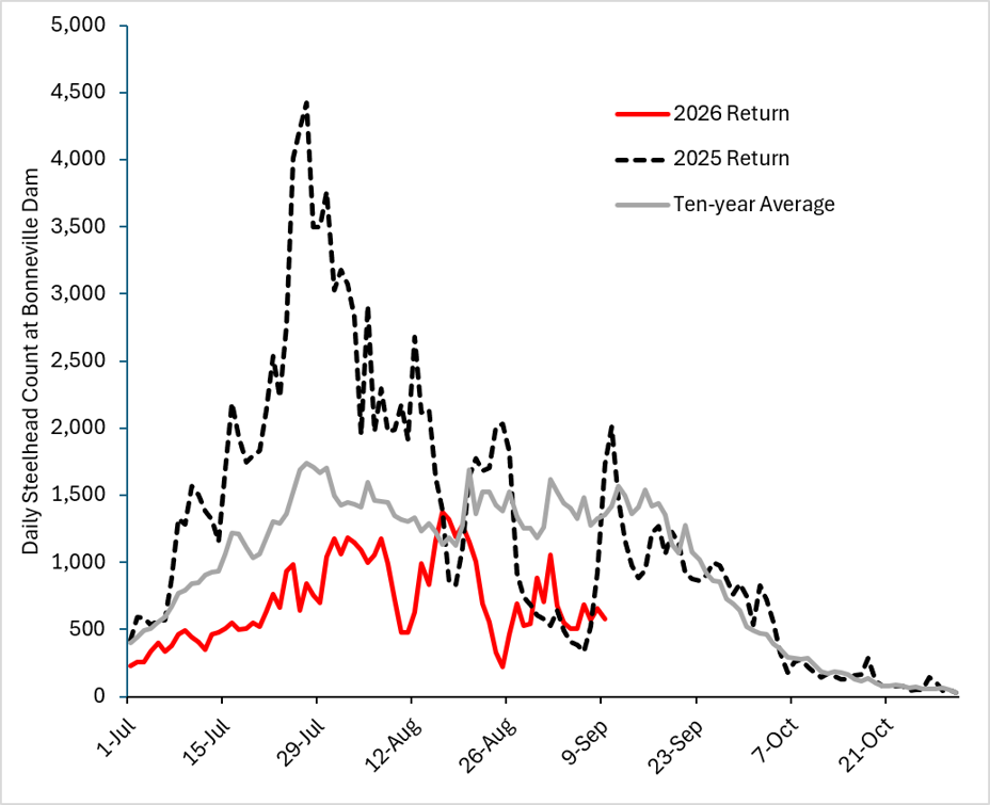
The total A/B Index steelhead return at Bonneville Dam is currently the lowest count to date since the dam was constructed in 1938, and the current unclipped steelhead count is also the lowest on record.

The U.S. v. Oregon Technical Advisory Committee (TAC) downgraded the total expected steelhead return at Bonneville Dam to 61,500 fish which would be the lowest steelhead count on record. The total includes 53,400 total A-Index steelhead of which 17,500 are unclipped fish, and 8,100 total B-Index steelhead of which 2,900 are unclipped fish.

2026 return

In response to the low return, Oregon and Washington have closed recreational harvest of steelhead in the Columbia River. Tributary fisheries in Oregon’s Deschutes and John Day rivers and Washington’s Drano Lake, which can attract migrating Snake River steelhead seeking cooler water, have also been closed to steelhead harvest.

Idaho Stocks

Steelhead stocks destined for Idaho are following a similar pattern, with abundances projected to be well below average. Based on PIT-tag detections of hatchery steelhead at Bonneville Dam, returns for many Idaho programs are projected to be similar to the record-low returns observed during the 2019–2020 return year. As a result, fisheries managers are concerned about meeting hatchery broodstock needs throughout the Snake River basin.

Natural-origin steelhead are also returning below preseason forecasts and recent averages, and conservation actions are necessary to reduce impacts on natural-origin fish. Managers will continue closely monitoring the run and will take additional actions if necessary to protect natural-origin steelhead and ensure hatchery broodstock needs are met.

How Did We Get Here?

There is no single factor that clearly explains why the 2026 steelhead return is so poor. More than 90% of the steelhead returning this year spent two years in the ocean. The one-ocean component was expected to be relatively weak, based on the alternating pattern observed in recent years, where one return year is dominated by one-ocean fish and the next by two-ocean fish.  The two-ocean component was expected to provide a much stronger return and instead is returning substantially below expectations.

Hatchery production and juvenile survival were relatively normal for this group of fish. During brood year 2024, hatcheries released approximately 96% of the smolt production goal in the Salmon and Snake river basins and 102% of the goal in the Clearwater Basin. Average survival from hatchery release sites to Lower Granite Dam was approximately 75%, compared with a 10-year average of about 77%.

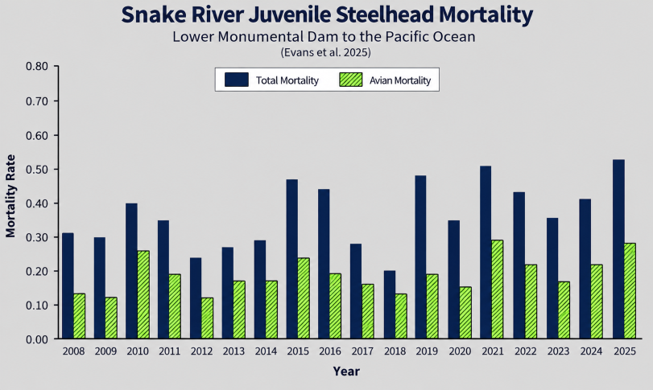
That does not mean freshwater mortality is unimportant. Steelhead face mortality from a variety of sources throughout their migration. Research has documented substantial losses during downstream migration from impacts such as avian predation. For example, the figure below shows estimated juvenile steelhead mortality (blue bars) between Lower Monumental Dam and the Pacific Ocean in comparison with juvenile steelhead mortality from avian predation (green bars).

avian pred

Fisheries managers continue working with state, federal and tribal partners to reduce and mitigate freshwater and migration impacts where possible. However, the magnitude and general pattern of these losses do not, by themselves, appear to explain the exceptionally poor adult return in 2026.

Ocean Impacts on Steelhead

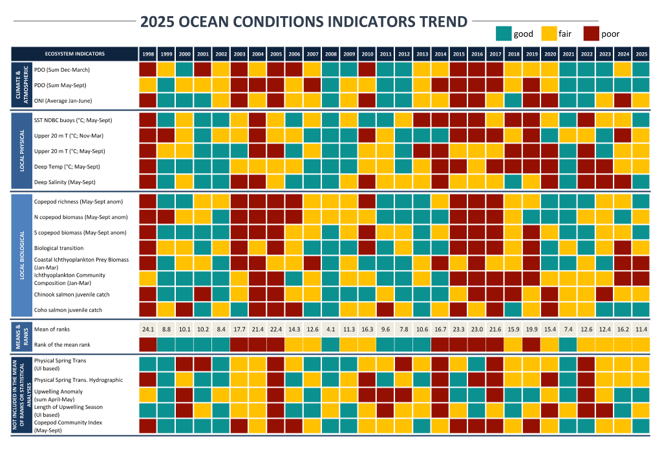
Once juvenile steelhead reach the Pacific Ocean, our ability to monitor them decreases dramatically. ocean conditions have long been recognized as an important driver of salmon and steelhead survival. Temperature, currents, upwelling, prey availability, competition with other species, and large-scale climate patterns can all influence marine survival. The chart below is an indicator of nearshore ocean conditions over time (NOAA Fisheries). 

Ocean Conditions

Nearshore ocean indicators during 2024–2025 showed mixed results. However, steelhead tend to migrate offshore relatively quickly after entering the ocean, meaning nearshore indicators may not accurately represent the conditions these fish experience during much of their marine life.

That distinction is important. Fisheries managers have increasingly sophisticated tools for monitoring fish in freshwater and through the hydrosystem, but considerably less information is available once steelhead move offshore into the North Pacific. The fact that preseason forecasts substantially overestimated this year’s return reinforces how much uncertainty remains in the ocean. No single freshwater, hydrosystem, or ocean indicator currently provides a complete explanation for what appears to be one of the poorest steelhead returns in modern history. Because of this, fisheries managers and anglers are stuck waiting for the initial adult returns to Bonneville to start making real inferences about run strengths. 

What Managers Can Do

Although fisheries managers cannot control the many environmental factors affecting steelhead survival, there are actions we can take to protect the adult fish that do return and ensure they make it back to Idaho.

IDFG and our state, federal, and tribal partners monitor steelhead throughout their migration, evaluate hatchery production and survival, manage fisheries to protect natural-origin fish, and adjust harvest when necessary to ensure enough hatchery adults reach spawning facilities and impacts on natural spawners are limited.

In previous low-return years, IDFG reduced bag limits to decrease harvest and help ensure hatchery broodstock needs were met. Bag-limit reductions typically reduce overall fishing effort, which decreases both hatchery harvest and encounters with natural-origin steelhead.

An important part of that strategy is recognizing that not all fisheries have the same conservation risk. Earlier in the migration, steelhead from numerous hatchery and natural-origin populations are mixed together. Management in these areas must account for impacts to multiple stocks, including wild fish and hatchery fish still needed for broodstock in other places.

Fisheries management cannot eliminate every source of mortality a steelhead encounters during its journey to the Pacific Ocean and back. What managers can do is minimize those impacts where possible, protect natural-origin fish, ensure enough hatchery adults return to meet broodstock needs, and strategically provide harvest opportunity on surplus hatchery fish. Successful management is not measured simply by how many fish anglers harvest; it is also measured by whether conservation and broodstock objectives are achieved while providing as much sustainable fishing opportunity as the run can support.

Silver Lining

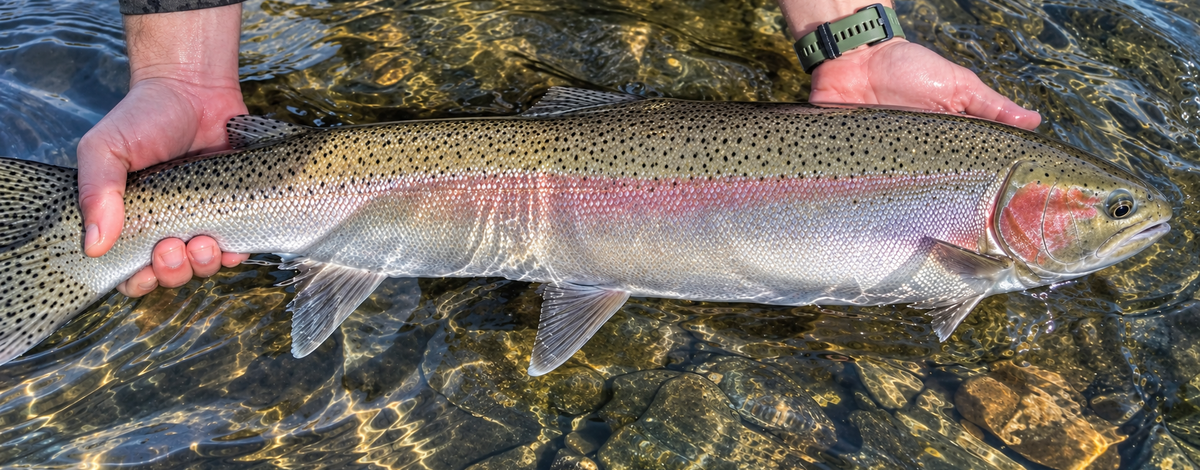
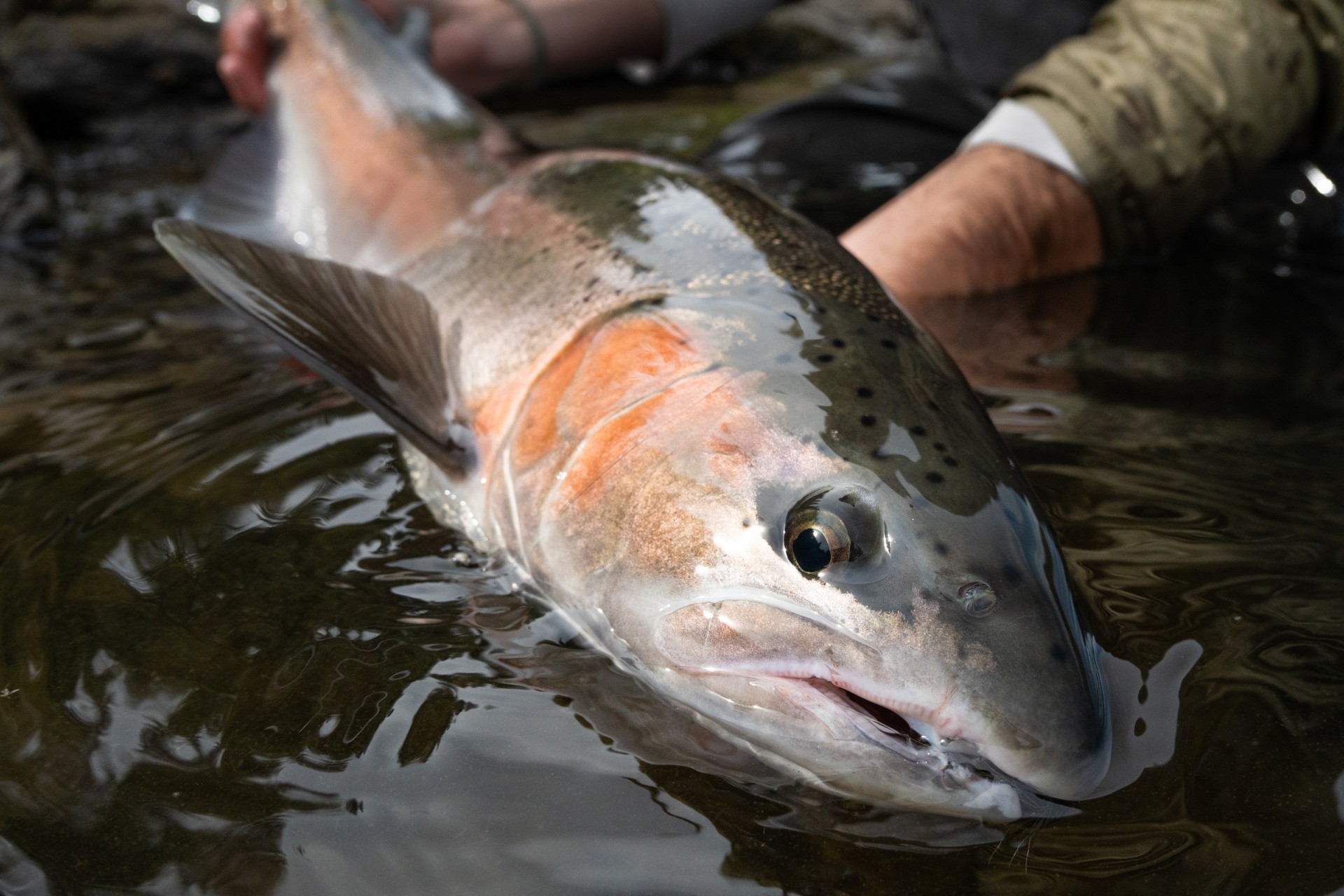
If there is a bright spot in this year’s return, it is that the returning fish are larger than average because the run is dominated by 2-ocean fish. Based on PIT-tag detections at Bonneville Dam, 2-ocean steelhead make up more than 90% of this year’s return. Larger steelhead are not just exciting to catch, but the larger females generally carry more eggs, which can help hatcheries meet egg-production goals with fewer adults.

This will undoubtedly be a challenging year for Idaho’s steelhead fisheries. For anglers who decide to head out this season, expectations may need to change, but the opportunity to encounter a large Idaho steelhead remains. We may not yet have all the answers for why this return fell so far below expectations, but IDFG and our partners will continue following the run, protecting the fish that return, and adaptively managing fisheries as new information becomes available.

Good luck and tight lines!