idfg-badge

Idaho Fish and Game

FCHN Joe1

2026 Fall Chinook Season Opener: What Anglers Need to Know

idfg-jthiessen

Idaho’s 2026 fall Chinook Salmon season opens Tuesday, Aug. 18, and anglers heading to the Clearwater, Snake and Salmon rivers should be aware of an important change to the daily bag and possession limits for this year’s fishery.

2026 Fall Chinook Season

Season dates: Aug. 18 through Nov. 1, 2026

Fishing days: Seven days per week

Daily limit: Three adult fall Chinook per day, only one of which may be adipose-intact (unclipped). There is no daily limit on jack fall Chinook.

Possession limit: Nine adult fall Chinook, only three of which may be adipose-intact (unclipped).

Season limit: There is no season limit for fall Chinook Salmon.

Anglers should review the current fall Chinook regulations for specific fishing boundaries and other rules before heading to the water. Fall Chinook Season & Limits

Note: North Fork Clearwater opens September 1. 
LGR FCHN2026

2026 Season Forecast

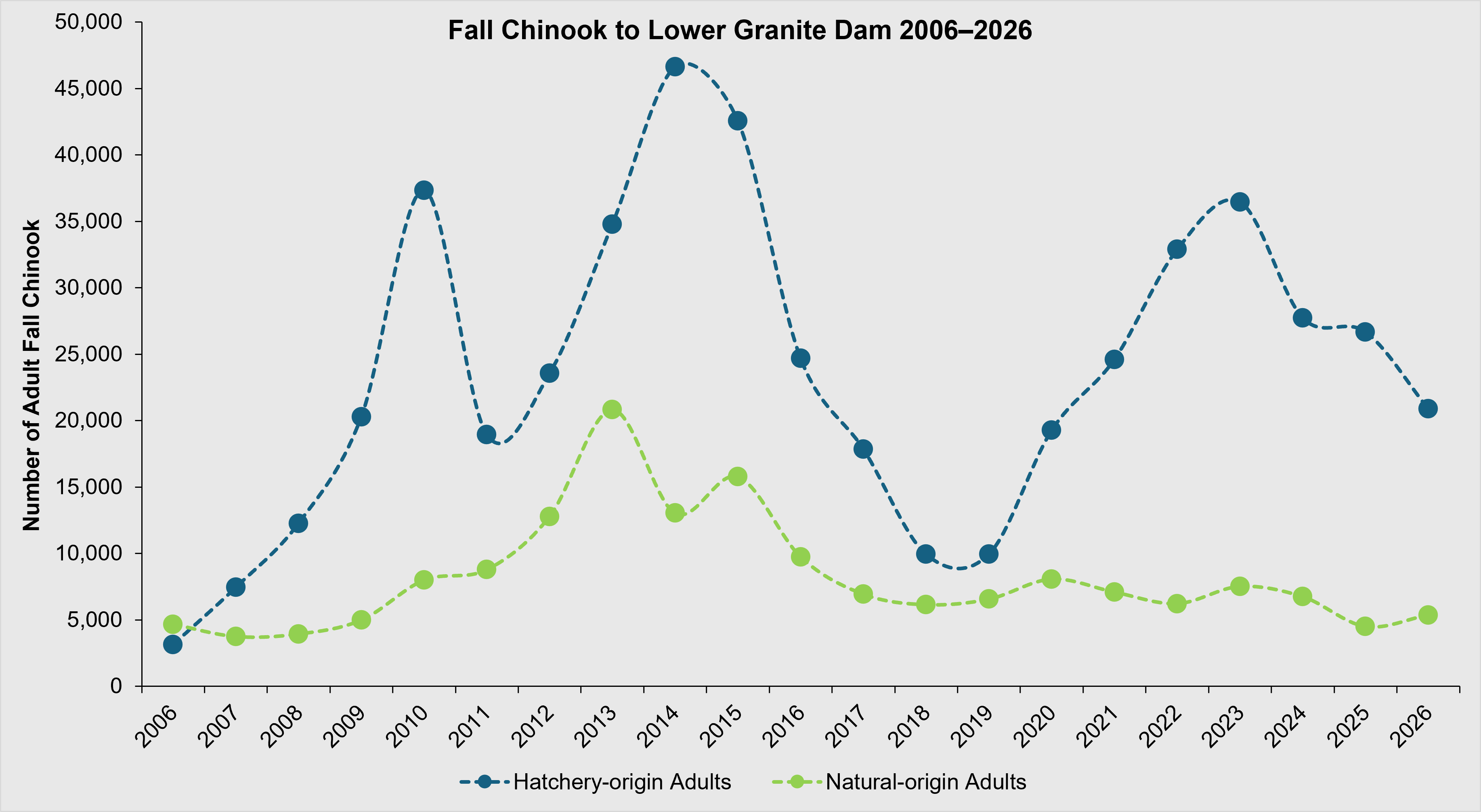
Anglers can expect the 2026 fall Chinook return to be below recent averages.

Approximately 26,000 adult fall Chinook are currently projected to return to Lower Granite Dam, including about 20,885 hatchery-origin and 5,370 natural-origin adults.

The hatchery component of the run should provide meaningful harvest opportunity this fall. However, the forecasted return of natural origin fall Chinook is lower than what Idaho has experienced in recent years and will be an important consideration as Idaho Fish and Game monitors the fishery.

Why does the number of wild fish matter to anglers?

Idaho’s fall Chinook fishery is primarily limited by allowable impacts to natural-origin fish. Simply put, the fewer natural-origin fish that return, the fewer natural-origin fish anglers can harvest before allowable harvest limits are reached.

That is the reason for this year's change allowing only one unclipped adult in the daily bag limit. The regulation is intended to reduce harvest of natural-origin adults while directing more harvest toward adipose-clipped hatchery fish. This should help provide fishing opportunities while protecting the smaller natural-origin return.

Conversion to Lower Granite will be important

The preseason forecast at Lower Granite Dam assumes a relatively normal survival rate of 70% as fish migrate through the Columbia and lower Snake rivers. This rate is referred to as the “Conversion” rate from Bonneville Dam to Lower Granite Dam. 

Last year demonstrated how quickly that outlook can change when conversion rates dropped under 60%. If conversion rates during 2026 are similar to the poorer rates observed last year, the return to Lower Granite could fall short of the run projection. If conversion is near average, the return should be much closer to the preseason forecast.

For that reason, anglers shouldn't put too much emphasis on early August dam counts. The next several weeks will provide much better information about the actual strength of Idaho’s return.

FCHN time

What should anglers expect for the Opener?

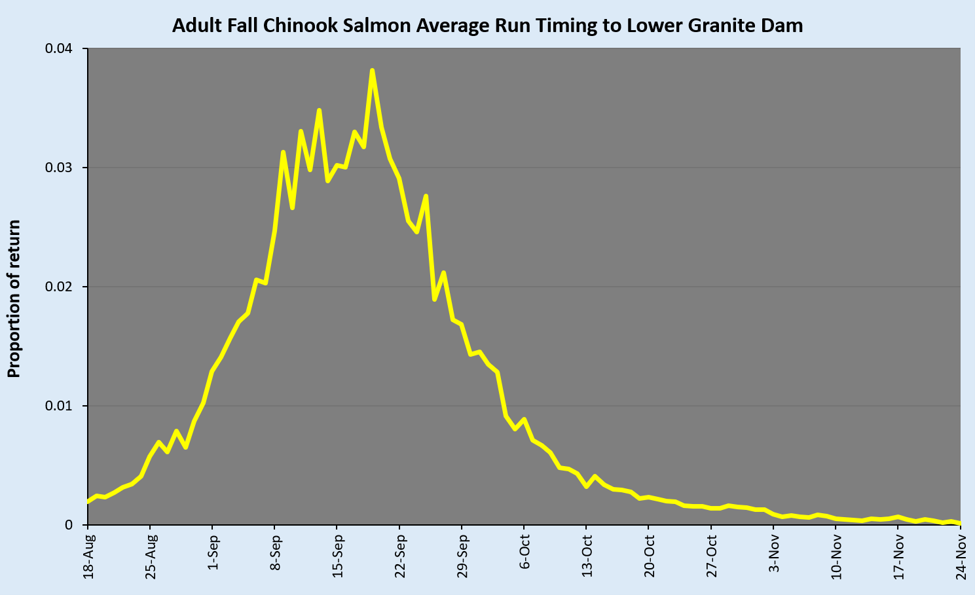
Fall Chinook typically arrive in Idaho in increasing numbers during the latter half of August, with fishing improving as more fish enter the Snake and Clearwater rivers, typically making early September the ideal time to fish. That said, Salmon fishing has been closed on the lower rivers in Idaho for a while and Fall Chinook often begin stacking up in Idaho before the August 18th opener. Since August 10th, about 1,000 adult Fall Chinook have passed Lower Granite. This is comparable to past seasons, so those who always chase the opening bite should expect similar results. 

IDFG will continue monitoring the run

Idaho Fish and Game biologists will closely monitor dam passage, PIT-tag information, harvest and angler effort throughout the fall season. This data will provide a clearer picture of the run as additional fish enter the Columbia and Snake river systems.

The next two to four weeks will be particularly informative. As the run develops, managers will have a much better understanding of whether the return is tracking near the preseason forecast and whether fish are successfully converting upstream to Lower Granite Dam.

confluence

Fishing Boundary Waters

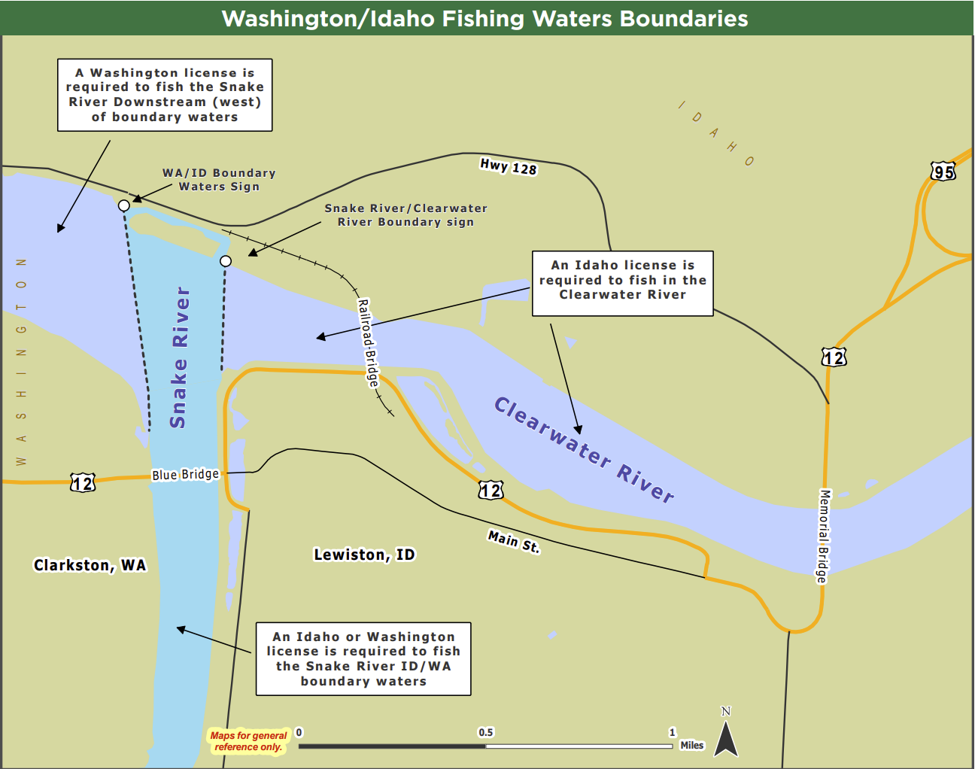
For anglers fishing boundary waters, an important thing to remember is that you may exercise the privileges of only one state's license at a time.

For example, if you are fishing with two rods under an Idaho two-pole permit while in boundary waters, you are fishing under Idaho privileges and must follow Idaho's associated regulations, including tagging requirements.

Likewise, possessing licenses from both states does not allow an angler to combine the possession limits from each state while fishing boundary waters. Anglers are entitled to the limit allowed under the license they are using.

Anglers planning to move between boundary waters and Washington-only waters should pay particular attention to Washington's regulations.

Washington regulations state:

“Before utilizing a Washington fishing license or fishing Washington only waters, any fish retained while using another state's license must be returned to shore before continuing to angle.”

In practical terms, an angler should not harvest a fall Chinook in boundary waters using an Idaho permit and then continue fishing in Washington-only waters with that fish still in the boat.

Anglers who plan to fish both boundary waters and Washington-only waters during the same trip are encouraged to review Washington Department of Fish and Wildlife regulations (WDFW Snake River Fall Chinook regulations). or contact WDFW before fishing to make sure they understand how the regulations apply to their specific situation.

The Bottom Line

The 2026 fall Chinook return is expected to be below average, particularly for natural-origin fish, but anglers should still have meaningful fishing and harvest opportunity this fall.

Remember the major regulation change for 2026: three adults may be harvested daily, but only one may be unclipped.

There are already fall Chinook entering Idaho and for those brave enough to battle the crowds, remember this: stay patient, respect thy fellow angler, and never take a good netter for granted.